Math Is Fun Forum
You are not logged in.
- Topics: Active | Unanswered
Pages: 1
#1 Yesterday 00:50:16
- Jai Ganesh
- Administrator

- Registered: 2005-06-28
- Posts: 52,664
Hypotension
Hypotension
Gist
Hypotension (low blood pressure) means blood flows at lower than normal force, typically below 90/60 mmHg, potentially depriving organs of oxygen, causing dizziness, fatigue, blurred vision, or fainting, and can stem from dehydration, blood loss, medications, or underlying conditions like heart issues, with treatment focusing on managing the cause, increasing fluids/salt, or compression. While some have naturally low BP without issues, sudden drops (orthostatic hypotension) are common, requiring prompt attention to prevent serious complications like shock.
Hypotension treatment focuses on raising blood pressure through lifestyle changes (more water, salt intake with doctor's advice, smaller meals, avoiding sudden movements, compression stockings) and, if needed, medications like midodrine or fludrocortisone, or IV fluids for severe cases, all depending on the underlying cause, with severe drops requiring emergency care.
Summary
Hypotension is a condition in which the blood pressure is abnormally low, either because of reduced blood volume or because of increased blood-vessel capacity. Though not in itself an indication of ill health, it often accompanies disease.
Extensive bleeding is an obvious cause of reduced blood volume that leads to hypotension. There are other possible causes. A person who has suffered an extensive burn loses blood plasma—blood minus the red and white blood cells and the platelets. Blood volume is reduced in a number of conditions involving loss of salt and water from the tissues—as in excessive sweating and diarrhea—and its replacement with water from the blood. Loss of water from the blood to the tissues may result from exposure to cold temperatures. Also, a person who remains standing for as long as one-half hour may temporarily lose as much as 15 percent of the blood water into the tissues of the legs.
Orthostatic hypotension—low blood pressure upon standing up—seems to stem from a failure in the autonomic nervous system. Normally, when a person stands up, there is a reflex constriction of the small arteries and veins to offset the effects of gravity. Hypotension from an increase in the capacity of the blood vessels is a factor in fainting (see syncope). Hypotension is also a factor in poliomyelitis, in shock, and in overdose of depressant drugs, such as barbiturates.
Details
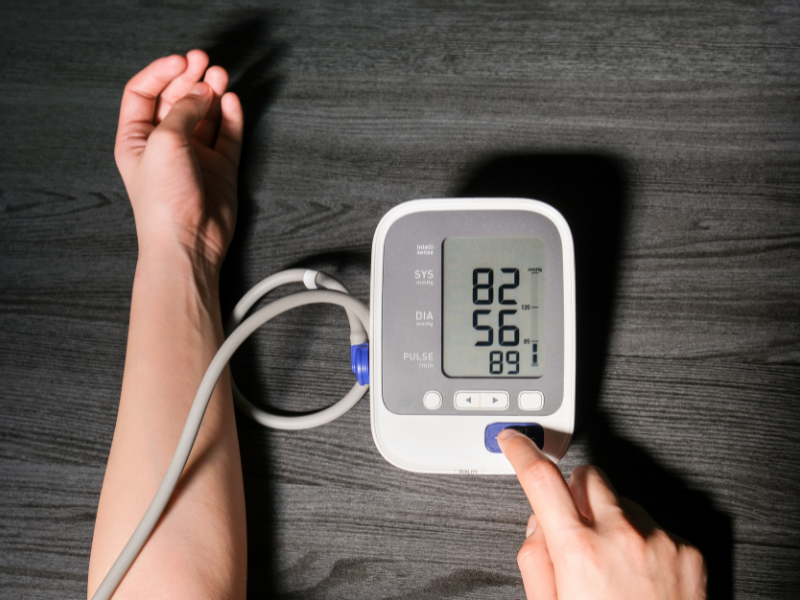
Hypotension, also known as low blood pressure, is a cardiovascular condition characterized by abnormally reduced blood pressure. Blood pressure is the force of blood pushing against the walls of the arteries as the heart pumps out blood and is indicated by two numbers, the systolic blood pressure (the top number) and the diastolic blood pressure (the bottom number), which are the maximum and minimum blood pressures within the cardiac cycle, respectively. A systolic blood pressure of less than 90 millimeters of mercury (mmHg) or diastolic of less than 60 mmHg is generally considered to be hypotension. Different numbers apply to children. However, in practice, blood pressure is considered too low only if noticeable symptoms are present.
Symptoms may include dizziness, lightheadedness, confusion, feeling tired, weakness, headache, blurred vision, nausea, neck or back pain, an irregular heartbeat or feeling that the heart is skipping beats or fluttering, and fainting. Hypotension is the opposite of hypertension, which is high blood pressure. It is best understood as a physiological state rather than a disease. Severely low blood pressure can deprive the brain and other vital organs of oxygen and nutrients, leading to a life-threatening condition called shock. Shock is classified based on the underlying cause, including hypovolemic shock, cardiogenic shock, distributive shock, and obstructive shock.
Hypotension can be caused by strenuous exercise, excessive heat, low blood volume (hypovolemia), hormonal changes, widening of blood vessels, anemia, vitamin B12 deficiency, anaphylaxis, heart problems, or endocrine problems. Some medications can also lead to hypotension. There are also syndromes that can cause hypotension in patients including orthostatic hypotension, vasovagal syncope, and other rarer conditions.
For many people, excessively low blood pressure can cause dizziness and fainting or indicate serious heart, endocrine or neurological disorders.
For some people who exercise and are in top physical condition, low blood pressure could be normal. A single session of exercise can induce hypotension, and water-based exercise can induce a hypotensive response.
Treatment depends on the cause of the low blood pressure. Treatment of hypotension may include the use of intravenous fluids or vasopressors. When using vasopressors, trying to achieve a mean arterial pressure (MAP) of greater than 70 mmHg does not appear to result in better outcomes than trying to achieve an MAP of greater than 65 mmHg in adults.
Additional Information
Low blood pressure is a reading below 90/60 mm Hg. Many issues can cause low blood pressure. Treatment varies depending on what’s causing it. Symptoms of low blood pressure include dizziness and fainting, but many people don’t have symptoms. The cause also affects your prognosis.
Overview:
What is low blood pressure?
Hypotension, or low blood pressure, is when your blood pressure is much lower than expected. It can happen either as a condition on its own or as a symptom of a wide range of conditions. It may not cause symptoms. But when it does, you may need medical attention.
Types of low blood pressure
Hypotension has two definitions:
* Absolute hypotension: Your resting blood pressure is below 90/60 millimeters of mercury (mm Hg).
* Orthostatic hypotension: Your blood pressure stays low for longer than three minutes after you stand up from a sitting position. (It’s normal for your blood pressure to drop briefly when you change positions, but not for that long.) The drop must be 20 mm Hg or more for your systolic (top) pressure and 10 mm Hg or more for your diastolic (bottom) pressure. Another name for this is postural hypotension because it happens with changes in posture.
Measuring blood pressure involves two numbers:
* Systolic (top number): This is the pressure on your arteries each time your heart beats.
* Diastolic (bottom number): This is how much pressure your arteries are under between heartbeats.
What is considered low blood pressure?
Low blood pressure is below 90/60 mm Hg. Normal blood pressure is above that, up to 120/80 mm Hg.
How common is low blood pressure?
Because low blood pressure is common without any symptoms, it’s impossible to know how many people it affects. However, orthostatic hypotension seems to be more and more common as you get older. An estimated 5% of people have it at age 50, while that figure climbs to more than 30% in people over 70.
Who does low blood pressure affect?
Hypotension can affect people of any age and background, depending on why it happens. However, it’s more likely to cause symptoms in people over 50 (especially orthostatic hypotension). It can also happen (with no symptoms) to people who are very physically active, which is more common in younger people.
Symptoms and Causes:
What are the symptoms of low blood pressure?
Low blood pressure symptoms include:
* Dizziness or feeling lightheaded.
* Fainting or passing out (syncope).
* Nausea or vomiting.
* Distorted or blurred vision.
* Fast, shallow breathing.
* Fatigue or weakness.
* Feeling tired, sluggish or lethargic.
* Confusion or trouble concentrating.
* Agitation or other unusual changes in behavior (a person not acting like themselves).
For people with symptoms, the effects depend on why hypotension is happening, how fast it develops and what caused it. Slow decreases in blood pressure happen normally, so hypotension becomes more common as people get older. Fast decreases in blood pressure can mean certain parts of your body aren’t getting enough blood flow. That can have effects that are unpleasant, disruptive or even dangerous.
Usually, your body can automatically control your blood pressure and keep it from dropping too much. If it starts to drop, your body tries to make up for that, either by speeding up your heart rate or constricting blood vessels to make them narrower. Symptoms of hypotension happen when your body can’t offset the drop in blood pressure.
For many people, hypotension doesn’t cause any symptoms. Many people don’t even know their blood pressure is low unless they measure their blood pressure.
What are the possible signs of low blood pressure?
Your healthcare provider may observe these signs of low blood pressure:
* A heart rate that’s too slow or too fast.
* A skin color that looks lighter than it usually does.
* Cool kneecaps.
* Low cardiac output (how much blood your heart pumps).
* Low urine (pee) output.
What causes low blood pressure?
Hypotension can happen for a wide range of reasons. Causes of low blood pressure include:
* Orthostatic hypotension: This happens when you stand up too quickly and your body can’t compensate with more blood flow to your brain.
* Central nervous system diseases: Conditions like Parkinson’s disease can affect how your nervous system controls your blood pressure. People with these conditions may feel the effects of low blood pressure after eating because their digestive systems use more blood as they digest food.
* Low blood volume: Blood loss from severe injuries can cause low blood pressure. Dehydration can also contribute to low blood volume.
* Life-threatening conditions: These conditions include irregular heart rhythms (arrhythmias), pulmonary embolism (PE), heart attacks and collapsed lung. Life-threatening allergic reactions (anaphylaxis) or immune reactions to severe infections (sepsis) can also cause hypotension.
* Heart and lung conditions: You can get hypotension when your heart beats too quickly or too slowly, or if your lungs aren’t working as they should. Advanced heart failure (weak heart muscle) is another cause.
* Prescription medications: Hypotension can happen with medications that treat high blood pressure, heart failure, erectile dysfunction, neurological problems, depression and more. Don’t stop taking any prescribed medicine unless your provider tells you to stop.
* Alcohol or recreational drugs: Recreational drugs can lower your blood pressure, as can alcohol (for a short time). Certain herbal supplements, vitamins or home remedies can also lower your blood pressure. This is why you should always include these when you tell your healthcare provider what medications you’re taking.
* Pregnancy: Orthostatic hypotension is possible in the first and second trimesters of pregnancy. Bleeding or other complications of pregnancy can also cause low blood pressure.
* Extreme temperatures: Being too hot or too cold can affect hypotension and make its effects worse.
What are the complications of low blood pressure?
Complications that can happen because of hypotension include:
* Falls and fall-related injuries: These are the biggest risks with hypotension because it can cause dizziness and fainting. Falls can lead to broken bones, concussions and other serious or even life-threatening injuries. If you have hypotension, preventing falls should be one of your biggest priorities.
* Shock: When your blood pressure is low, that can affect your organs by reducing the amount of blood they get. That can cause organ damage or even shock (where your body starts to shut down because of limited blood flow and oxygen).
* Heart problems or stroke: Low blood pressure can cause your heart to try to compensate by pumping faster or harder. Over time, that can cause permanent heart damage and even heart failure. It can also cause problems like deep vein thrombosis (DVT) and stroke because blood isn’t flowing like it should, causing clots to form.
Diagnosis and Tests:
How is low blood pressure diagnosed?
Hypotension itself is easy to diagnose. Taking your blood pressure is all you need to do. But figuring out why you have hypotension is another story. If you have symptoms, a healthcare provider will likely use a variety of tests to figure out why it’s happening and if there’s any danger to you because of it.
What tests will be done to diagnose low blood pressure?
Your provider may recommend the following tests:
Lab testing
Tests on your blood and pee (urine) can look for any potential problems, like:
* Diabetes.
* Vitamin deficiencies.
* Thyroid or hormone problems.
* Low iron levels (anemia).
* Pregnancy (for anyone who can become pregnant).
Imaging
If providers suspect a heart or lung problem is behind your hypotension, they’ll likely use imaging tests to see if they’re right. These tests include:
* X-rays.
* Computed tomography (CT) scans.
* Magnetic resonance imaging (MRI).
* Echocardiogram or similar ultrasound-based tests.
Diagnostic testing
These tests look for specific problems with your heart or other body systems.
* Electrocardiogram (ECG or EKG).
* Exercise stress testing.
* Tilt table test (can help in diagnosing orthostatic hypotension).
It appears to me that if one wants to make progress in mathematics, one should study the masters and not the pupils. - Niels Henrik Abel.
Nothing is better than reading and gaining more and more knowledge - Stephen William Hawking.
Offline
Pages: 1