Math Is Fun Forum
You are not logged in.
- Topics: Active | Unanswered
- Index
- » Science HQ
- » Patella
Pages: 1
#1 2026-01-12 15:39:34
- Jai Ganesh
- Administrator

- Registered: 2005-06-28
- Posts: 53,791
Patella
Patella
Gist
The patella is your kneecap. It's the bone at the front of your knee joint. It's the biggest bone in your body embedded in a tendon (a sesamoid bone).
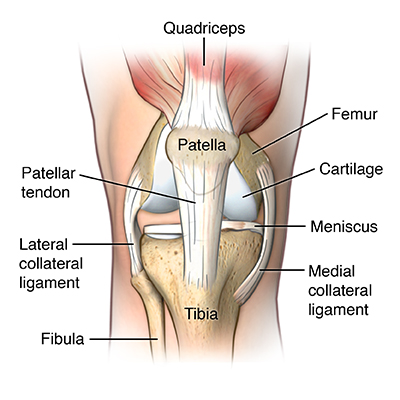
The patella, or kneecap, is the largest sesamoid bone in the body, a flat, triangular bone at the front of the knee joint that protects it and helps with leg extension by acting as a lever for the quadriceps muscle. Embedded in the quadriceps tendon, it connects the thigh muscles to the shinbone (tibia) via the patellar ligament, allowing for smooth movement and improving the efficiency of knee extension.
A patella (kneecap) injury can range from moderately painful strains (tendinitis) to severe, debilitating fractures or dislocations, often causing significant pain, swelling, and inability to straighten the knee, with recovery potentially taking months, requiring rest, bracing, or surgery depending on the injury's severity. Serious tears or displaced fractures often need surgery, while less severe issues might heal with immobilization and physical therapy, but all require prompt medical attention.
Summary
The patella (pl.: patellae or patellas), also known as the kneecap, is a flat, rounded triangular bone which articulates with the femur (thigh bone) and covers and protects the anterior articular surface of the knee joint. The patella is found in many tetrapods, such as mice, cats, birds, and dogs, but not in whales, or most reptiles.
In humans, the patella is the largest sesamoid bone (i.e., embedded within a tendon or a muscle) in the body. Babies are born with a patella of soft cartilage which begins to ossify into bone at about four years of age.
Structure
The patella is a sesamoid bone roughly triangular in shape, with the apex of the patella facing downwards. The apex is the most inferior (lowest) part of the patella. It is pointed in shape, and gives attachment to the patellar ligament.
The front and back surfaces are joined by a thin margin and towards centre by a thicker margin. The tendon of the quadriceps femoris muscle attaches to the base of the patella., with the vastus intermedius muscle attaching to the base itself, and the vastus lateralis and vastus medialis are attached to outer lateral and medial borders of patella respectively.
The upper third of the front of the patella is coarse, flattened, and rough, and serves for the attachment of the tendon of the quadriceps and often has exostoses. The middle third has numerous vascular canaliculi. The lower third culminates in the apex which serves as the origin of the patellar ligament. The posterior surface is divided into two parts.
The upper three-quarters of the patella articulates with the femur and is subdivided into a medial and a lateral facet by a vertical ledge which varies in shape.
In the adult the articular surface is about 12 {cm}^{2} (2 sq in) and covered by cartilage, which can reach a maximal thickness of 6 mm (1⁄4 in) in the centre at about 30 years of age. Owing to the great stress on the patellofemoral joint during resisted knee flexion, the articular cartilage of the patella is among the thickest in the human body.
The lower part of the posterior surface has vascular canaliculi filled and is filled by fatty tissue, the infrapatellar fat pad.
Function
The primary functional role of the patella is knee extension. The patella increases the leverage that the quadriceps tendon can exert on the femur by increasing the angle at which it acts.
The patella is attached to the tendon of the quadriceps femoris muscle, which contracts to extend/straighten the knee. The patella is stabilized by the insertion of the horizontal fibres of vastus medialis and by the prominence of the lateral femoral condyle, which discourages lateral dislocation during flexion. The retinacular fibres of the patella also stabilize it during exercise.
Details
The patella is your kneecap. Even though it protects your joint, it’s not just a cover for your knee. It also helps muscles, tendons and ligaments work correctly, as well as helps you move your knee. If your bones are weakened by osteoporosis, you have an increased risk for fractures.
What is the patella?
The patella is your kneecap. It’s the bone at the front of your knee joint. It’s the biggest bone in your body embedded in a tendon (a sesamoid bone). Your patella helps your quadriceps muscle move your leg, protects your knee joint, and supports lots of important muscles, tendons and ligaments.
Traumas that hurt your knee are the most common patella injuries, including dislocations and bone fractures. If you do experience an injury, you might need surgery to repair your bone and physical therapy to help you regain your strength and ability to move.
Your patella — like all bones — can be affected by osteoporosis.
Function:
What does the patella do?
Your patella has two main jobs:
* Working with your quadriceps muscle to extend and straighten your leg.
* Protecting your knee joint.
Anatomy:
Where is the patella located?
The patella is at the front of your knee and covers the knee joint itself. It’s a bridge between your quad muscle and your lower leg.
What does the patella look like?
The patella is shaped like an oval with a slight point at the bottom. The top (base) is connected to your quad muscle by the quadriceps tendon. The patellar ligament connects the bottom (apex) of your patella to your tibia (shin bone).
The patella’s medial facet (the side closer to the inside of your body) articulates (moves) with your femur’s medial condyle. The lateral facet (the side closer to the outside of your body) moves with your femur’s lateral condyle.
These parts and labels are usually more for your healthcare provider to use, as they describe where you’re having pain or issues. If you ever break your patella — a patellar fracture — your provider might use some of these terms to describe where your bone was damaged.
How big is the patella?
Most adults’ patellae (the plural for patella) are around 1.75 inches long and 1.5 inches wide.
Conditions and Disorders:
What are the common conditions and disorders that affect the patella?
Lots of conditions cause knee pain (anterior knee pain or chondromalacia patella). Many of the most common causes of knee pain damage the patella or the area around it, including:
* Patellofemoral pain syndrome.
* Patellar dislocations.
* Patellar instability.
* Patella fractures.
* Patellar tendinitis.
Patellar dislocation vs. patellar subluxation
Some people might think they have a patellar dislocation when they actually have a patellar subluxation.
A subluxation is a partial dislocation. It means that your bone is unstable in the joint and may have strayed a little out of place, but it hasn’t popped all the way out. When you have a patella subluxation, your kneecap still fits in its groove and you can still walk. You may feel uncomfortable or unsteady, and you may hear a popping noise as your patella moves. Injuries or your joint being too loose can cause patellar subluxation.
Visit a healthcare provider if you’re experiencing new symptoms in your knees or have trouble walking or moving.
Osteoporosis
Osteoporosis can affect any bone in your body, including your patella. Osteoporosis weakens bones, making them more susceptible to sudden and unexpected fractures. Many people don’t know they have osteoporosis until after it causes them to break a bone. There usually aren’t obvious symptoms.
Women and adults older than 50 have an increased risk for developing osteoporosis. Talk to your provider about a bone density test that can catch osteoporosis before it causes a fracture.
What tests are done on the patella?
The most common test providers do on the patella is the patella reflex test.
Your provider will tap your knee just below your patella with a special hammer. The sudden stimulation on your tendons triggers an involuntary reflex — a reaction you can’t control — which should make your leg extend. This is the patellar reflex.
Your provider might perform this test as part of your routine examination or if they suspect something is affecting your body’s nervous system.
If you’ve experienced a patellar injury or fracture, your provider or surgeon might need imaging tests, including:
* X-rays.
* Magnetic resonance imaging (MRI).
* CT scan.
What are common treatments for the patella?
Usually, your patella won’t need treatment unless you’ve experienced an injury or fracture or have knee pain.
Many issues that affect your patella can be treated with similar treatments, including:
* Wearing a brace or other immobilizing device.
* Resting or avoiding the activity that caused your injury.
* Physical therapy.
* At-home treatments like icing and over-the-counter pain relievers.
Talk to your provider about which treatments you’ll need and how long you should expect them to take.
Patella fracture treatment
How your fracture is treated depends on which type it is and what caused it. You’ll need some form of immobilization — like a splint or cast — and might need surgery to realign (set) your bone to its correct position and secure it in place so it can heal. Ask your provider or surgeon how long it will take your specific fracture to recover.
Osteoporosis treatment
Treatments for osteoporosis can include:
* Exercise.
* Vitamin and mineral supplements.
* Prescription medications.
Exercise and taking supplements are usually all you’ll need to prevent osteoporosis. A healthcare provider can help develop a treatment plan that’s customized for you and your bone health.
Care:
Keeping your patella healthy
Following a diet and exercise plan that’s healthy for your and seeing a healthcare provider for regular checkups will help you maintain your bone (and overall) health. Talk to a provider about a bone density test if you’re older than 50 or have a family history of osteoporosis.
Follow these general safety tips to reduce your risk of an injury:
* Always wear your seatbelt.
* Wear the right protective equipment for all activities and sports.
* Make sure your home and workspace are free from clutter that could trip you or others.
* Always use the proper tools or equipment at home to reach things. Never stand on chairs, tables or countertops.
* Follow a diet and exercise plan that’ll help you maintain good bone health.
* Use a cane or walker if you have difficulty walking or have an increased risk of falls.
A note from Cleveland Clinic
Your patella, or kneecap, does a lot of work for a relatively small bone. It’s an important bridge between your upper and lower leg. It protects the rest of your knee joint and helps it function as it should. Anything you do to improve your overall health will also help keep your bones strong. Talk to your provider about your osteoporosis risk, and ask them about ways you can support your bones as you age.
Additional Information
The patella (kneecap) is located at the front of the knee joint, within the patellofemoral groove of the femur. Its superior aspect is attached to the quadriceps tendon and inferior aspect to the patellar ligament.
It is classified as a sesamoid type bone due to its position within the quadriceps tendon, and is the largest sesamoid bone in the body.
Bony Landmarks
The patella has a triangular shape, with anterior and posterior surfaces. The apex of the patella is situated inferiorly and is connected to the tibial tuberosity by the patellar ligament. The base forms the superior aspect of the bone and provides the attachment area for the quadriceps tendon.
The posterior surface of the patella articulates with the femur, and is marked by two facets:
* Medial facet – articulates with the medial condyle of the femur.
* Lateral facet – articulates with the lateral condyle of the femur.
Functions
The patella has two main functions:
* Leg extension – Enhances the leverage that the quadriceps tendon can exert on the femur, increasing the efficiency of the muscle.
* Protection – Protects the anterior aspect of the knee joint from physical trauma.
It appears to me that if one wants to make progress in mathematics, one should study the masters and not the pupils. - Niels Henrik Abel.
Nothing is better than reading and gaining more and more knowledge - Stephen William Hawking.
Offline
Pages: 1
- Index
- » Science HQ
- » Patella