Math Is Fun Forum
You are not logged in.
- Topics: Active | Unanswered
Pages: 1
#1 2026-03-31 21:57:33
- Jai Ganesh
- Administrator

- Registered: 2005-06-28
- Posts: 53,853
Diabetic Neuropathy
Diabetic Neuropathy
Gist
Summary
Diabetic neuropathy is nerve damage that is caused by diabetes.
Nerves are bundles of special tissues that carry signals between your brain and other parts of your body. The signals
What are the different types of diabetic neuropathy?
Types of diabetic neuropathy include the following:
Peripheral neuropathy
Peripheral neuropathy is nerve damage that typically affects the feet and legs and sometimes affects the hands and arms.
Autonomic neuropathy
Autonomic neuropathy is damage to nerves that control your internal organs. Autonomic neuropathy can lead to problems with your heart rate and blood pressure, digestive system, bladder, sex organs, sweat glands, eyes, and ability to sense hypoglycemia.
Focal neuropathies
Focal neuropathies are conditions in which you typically have damage to single nerves, most often in your hand, head, torso, and leg.
Proximal neuropathy
Proximal neuropathy is a rare and disabling type of nerve damage in your hip, buttock, or thigh. This type of nerve damage typically affects one side of your body and may rarely spread to the other side. Proximal neuropathy often causes severe pain and may lead to significant weight loss.
Who is most likely to get diabetic neuropathy?
If you have diabetes, your chance of developing nerve damage caused by diabetes increases the older you get and the longer you have diabetes. Managing your diabetes is an important part of preventing health problems such as diabetic neuropathy.
You are also more likely to develop nerve damage if you have diabetes and
* are overweight
* have high blood pressure
* have high cholesterol
* have advanced kidney disease
* drink too many alcoholic drinks
* smoke
Research also suggests that certain genes may make people more likely to develop diabetic neuropathy.
What causes diabetic neuropathy?
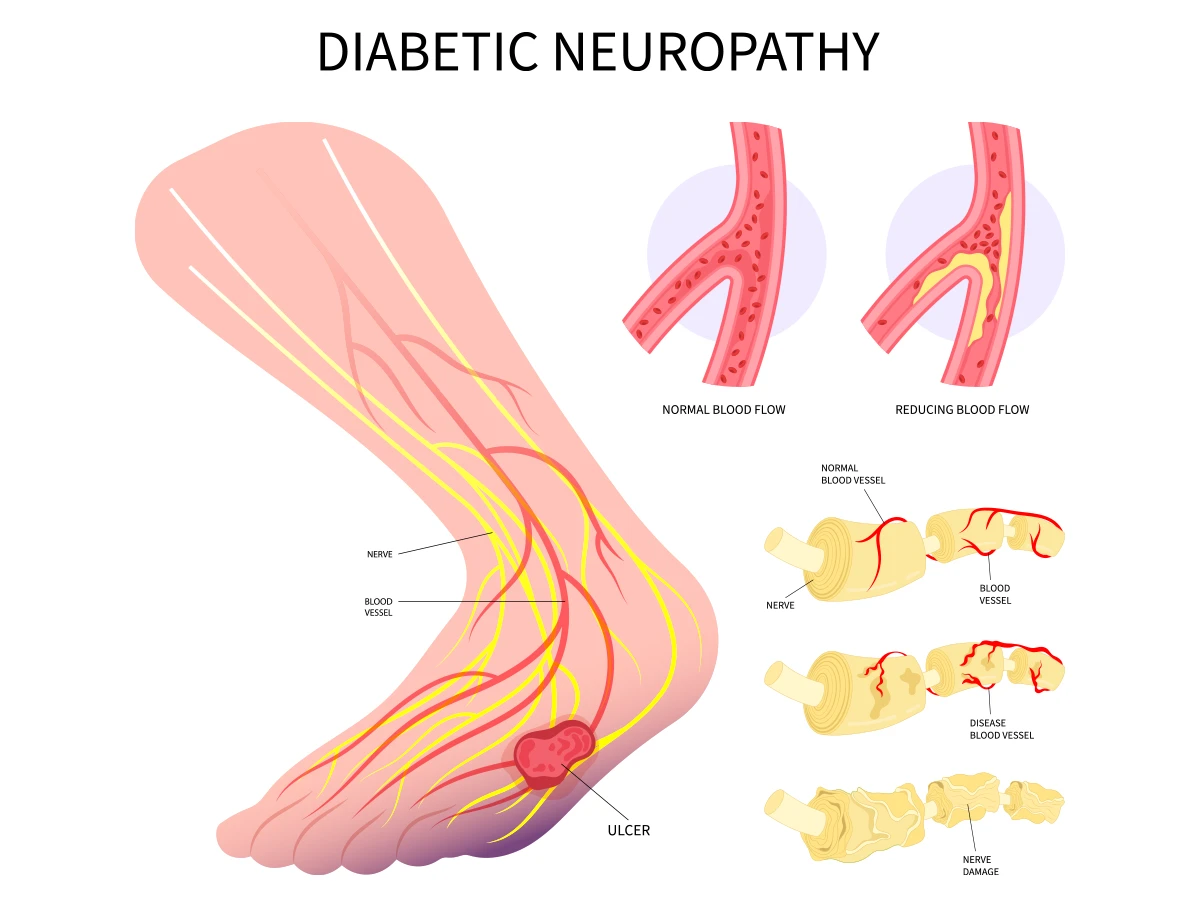
Over time, high blood glucose levels, also called blood sugar, and high levels of fats, such as triglycerides, in the blood from diabetes can damage your nerves. High blood glucose levels can also damage the small blood vessels that nourish your nerves with oxygen and nutrients. Without enough oxygen and nutrients, your nerves cannot function well.
Details
Diabetic neuropathy is nerve damage that can happen when you have diabetes that's not well controlled. It can happen in many ways, and they all seem to be related to blood sugar levels being too high for too long.
"Although the exact mechanism of diabetic neuropathy is not known, there are a number of ways elevated blood sugar can cause neuropathy," says Laura Rosow, MD, a neurologist at the University of California San Francisco Weill Institute for Neurosciences.
"One way is by interfering with chemical pathways within nerves that allow them to transmit signals. Another way is by causing damage to tiny blood vessels that supply the nerves with nutrients and oxygen. Longer duration of diabetes and higher average blood sugar levels are both associated with an increased risk of developing neuropathy."
To prevent it, work with your doctor to manage your blood sugar. Many people with diabetes will have this complication, but it may be prevented by taking your medicine and taking other steps to improve your health.
You may hear your doctor mention the four types of diabetes-related neuropathy: peripheral, autonomic, proximal, and focal.
What Is Diabetic Peripheral Neuropathy?
Diabetic peripheral neuropathy is nerve damage in your peripheral nervous system caused by chronically high blood sugar and diabetes. Peripheral nerves include everything outside your brain and spinal cord, or the central nervous system. This type of neuropathy leads to numbness, loss of sensation, and, sometimes, pain in your feet, legs, or hands.
"Most commonly, diabetes affects the longest nerves in the body first, including the nerves in the feet," Rosow says. "This can manifest as numbness, pain, tingling, or weakness in the feet and toes and may cause issues with walking and balance. As this type of neuropathy progresses, it may creep upward towards the knees and can eventually involve the hands as well, potentially leading to issues with fine motor control."
As many as 60%-70% of all people with diabetes eventually develop diabetic peripheral neuropathy, although not all may have pain. Yet this nerve damage is not inevitable. Studies have shown that people with diabetes can lower their risk of developing nerve damage by keeping their blood sugar levels as close to normal as possible.
Symptoms of diabetic peripheral neuropathy
People describe the early symptoms of peripheral neuropathy in many ways. You may feel:
* Tingling
* Numbness (which may become permanent)
* Burning (especially in the evening)
* Pain, which can be sharp
* Pins and needles
* Prickling
* Cold
* Pinching
* Buzzing
* Deep stabs
* Cramps
The symptoms are often worse at night. Be on the lookout for these changes in how you feel:
* Touch sensitivity. You may feel heightened sensitivity to touch or a tingling or numbness in your toes, feet, legs, or hands.
* Muscle weakness. Chronically elevated blood sugars can also damage nerves that tell muscles how to move. This can lead to muscle weakness. You may have trouble walking or getting up from a chair. You may also have trouble grabbing things or carrying things with your hands.
* Balance problems. You may feel more unsteady than usual and uncoordinated when you walk. This happens when the body adapts to changes brought on by muscle damage.
How to treat diabetic peripheral neuropathy
Early symptoms usually get better when your blood sugar is under control. There are medications to help manage the discomfort.
Other steps you can take to avoid or help with the symptoms include:
* Check your feet and legs daily. Look for blisters, calluses, and cuts.
* Apply lotion if your feet are dry. But avoid getting lotion in between your toes; this area should be kept dry.
* Care for your nails regularly (go to a podiatrist if necessary).
* Wear properly fitting footwear. Some people with bone abnormalities may need custom shoes to redistribute pressure.
* Wear your shoes most of the time to avoid injury.
* People with claudication may need a referral to a doctor or surgeon who specializes in poor circulation.
* Control blood sugar, cholesterol, and high blood pressure.
* If you smoke, quit.
What Is Diabetic Autonomic Neuropathy?
Diabetic autonomic neuropathy is caused by diabetes-related nerve damage to your autonomic nervous system. Your autonomic nervous system is the part of your peripheral nervous system that controls your body's involuntary or automatic functions, including the pumping of your heart, blood pressure, digestion, and temperature. Autonomic nerves connect your brain to your internal organs. This type of diabetic neuropathy usually affects the digestive system, especially the stomach. It can also affect the heart, blood vessels, urinary system, and sex organs.
This type of diabetic neuropathy isn't well understood compared to other types. But it may come with more risk for heart-related complications and death. Some studies suggest that about 20% of people with diabetes have signs of abnormal heart function. Most people who have diabetic autonomic neuropathy will have other types of peripheral neuropathy, too.
Diabetic autonomic neuropathy can make it harder to notice signs of your blood sugar being low. You may have trouble controlling your body temperature; you may sweat a lot. You may have trouble seeing when you turn off the lights because your eyes don't adjust like they should. You may also have many other signs in your digestive system, circulatory system, bladder, and sex organs.
Symptoms of diabetic autonomic neuropathy in your digestive system
Symptoms include:
* Bloating
* Diarrhea
* Constipation
* Heartburn
* Nausea
* Vomiting
* Feeling full after small meals
How to manage the symptoms of diabetic autonomic neuropathy in your digestive system
You may need to eat smaller meals and take medication to treat them.
Symptoms of diabetic autonomic neuropathy in blood vessels
Common symptoms may include:
* Blacking out when you stand up quickly
* Faster heartbeat
* Dizziness
* Low blood pressure
How to manage the symptoms of diabetic autonomic neuropathy in blood vessels
Avoid standing up too quickly. You may also need to wear special stockings (ask your doctor about them) and take medicine.
Symptoms of diabetic autonomic neuropathy in male sex organs
People assigned male at birth may not be able to have or keep an erection, or they may have "dry" or reduced ejaculations.
How to manage the symptoms of diabetic autonomic neuropathy in people assigned male at birth
See your doctor, because there are other possible causes besides diabetes. Treatment may include:
* Counseling
* Penile implant or injections
* Vacuum erection device
* Medication
Symptoms of diabetic autonomic neuropathy in female sex organs
People assigned female at birth may have less vaginal lubrication. Diabetic autonomic neuropathy also may make it hard to have an orgasm, so you may have fewer or no orgasms.
How to manage the symptoms of diabetic autonomic neuropathy in people assigned female at birth
See your doctor. Treatment options include:
* Counseling
* Estrogen
* Vaginal estrogen creams, suppositories, and rings
* Medications to help sex not feel painful
* Lubricants
Symptoms of diabetic autonomic neuropathy in the urinary system
You may have:
* Trouble emptying your bladder completely
* Bloating
* Incontinence (leaking urine)
* More bathroom trips to pee at night
How to manage the symptoms of diabetic autonomic neuropathy in the urinary system
Tell your doctor. Treatments may include:
* Medication
* Inserting a catheter into the bladder to release urine (self-catheterization)
* Surgery
What Is Diabetic Proximal Neuropathy?
Diabetic proximal neuropathy happens when there's damage from diabetes to nerves in your thighs, hips, buttocks, or legs. It's more common when you have type 2 diabetes and are 50 or older.
Symptoms of diabetic proximal neuropathy
This type of neuropathy may cause pain in the thighs, hips, or buttocks. The pain is usually on one side. It can also lead to weakness in your legs. You may also notice:
* Shrinking of the muscles in your legs
* Trouble getting up after sitting
* Pain in your stomach or chest
* Weight loss
* Loss of your reflexes
How to treat the symptoms of diabetic proximal neuropathy
Most people with this condition need treatment. Your doctor may recommend medication and physical therapy to help you with your weakness, pain, or other symptoms.
What Is Diabetic Focal Neuropathy?
Diabetic focal neuropathy affects only one particular nerve. It's also called mononeuropathy. This type can appear suddenly, most often in the head, torso, or leg. It can cause muscle weakness or pain along with a variety of symptoms, depending on the nerve that's affected.
Symptoms of diabetic focal neuropathy
* Double vision
* Trouble focusing with your eyes
* Pain or ache behind an eye
* Eye pain
* Paralysis on one side of the face (Bell's palsy)
* Severe pain, tingling, or burning in a certain area, such as the lower back or leg(s)
* Chest or belly pain that is sometimes mistaken for another condition such as heart attack or appendicitis
* Loss of feeling or numbness in the affected part of your body
How to manage the symptoms of diabetic focal neuropathy
Tell your doctor about your symptoms. Focal neuropathy is painful and unpredictable. But it tends to improve by itself over weeks or months. It usually doesn't cause long-term damage.
Additional Information
Diabetic neuropathy includes various types of nerve damage associated with diabetes mellitus. The most common form, diabetic peripheral neuropathy, affects 30% of all diabetic patients. Studies suggests that cutaneous nerve branches, such as the sural nerve, are involved in more than half of patients with diabetes 10 years after the diagnosis and can be detected with high-resolution magnetic resonance imaging. Symptoms depend on the site of nerve damage and can include motor changes such as weakness; sensory symptoms such as numbness, tingling, or pain; or autonomic changes such as urinary symptoms. These changes are thought to result from a microvascular injury involving small blood vessels that supply nerves (vasa nervorum). Relatively common conditions which may be associated with diabetic neuropathy include distal symmetric polyneuropathy; third, fourth, or sixth cranial nerve palsy; mononeuropathy; mononeuropathy multiplex; diabetic amyotrophy; and autonomic neuropathy.
Diabetic neuropathy can be a debilitating condition. You may feel helpless or worried about serious complications that could arise from having diabetic neuropathy. Advocate Health Care’s team of expert neurologists are here to help you manage diabetic neuropathy and help you improve your quality of life.
Diabetic neuropathy arises from prolonged mismanagement of blood sugar levels in people with diabetes. Elevated glucose levels inflict harm on the peripheral nerves throughout the body, especially nerves in your feet and legs.
The severity of diabetic neuropathy depends on the nerves involved and can cause symptoms such as pain, tingling, numbness and weakness in the feet, legs and hands. Furthermore, it can also cause adverse effects on cardiac function, circulation, kidney health and digestion.
What is diabetic neuropathy?
A side effect of diabetes is damage to your nerves. This damage impacts the nerves’ ability to carry messages to different parts of your body. With diabetic neuropathy, this roadblock for the communication pathway happens in the legs and feet but could happen anywhere within the peripheral nervous system.
Your doctor may refer to this nerve damage by different terms based on what nerves are impacted from high blood sugar levels.
The four types of diabetic neuropathy are:
* Autonomic neuropathy: Damage to the autonomic nerves that control involuntary actions such as breathing, regulating body temperature and blood pressure.
* Mononeuropathy: Damage to a single nerve, usually to nerves close to the skin or near a bone.
* Peripheral neuropathy: Damage to the peripheral nerves in the hands, arms, legs and feet.
* Proximal neuropathy: Damage to the nerves in the thighs, hips, buttock and legs. This is more common if you have type 2 diabetes.
It appears to me that if one wants to make progress in mathematics, one should study the masters and not the pupils. - Niels Henrik Abel.
Nothing is better than reading and gaining more and more knowledge - Stephen William Hawking.
Offline
Pages: 1