Math Is Fun Forum
You are not logged in.
- Topics: Active | Unanswered
#1 Re: This is Cool » Miscellany » Today 00:06:35
2527) Ammonium Phosphate
Gist
Ammonium phosphate is a group of water-soluble inorganic salts, commonly (triammonium phosphate), formed by reacting ammonia with phosphoric acid. It is a white, crystalline solid with an ammonia odor, primarily used as a high-nutrient, readily absorbed fertilizer (N-P-K), a fire-extinguishing agent, and in food processing.
Ammonium phosphate, including Monoammonium Phosphate (MAP) and Diammonium Phosphate (DAP), is primarily used as a high-nutrient, water-soluble fertilizer, providing nitrogen and phosphorus for agricultural, forestry, and lawn applications. Key uses also include fire suppression in ABC dry chemical extinguishers, food-grade additives (leavening/yeast nutrition), and industrial applications like fire retardants for wood/paper.
Summary
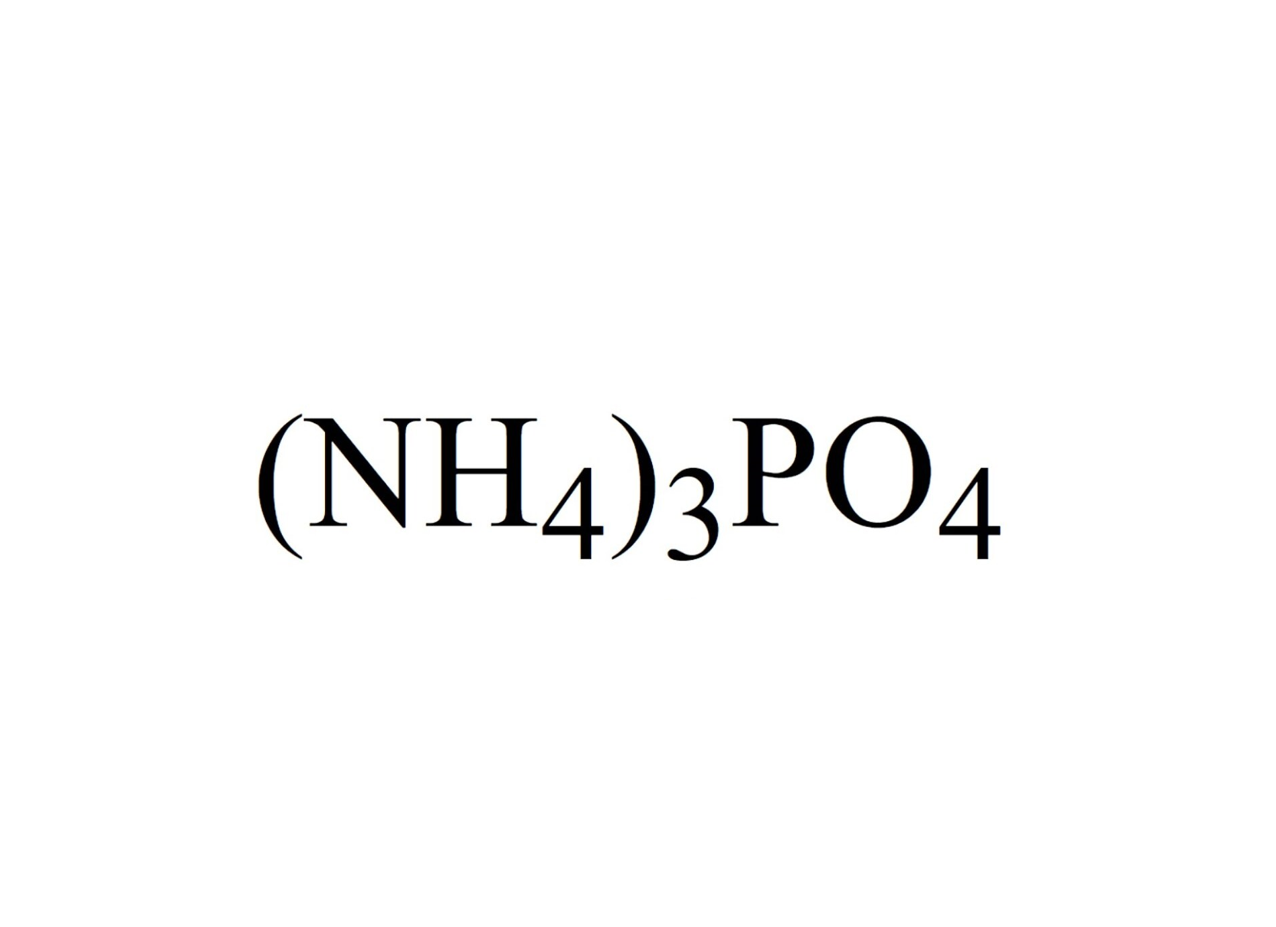
Ammonium phosphate is the inorganic compound with the formula (NH4)3PO4. It is the ammonium salt of orthophosphoric acid. A related double salt, (NH4)3PO4.(NH4)2HPO4 is also recognized but is impractical to use. Both triammonium salts evolve ammonia. In contrast to the unstable nature of the triammonium salts, the diammonium phosphate (NH4)2HPO4 and monoammonium salt (NH4)H2PO4 are stable materials that are commonly used as fertilizers to provide plants with fixed nitrogen and phosphorus.
Details
Ammonium phosphate is an unstable compound made of ammonium and phosphate salt with the chemical formula (NH4)3PO4.
Ammonium phosphate is manufactured by mixing together ammonium phosphate and urea in a molten condition. Considerable heat is generated which transform the ammonium phosphate to the molten state. It includes a group of nitrogen phosphorus materials: mono ammonium phosphates and diammonium phosphates, mixtures of the two or combinations with ammonium nitrate or ammonium sulfate.
Uses of Ammonium phosphate – (NH4)3PO4
* Ammonium phosphate is a broad generic name for a variety of fertilizer materials containing both nitrogen and phosphate.
* Ammonium phosphates are becoming increasingly important as a source of available P2O5. P2O5 is somewhat higher in ammonium phosphates than in triple superphosphate.
* Mainly used as a solid fertilizer but can also be utilized in solution.
* Used as components of intumescent paints and mastics where they function as an acid catalyst.
* Used in paints in which pentaerythritol is the carbonific component and melamine is the specific compound.
Frequently Asked Questions – FAQs
Q1: What is ammonium phosphate used for?
A1: Ammonium phosphate is a high source of elemental nitrogen used as an ingredient in certain fertilizers. This is also used in thermoplastic formulations as a flame retardant.
Q2: What is ammonium phosphate fertilizer?
AmmA2: onium phosphate adds nitrogen and phosphates to the lawns which lack the nutrients. Ammonium phosphate is a fast-release fertilizer that can be used for new grass planting, cleaning, monitoring, or lawn renovation.
Q3: What’s the difference between ammonia and ammonium?
A3: Ammonia contains one nitrogen and three hydrogens opposed to one nitrogen and four hydrogens formed by ammonium. Ammonia is a low, unionized foundation. In the other side, it is ionized to ammonium. Some major distinctions between the two is that Ammonia gives off a heavy odour while Ammonium does not smell at all.
Q4: Is ammonium phosphate an acid?
A4: Ammonium phosphate is an orthophosphoric acid ammonium salt. Formula (NH4)3PO4 is a highly unstable compound. It is elusive, and of little economic interest due to its uncertainty.
Q5: Why is ammonium phosphate soluble in water?
A5: It is soluble in water, and ammonia loses and the acid phosphate (NH4)(H2PO4) is formed as the aqueous solution on the boil. Ammonium phosphate is a high source of elemental nitrogen used as an ingredient in certain fertilizers. This is also used in thermoplastic formulations as a flame retardant.
Additional Information:
Key Properties and Everyday Uses of Ammonium Phosphate
Ammonium phosphate is a salt that is made up of ammonia and phosphorus, and its chemical formula is (NH4)3PO4. However, this is a very unstable salt and due to how unstable it is, it is not exactly a salt worth a lot of commercial value. It can be formed by combining phosphoric acid along with ammonia, or by adding a lot more ammonia with acid phosphate.
For it to be used commercially, it is mostly obtained from crystalline powders.
Major Uses of Ammonium Phosphate:
* Agriculture & Fertilizer: High-concentration, soluble fertilizers (MAP/DAP) provide quick nutrients to plants and are used in foliar feeding and irrigation.
* Fire Retardant & Extinguisher: Used as an ingredient in dry chemical powder extinguishers and in flame-retardant coatings for materials like paper and wood.
* Food Industry: Functions as a leavening agent in baking powders and as a dough conditioner, as well as a yeast nutrient for wine production.
* Industrial Applications: Acts as a fluxing agent in soldering, in the production of intumescent paints, and as a raw material for producing electronics such as piezo-electric crystals.
* Water Treatment: Sometimes used in pH regulation to assist with ammonia removal.
Key Types:
* MAP (Monoammonium Phosphate): Often used for direct soil application, it is highly soluble.
* DAP (Diammonium Phosphate): Widely used for its high nitrogen and phosphorus content.
The Formula of Ammonium Phosphate
The molecular formula for this salt is (NH4)3PO4 and it is also referred to as triammonium phosphate or diazonium hydrogen phosphate.
#2 Re: Dark Discussions at Cafe Infinity » crème de la crème » Today 00:03:41
2464) Edwin McMillan
Gist:
Work
The heaviest element existing in nature is uranium, which has an atomic number of 92. All of the heavier elements are radioactive and quickly decay. It has become apparent, however, that they can be created by bombarding atoms with particles and atomic nuclei. In 1940 Edwin McMillan used a particle accelerator to radiate uranium with neutrons and proved that an element with an atomic number of 93 had been created. It was named neptunium. McMillan also contributed to the mapping of additional heavy elements and isotopes.
Summary
Edwin Mattison McMillan (September 18, 1907 – September 7, 1991) was an American physicist credited with being the first to produce a transuranium element, neptunium. For this, he shared the 1951 Nobel Prize in Chemistry with Glenn Seaborg.
A graduate of California Institute of Technology, he earned his doctorate from Princeton University in 1933, and joined the Berkeley Radiation Laboratory where he discovered oxygen-15 and beryllium-10. During World War II, he worked on microwave radar at the MIT Radiation Laboratory, and then on sonar at the Navy Radio and Sound Laboratory. In 1942 he joined the Manhattan Project, the wartime effort to create atomic bombs, and helped establish its Los Alamos Laboratory where the bombs were designed. He led teams working on the gun-type nuclear weapon design, and also participated in the development of the implosion-type nuclear weapon.
McMillan co-invented the synchrotron with Vladimir Veksler, and after the war he returned to the Berkeley Radiation Laboratory to build them. He was appointed associate director of the Radiation Laboratory in 1954 and promoted to deputy director in 1958. He became director upon the death of lab founder Ernest Lawrence later that year, and remained director until his retirement in 1973.
Details
Edwin Mattison McMillan (born September 18, 1907, Redondo Beach, California, U.S.—died September 7, 1991, El Cerrito, California) was an American nuclear physicist who shared the Nobel Prize for Chemistry in 1951 with Glenn T. Seaborg for his discovery of element 93, neptunium, the first element heavier than uranium, thus called a transuranium element.
McMillan was educated at the California Institute of Technology and at Princeton University, where he earned a Ph.D. in 1932. He then joined the faculty of the University of California, Berkeley, and became a full professor in 1946 and director of the Lawrence Radiation Laboratory in 1958. He retired in 1973.
While studying nuclear fission, McMillan discovered neptunium, a decay product of uranium-239. In 1940, in collaboration with Philip H. Abelson, he isolated the new element and obtained final proof of his discovery. Neptunium was the first of a host of transuranium elements that provide important nuclear fuels and contributed greatly to the knowledge of chemistry and nuclear theory. During World War II McMillan also did research on radar and sonar and worked on the first atomic bomb. He served as a member of the General Advisory Committee to the U.S. Atomic Energy Commission from 1954 to 1958.
McMillan also made a major advance in the development of Ernest Lawrence’s cyclotron, which in the early 1940s had run up against its theoretical limit. Accelerated in an ever-widening spiral by synchronized electrical pulses, atomic particles in a cyclotron are unable to attain a velocity beyond a certain point, as a relativistic mass increase tends to put them out of step with the pulses. In 1945, independently of the Russian physicist Vladimir I. Veksler, McMillan found a way of maintaining synchronization for indefinite speeds. He coined the name synchrocyclotron for accelerators using this principle. McMillan was chairman of the National Academy of Sciences from 1968 to 1971.

#3 Jokes » Onion Jokes » Today 00:03:19
- Jai Ganesh
- Replies: 0
Q: What's round, white and giggles?
A: A tickled onion!
* * *
Q: What's the difference between a viola and an onion?
A: No one cries when you cut up a viola.
* * *
Q: What do you call a hobbit with a healthy appetite?
A: Lord of the Onion Rings.
* * *
Q: Where did the onion go to have a few drinks?
A: The Salad Bar!
* * *
#4 Dark Discussions at Cafe Infinity » Comfort Quotes - V » Today 00:02:49
- Jai Ganesh
- Replies: 0
Comfort Quotes - V
1. I love to take up projects outside my comfort zone and give them my best. - Shriya Saran
2. Hope, the best comfort of our imperfect condition. - Edward Gibbon
3. In all life one should comfort the afflicted, but verily, also, one should afflict the comfortable, and especially when they are comfortably, contentedly, even happily wrong. - John Kenneth Galbraith
4. I would not say that female cosmonauts are not welcomed in the Russian space program. I must say, however, that all spaceflight hardware, including spacesuits and spacecraft comfort assuring systems, were designed mostly by men and for men. - Valentina Tereshkova
5. You can never get to a place of comfort in this business. As soon as you hit that little cushy spot, somebody's gonna kick you out. So I have a constant need to do it better. - Charlize Theron
6. You should not remain in your comfort zone; if you want to make it big, you must challenge yourself, get out of your comfort zone, and succeed in doing well outside of your comfort areas. - Rohit Sharma
7. A wealthy landowner cannot cultivate and improve his farm without spreading comfort and well-being around him. Rich and abundant crops, a numerous population and a prosperous countryside are the rewards for his efforts. - Antoine Lavoisier
8. When you see in places like Africa and parts of Asia abject poverty, hungry children and malnutrition around you, and you look at yourself as being people who have well being and comforts, I think it takes a very insensitive, tough person not to feel they need to do something. - Ratan Tata
9. When I feel stressed, I turn to food for comfort, but I don't like to diet and I'm not good at it. - Salma Hayek
10. Religion works. I know there's comfort there, a crash pad. It's something to explain the world and tell you there is something bigger than you, and it is going to be alright in the end. It works because it's comforting. - Brad Pitt.
#5 This is Cool » Dislocation » Yesterday 17:42:21
- Jai Ganesh
- Replies: 0
Dislocation
Gist
A joint dislocation is a traumatic injury where bones are forced out of their normal position, often caused by falls, sports, or accidents. Symptoms include severe pain, visible deformity, swelling, and inability to move the joint. Treatment involves immediate medical reduction, immobilization, and rehab, taking several weeks to heal.
A dislocation is the displacement of bones from their normal positions within a joint, typically caused by trauma, or a general disruption of established order. It results in severe pain, deformity, and limited movement. Synonyms include displacement, disruption, separation, misalignment, and luxation.
Summary
A joint dislocation, also called luxation, occurs when there is an abnormal separation in the joint, where two or more bones meet. A partial dislocation is referred to as a subluxation. Dislocations are commonly caused by sudden trauma to the joint like during a car accident or fall. A joint dislocation can damage the surrounding ligaments, tendons, muscles, and nerves. Dislocations can occur in any major joint (shoulder, knees, hips) or minor joint (toes, fingers). The most common joint dislocation is a shoulder dislocation.
The treatment for joint dislocation is usually by closed reduction, that is, skilled manipulation to return the bones to their normal position. Only trained medical professionals should perform reductions since the manipulation can cause injury to the surrounding soft tissue, nerves, or vascular structures.
Signs and symptoms
The following symptoms are common with any type of dislocation.
* Intense pain
* Joint instability
* Deformity of the joint area
* Reduced muscle strength
* Bruising or redness of the joint area
* Difficulty moving joint
* Stiffness
Complications
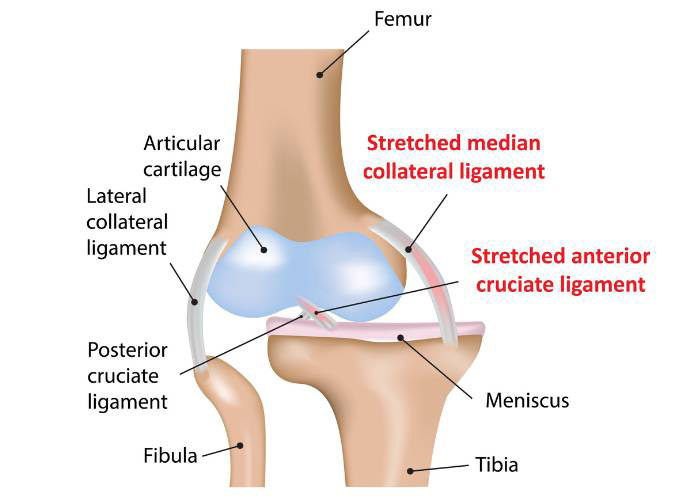
Joint dislocations can have associated injuries to surrounding tissues and structures, including muscle strains, ligament and tendon injuries, neurovascular injuries, and fractures. Depending on the location of the dislocation, there are different complications to consider.
In the shoulder, vessel and nerve injuries are rare, but can cause many impairments and requires a longer recovery process. Knee dislocations are rare, but can be complicated by injuries to arteries and nerves, leading to limb-threatening complications. Degenerative changes following injury to the wrist are common, with many developing arthritis. Persistent nerve pain years after the initial trauma is not uncommon. Most finger dislocations occur in the middle of the finger (PIP) and are complicated by ligamentous injury (volar plate). Since most dislocations involving the joint near the fingertip (DIP joint) are due to trauma, there is often an associated fracture or tissue injury. Hip dislocations are at risk for osteonecrosis of the femoral head, femoral head fractures, the development of osteoarthritis, and sciatic nerve injury. Given the strength of ligaments in the foot and ankle, ankle dislocation-fractures can occur.
PIP: Proximal Interphalangeal
DIP : Distal Interphalangeal.
Details
A dislocation is the medical term for bones in one of your joints being pushed out of their usual place. They can affect any joint in your body. Dislocations almost always happen during traumas or sports injuries. Never try to push or force a dislocated joint back into place on your own.
Overview:
What is a dislocation?
Dislocation is the medical term for bones in one of your joints being knocked or pushed out of their usual place.
A joint is any place in your body where two bones meet. They’re part of your skeletal system. You have hundreds of joints throughout your body. They support your body from head to toe.
Any joint in your body can be dislocated. Dislocations can be painful and make it hard (or impossible) to use your affected joint. Dislocations can also strain or tear the tissues around your joints, including your:
* Muscles.
* Nerves.
* Tendons.
* Blood vessels.
Go to the emergency room if you experience a dislocation or can’t use a part of your body. Never try to force a joint back into place on your own.
Types of dislocations
Healthcare providers classify dislocations based on how far the bones in your joints were moved:
* Complete dislocations (luxation): A complete dislocation happens when the bones in your joint are totally separated and pushed out of place.
* Subluxation: Subluxation is the medical term for a partial dislocation. You have a subluxation if something pulls your joint apart and the bones still touch, just not as completely as usual.
How common are dislocations?
Dislocations are very common. The most commonly dislocated joints include:
* Fingers.
* Shoulders.
* Knees.
* Elbows.
* Hips.
* Jaws.
Symptoms and Causes:
What are the symptoms of a dislocation?
The most common symptoms of a dislocation include:
* Pain.
* Swelling.
* Bruising.
* The joint looking noticeably different or out of place.
* Being unable to move or use your joint.
* A feeling of instability or like the joint is weaker than usual.
Your symptoms will vary depending on which joint is affected and which type of dislocation you experience.
What causes dislocations?
Any force that’s strong enough to push a joint out of place can cause a dislocation. The most common causes are:
* Car accidents.
* Sports injuries.
* Falls.
Dislocation risk factors
Anyone can experience a dislocation, but some groups are more at risk, including people who:
* Play contact sports.
* Are older than 65.
* Have Ehlers-Danlos syndrome or another health condition that weakens connective tissues (including ligaments, tendons or muscles) around joints.
What are common complications of a dislocation?
The most common complications of dislocations are damage to the bones and tissues around your joint, including:
* Muscle strains.
* Ligament and tendon sprains.
* Nerve damage.
* Damaged blood vessels.
* Bone fractures (broken bones).
Diagnosis and Tests:
How are dislocations diagnosed?
A healthcare provider will diagnose a dislocation with a physical exam. They’ll examine your joint and the area around it. Tell your provider about any symptoms you’re experiencing and what you were doing right before your injury.
What tests are done to diagnose dislocations?
Your provider might need some of the following imaging tests to diagnose damage inside your body after a dislocation:
* X-rays.
* Magnetic resonance imaging (MRI).
* A computed tomography (CT) scan.
* Ultrasound.
Management and Treatment:
How are dislocations treated?
The most important treatment for a dislocation is putting your joint back in its correct place. Your healthcare provider might call this a relocation, manipulation or a closed reduction. They’ll carefully push and pull on the dislocated joint to move it back into alignment. Your provider might give you anesthesia or sedatives (medications that make you sleepy or feel less pain) before they relocate your joint. You might need X-rays before and after a relocation to check for broken bones in or around your joint.
Never try to reposition a dislocated joint on your own. Don’t let anyone other than a healthcare provider push your joint back into place. If you experience a dislocation, go to the emergency room right away. If possible, go to the emergency room instead of an urgent care or other clinic if you experience a dislocation. The ER is the best place to go because healthcare providers in the emergency room can get you any imaging tests and any medication you’ll need before and after they put your joint back into alignment.
Depending on which joint was dislocated, you might need other treatment, including:
* Immobilization: Wearing a splint, sling or brace will hold your joint in place while it heals.
* Medication: Your provider will tell you which medication you can take to reduce pain and inflammation. Don’t take over-the-counter (OTC) pain relievers for more than 10 days in a row without talking to your provider.
* Rest: You’ll need to avoid any physical activity that uses or puts stress on your affected joint.
Dislocation surgery
If the injury that dislocated your joint caused other damage inside your body, you might need surgery to repair it. Some people with severe dislocations need surgery to reset their joint if a closed reduction doesn’t work.
What is the recovery time after a dislocation?
Most people need at least a few weeks to recover after a dislocation. How long it takes your joint to heal depends on which joint was dislocated and if you experienced any other injuries.
A dislocated finger may feel back to normal in three weeks. A bigger joint like your shoulder could take several months or longer to heal. Your provider will tell you what to expect.
Ask your provider how long you need to wait before you resume physical activities. If you return to playing sports or working out before your joint has fully healed, you have an increased risk of reinjuring it — including dislocating it again.
Additional Information:
What are dislocations in children?
A dislocation is a joint injury. It occurs when the ends of 2 connected bones come apart. It is not common in younger children. This is because their growth plates are weaker than the muscles or tendons. Growth plates are the areas at the end of long bones where the bones grow. Dislocations happen more often among teens.
What causes a dislocation in a child?
A dislocation happens when extreme force is put on a ligament. It can occur if your child falls or takes a hit to the body, such as while playing a contact sport.
Ligaments are flexible bands of fibrous tissue. They join various bones and cartilage. They also bind the bones in a joint together. The hip and shoulder joints, for example, are called ball and socket joints. Lots of force on the ligaments in these joints can cause the head of the bone (ball) to partly or fully come out of the socket. The most commonly dislocated joint is the shoulder.
What are the symptoms of a dislocation in a child?
Each child may feel symptoms a bit differently. But below are the most common symptoms a child will have in the dislocated area:
* Pain
* Swelling
* Bruising or redness
* Numbness or weakness
* Deformity
* Trouble using or moving the joint in a normal way
These symptoms may seem like other health problems. Make sure your child sees his or her healthcare provider for a diagnosis.
How is a dislocation diagnosed in a child?
Your child’s healthcare provider makes the diagnosis with an exam. During the exam, he or she will ask about your child’s health history and how the injury happened.
Your child may also need:
* X-rays. This test makes images of internal tissues, bones, and organs.
* MRI. This test uses a combination of large magnets, radiofrequencies, and a computer to make detailed images of organs and structures within the body. An MRI is usually done only if surgery may be needed.
How is a dislocation treated in a child?
Treatment will depend on your child’s symptoms, age, and general health. It will also depend on how severe the condition is.
All dislocations need medical care right away to prevent a bone from breaking. Untreated dislocations can lead to serious problems. Treatment may include:
* RICE. This stands for rest, ice, compression, and elevation of the dislocated area.
* Repositioning. Sometimes the bone ends may go back into place by themselves. If not, your child’s healthcare provider will need to manually move the bones back into their proper position so the joint can heal.
* Splint or cast. This treatment keeps the dislocated area in place while it heals. It also protects the area from motion or use.
* Medicine. Certain medicines can ease pain.
* Traction. This treatment gently stretches the muscles and tendons around the bone ends to help with the dislocation. It uses pulleys, strings, weights, and a metal frame attached over or on the bed.
* Surgery. Your child may need this treatment if the dislocation happens again and again. It may also be done if a muscle, tendon, or ligament is badly torn.
Your child’s healthcare provider may also recommend:
* Limits on activity while the dislocation heals
* Crutches or a wheelchair so your child can move around during healing
* Physical therapy to stretch and strengthen the injured muscles, ligaments, and tendons
Key points about dislocations in children
* A dislocation happens when extreme force is put on a ligament, causing the ends of 2 bones to come apart.
* A dislocation can cause pain, swelling, and weakness. Your child may also have trouble moving the injured area.
* An exam and X-rays are often needed to diagnose a dislocation.
* The bones must be put back into their proper position so the joint can heal. Other treatments include casts, splints, pain relievers, and surgery.
#6 Re: Jai Ganesh's Puzzles » General Quiz » Yesterday 16:48:03
Hi,
#10801. What does the term in Biology Interferon mean?
#10802. What does the term in Biology Interphase mean?
#7 Re: Jai Ganesh's Puzzles » English language puzzles » Yesterday 16:28:58
Hi,
#6007. What does the adjective sloppy mean?
#6008. What does the verd (used with object) slosh mean?
#8 Re: Jai Ganesh's Puzzles » Doc, Doc! » Yesterday 16:08:08
Hi,
#2600. What does the medical term Lacunar ligament or Gimbernat's ligament mean?
#9 Re: Jai Ganesh's Puzzles » 10 second questions » Yesterday 15:48:14
Hi,
#9886.
#10 Re: Jai Ganesh's Puzzles » Oral puzzles » Yesterday 15:38:26
Hi,
#6379.
#11 Re: Exercises » Compute the solution: » Yesterday 15:27:40
Hi,
2740.
#12 Science HQ » Liver » Yesterday 15:03:27
- Jai Ganesh
- Replies: 0
Liver
Gist
The liver is a vital, large, reddish-brown organ located in the upper right abdominal cavity, performing over 500 essential tasks including detoxification, bile production for digestion, and energy storage. It serves as a metabolic powerhouse, converting nutrients from food into energy, clearing harmful substances from the blood, and regulating blood clotting.
The liver is a vital organ performing over 500 essential functions, primarily acting as the body's chemical factory and filter. Key functions include metabolizing macronutrients (carbs, fats, proteins), detoxifying harmful substances (drugs, alcohol), producing bile for fat digestion, storing energy (glycogen) and nutrients, and synthesizing blood clotting proteins.
Summary
The liver is a major metabolic organ exclusively found in vertebrates, which performs many essential biological functions such as detoxification of the organism, and the synthesis of various proteins and various other biochemicals necessary for digestion and growth. In humans, it is located in the right upper quadrant of the abdomen, below the diaphragm and mostly shielded by the lower right rib cage. Its other metabolic roles include carbohydrate metabolism, the production of a number of hormones, conversion and storage of nutrients such as glucose and glycogen, and the decomposition of red blood cells. Anatomical and medical terminology often use the prefix hepat- from ἡπατο-, from the Greek word for liver, such as hepatology, and hepatitis.
The liver is also an accessory digestive organ that produces bile, an alkaline fluid containing cholesterol and bile acids, which emulsifies and aids the breakdown of dietary fat. The gallbladder, a small hollow pouch that sits just under the right lobe of liver, stores and concentrates the bile produced by the liver, which is later excreted to the duodenum to help with digestion. The liver's highly specialized tissue, consisting mostly of hepatocytes, regulates a wide variety of high-volume biochemical reactions, including the synthesis and breakdown of small and complex organic molecules, many of which are necessary for normal vital functions. Estimates regarding the organ's total number of functions vary, but is generally cited as being around 500. For this reason, the liver has sometimes been described as the body's chemical factory.
It is not known how to compensate for the absence of liver function in the long term, although liver dialysis techniques can be used in the short term. Artificial livers have not been developed to promote long-term replacement in the absence of the liver. As of 2018, liver transplantation is the only option for complete liver failure.
Details
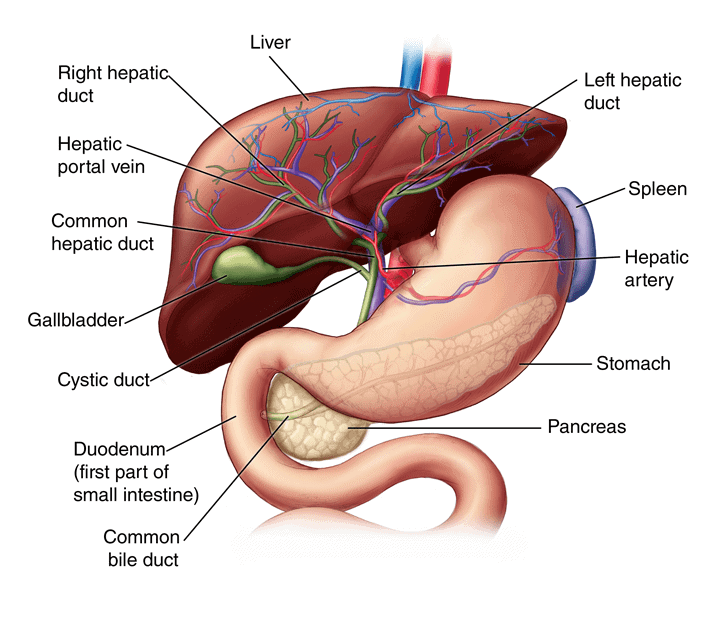
The liver is located in the upper right-hand portion of the abdominal cavity, beneath the diaphragm, and on top of the stomach, right kidney, and intestines.
Shaped like a cone, the liver is a dark reddish-brown organ that weighs about 3 pounds.
There are 2 distinct sources that supply blood to the liver, including the following:
* Oxygenated blood flows in from the hepatic artery
* Nutrient-rich blood flows in from the hepatic portal vein
The liver holds about one pint (13%) of the body's blood supply at any given moment. The liver consists of 2 main lobes. Both are made up of 8 segments that consist of 1,000 lobules (small lobes). These lobules are connected to small ducts (tubes) that connect with larger ducts to form the common hepatic duct. The common hepatic duct transports the bile made by the liver cells to the gallbladder and duodenum (the first part of the small intestine) via the common bile duct.
Functions of the liver
The liver regulates most chemical levels in the blood and excretes a product called bile. This helps carry away waste products from the liver. All the blood leaving the stomach and intestines passes through the liver. The liver processes this blood and breaks down, balances, and creates the nutrients and also metabolizes drugs into forms that are easier to use for the rest of the body or that are nontoxic. More than 500 vital functions have been identified with the liver. Some of the more well-known functions include the following:
* Production of bile, which helps carry away waste and break down fats in the small intestine during digestion
* Production of certain proteins for blood plasma
* Production of cholesterol and special proteins to help carry fats through the body
* Conversion of excess glucose into glycogen for storage (glycogen can later be converted back to glucose for energy) and to balance and make glucose as needed
* Regulation of blood levels of amino acids, which form the building blocks of proteins
* Processing of hemoglobin for use of its iron content (the liver stores iron)
* Conversion of poisonous ammonia to urea (urea is an end product of protein metabolism and is excreted in the urine)
* Clearing the blood of drugs and other poisonous substances
* Regulating blood clotting
* Resisting infections by making immune factors and removing bacteria from the bloodstream
* Clearance of bilirubin, also from red blood cells. If there is an accumulation of bilirubin, the skin and eyes turn yellow.
When the liver has broken down harmful substances, its by-products are excreted into the bile or blood. Bile by-products enter the intestine and leave the body in the form of feces. Blood by-products are filtered out by the kidneys, and leave the body in the form of urine.
Additional Information
Your liver performs more than 500 important functions, from filtering blood and processing nutrients to fighting infections. It creates bile and important proteins your body needs. You can’t live without a liver: If your liver fails, you’ll need an organ transplant to survive.
Overview:
What is my liver?
Your liver is the largest internal organ in your body and one of the only organs that can regenerate itself. The liver plays a crucial role in filtering blood, storing energy and producing bile for digestion.
Unfortunately, hundreds of diseases and conditions can damage your liver so it can’t work. Some of these can be life-threatening. Hepatologists, medical specialists who diagnose and treat liver disease, can treat and sometimes cure these diseases. And there are many things that you can do to keep your liver well and working as it should.
Function
Your liver is the biggest organ in your body, and it performs hundreds of functions every day.
What is the liver’s function?
Your liver’s biggest job is filtering harmful substances and waste from your blood. Every day, your liver filters more than 250 gallons of blood. If that wasn’t enough, and among many other duties, your liver also:
* Makes cholesterol that your body uses in different ways
* Helps produce certain hormones, protects your cells and is a key ingredient in bile production
* Makes proteins — like clotting factors that manage bleeding and albumin, which manages fluid pressure in your bloodstream
* Helps keep your blood glucose levels steady by storing glycogen (glucose) and releasing it into your bloodstream to keep your blood sugar levels on an even keel
* Breaks down toxins and germs so they safely leave your body in your pee and poop
* Works by breaking down fats in your blood to produce energy, and if there are too many, they may get stored as extra fat
Anatomy:
Where is my liver located?
Your liver is on the right side of your upper body. It’s located under your ribs, just next to your stomach.
What does my liver look like?
Your liver looks like a spongy, reddish-brown wedge of tissue. The wedge, which may be about the size and shape of a football, may weigh between 3 and 5 pounds.
The liver has two lobes (sections). The lobe on the right is slightly larger than the lobe on the left. Both lobes contain many blood vessels and thousands of smaller lobes (lobules) that are tiny clusters of liver cells (hepatocytes).
Some of the important parts of your liver anatomy include:
* Lobules: These are tiny clusters of liver cells that connect with your bile ducts, the tubes that transport bile from your liver to your small intestine.
* Hepatic veins: These are blood vessels in your liver’s lobes that carry blood through your liver so it can remove waste and toxins that eventually leave your body through your pee and poop.
* Bile ducts: Bile ducts carry the bile that your liver produces out to the rest of your body.
Conditions and Disorders:
What common conditions and disorders can affect my liver?
There are over 100 types of liver diseases, but they fall into a handful of subtypes. Examples include:
* Alcohol-induced hepatitis: Heavy alcohol use can cause acute or chronic hepatitis (inflammation in your liver). If it’s frequent or lasts a long time, it can lead to cirrhosis and liver failure.
* Bile duct obstruction: Conditions that block the flow of bile through your bile ducts can cause it to build up and injure your liver. Gallstones and biliary stricture (narrowing) are some common causes.
* Inherited metabolic disorders: Some of these disorders can cause toxic products to build up in your blood. Hemochromatosis is one example.
* Liver lesions: These are abnormal growths in your liver. Most are benign (noncancerous), including liver cysts and liver hemangiomas. But some abnormal growths are liver cancer, including hepatocellular carcinoma, intrahepatic cholangiocarcinoma (bile duct cancer in your liver) and hepatoblastoma.
* Steatotic (fatty) liver disease: These are conditions that involve fat buildup in your liver. Condition types include alcohol-related liver disease, metabolic dysfunction-associated steatotic liver disease (MASLD) and non-alcohol-related steatohepatitis.
* Toxic hepatitis: Chronic overexposure to toxins, like industrial chemicals or drugs, can cause acute or chronic hepatitis.
* Viral hepatitis: Viral hepatitis infections can become chronic infections that cause chronic liver disease, including hepatitis B and hepatitis C. Hepatitis A is an acute (short-term) infection.
What are common signs and symptoms of liver problems?
Common early symptoms of liver problems include:
* Upper abdominal pain
* Nausea
* Your skin and eyes turning yellow (jaundice)
When liver disease is more advanced and your liver function declines, you may develop many other symptoms, like:
* Confusion or mild cognitive impairment
* Dark-colored pee and light-colored poop
* Fatigue
* Musty-smelling breath
* Swollen belly or legs
What tests can check my liver health?
Healthcare providers may use a combination of tests to check on your liver or to diagnose liver diseases, like:
* Blood tests: Liver function tests measure substances in your blood that your liver produces, like liver enzymes, proteins and bilirubin. High or low levels may indicate liver disease.
* Imaging tests: Imaging tests of your liver can show signs of inflammation, lesions or scarring. Examples include liver ultrasound, CT scan, nuclear liver scan and elastography.
* Liver biopsy: To diagnose some conditions, your healthcare provider might need to take a small tissue sample from your liver to examine in a lab. They can usually do this with a hollow needle.
What are common treatments for liver conditions?
Different treatments are available to treat different liver diseases, including medications and surgery. The most common — and important — treatment for liver disease is reducing stress on your liver through diet and lifestyle changes. If liver disease reaches the end stages, you’ll need a liver transplant.
Care:
How can I take care of my liver?
To keep your liver healthy and functioning well, you can:
* Avoid infections: Washing your hands, being vaccinated against hepatitis and practicing safe sex all help reduce your risk of infections that can harm your liver.
* Avoid excess toxins: If you drink beverages with alcohol, limit your drinks to one or two a day. If you use tobacco, try to quit and ask your healthcare provider for helpful resources. And be sure to use medications as directed. Avoid unnecessary herbal supplements.
* Eat well: Consider the Mediterranean diet, which focuses on whole foods and healthy fats. Maintaining a weight that’s healthy for you can also help to prevent metabolic liver disease.
When should I contact a healthcare provider?
Liver disease symptoms can be vague and may feel like many other diseases. Belly aches and nausea might mean stomach flu rather than liver disease. But stomach pain that doesn’t go away, unintended weight loss and jaundice (yellow eyes and skin) are reasons to contact a healthcare provider.
#13 This is Cool » Nitric Oxide » Yesterday 01:01:21
- Jai Ganesh
- Replies: 0
Nitric Oxide
Gist
Nitric oxide (NO) is a vital signaling gas produced by the body that relaxes and widens blood vessels (vasodilation), improving blood flow, lowering blood pressure, and supporting cardiovascular health. It acts as a neurotransmitter and immune defender. Key health benefits include improved heart health, increased exercise performance, and enhanced nutrient delivery.
Inhaled nitric oxide, used therapeutically, can cause adverse effects such as hypotension (low blood pressure), methemoglobinemia (impaired oxygen transport), platelet inhibition leading to bleeding, and respiratory issues like pulmonary edema or irritations. Common side effects include headaches, dizziness, and nausea.
Summary
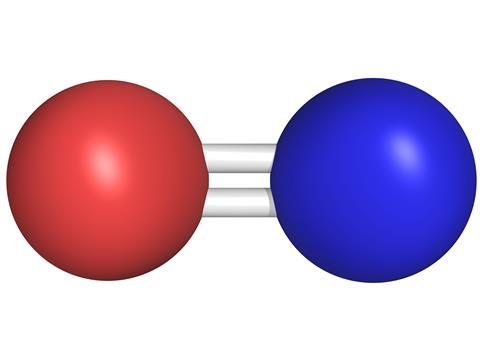
Nitric oxide (nitrogen oxide, nitrogen monooxide, or nitrogen monoxide) is a colorless gas with the formula NO. It is one of the principal oxides of nitrogen. Nitric oxide is a free radical: it has an unpaired electron, which is sometimes denoted by a dot in its chemical formula (•N=O or •NO). Nitric oxide is also a heteronuclear diatomic molecule, a class of molecules whose study spawned early modern theories of chemical bonding.
An important intermediate in industrial chemistry, nitric oxide forms in combustion systems and can be generated by lightning in thunderstorms. In mammals, including humans, nitric oxide is a signaling molecule in many physiological and pathological processes. It was proclaimed the "Molecule of the Year" in 1992. The 1998 Nobel Prize in Physiology or Medicine was awarded for discovering nitric oxide's role as a cardiovascular signalling molecule. Its impact extends beyond biology, with applications in medicine, such as the development of sildenafil, and in industry, including semiconductor manufacturing.
Nitric oxide should not be confused with nitrogen dioxide (NO2), a brown gas and major air pollutant, or with nitrous oxide (N2O), an anesthetic gas.
Details
Nitric oxide (NO) is a colourless toxic gas that is formed by the oxidation of nitrogen. Nitric oxide performs important chemical signaling functions in humans and other animals and has various applications in medicine. It has few industrial applications. It is a serious air pollutant generated by automotive engines and thermal power plants.
Nitric oxide is formed from nitrogen and oxygen by the action of electric sparks or high temperatures or, more conveniently, by the action of dilute nitric acid upon copper or mercury. It was first prepared about 1620 by the Belgian scientist Jan Baptista van Helmont, and it was first studied in 1772 by the English chemist Joseph Priestley, who called it “nitrous air.”
Nitric oxide liquefies at −151.8 °C (−241.2 °F) and solidifies at −163.6 °C (−262.5 °F); both the liquid and the solid are blue in colour. The gas is almost insoluble in water, but it dissolves rapidly in a slightly alkaline solution of sodium sulfite, forming the compound sodium dinitrososulfite, Na2(NO)2SO3. It reacts rapidly with oxygen to form nitrogen dioxide, NO2. Nitric oxide is a relatively unstable, diatomic molecule that possesses a free radical (i.e., an unpaired electron). The molecule can gain or lose one electron to form the ions NO− or NO+.
In the chemical industry, nitric oxide is an intermediate compound formed during the oxidation of ammonia to nitric acid. An industrial procedure for the manufacture of hydroxylamine is based on the reaction of nitric oxide with hydrogen in the presence of a catalyst. The formation of nitric oxide from nitric acid and mercury is applied in a volumetric method of analysis for nitric acid or its salts.
Though it is a toxic gas at high concentrations, nitric oxide functions as an important signaling molecule in animals. It acts as a messenger molecule, transmitting signals to cells in the cardiovascular, nervous, and immune systems. The nitric oxide molecule’s possession of a free radical makes it much more reactive than other signaling molecules, and its small size enables it to diffuse through cell membranes and walls to perform a range of signaling functions in various bodily systems. The body synthesizes nitric oxide from the amino acid L-arginine by means of the enzyme nitric oxide synthase.
The main site of the molecule’s synthesis is the inner layer of blood vessels, the endothelium, though the molecule is also produced by other types of cells. From the endothelium, nitric oxide diffuses to underlying smooth muscle cells and causes them to relax. This relaxation causes the walls of blood vessels to dilate, or widen, which in turn increases blood flow through the vessels and decreases blood pressure. Nitric oxide’s role in dilating blood vessels makes it an important controller of blood pressure. Nitric oxide is also produced by neurons (nerve cells) and is used by the nervous system as a neurotransmitter to regulate functions ranging from digestion to blood flow to memory and vision. In the immune system, nitric oxide is produced by macrophages, which are a type of leukocyte (white blood cell) that engulfs bacteria and other foreign particles that have invaded the body. The nitric oxide released by macrophages kills bacteria, other parasites, and tumour cells by disrupting their metabolism.
Nitric oxide’s role in regulating blood flow and pressure is used by modern medicine in several ways. The drug nitroglycerin has been used since the late 19th century to relieve the condition known as angina pectoris, which is caused by an insufficient supply of blood to the heart muscle. Nitroglycerin was long known to achieve its therapeutic effect by dilating the coronary arteries (thereby increasing the flow of blood to the heart), but why it did so remained unknown until the late 1980s, when researchers realized that the drug serves to replenish the body’s supply of nitric oxide, more of which is then available to relax, and thereby widen, the coronary blood vessels.
Nitric oxide is an important component of the air pollution generated by automotive engines and thermal power-generating plants. When a mixture of air and hydrocarbon fuel is burned in an internal-combustion engine or a power plant, the ordinarily inert nitrogen in the air combines with oxygen at very high temperatures to form nitric oxide. The nitric oxide and hydrocarbon vapours emitted by automotive exhausts and power-plant smokestacks undergo complex photochemical reactions in the lower atmosphere to form various secondary pollutants called photochemical oxidants, which make up photochemical smog. Nitric oxide combines with water vapour in the atmosphere to form nitric acid, which is one of the components of acid rain. Heightened levels of atmospheric nitric oxide resulting from industrial activity were also one of the causes of gradual depletion of the ozone layer in the upper atmosphere. Sunlight causes nitric oxide to react chemically with ozone (O3), thereby converting the ozone to molecular oxygen (O2).
Additional Information
Nitric oxide or Nitrogen monoxide is a chemical compound with chemical formula NO. This gas is an important signaling molecule in the body of mammals including humans and is an extremely important intermediate in the chemical industry. It is also a toxic air pollutant produced by automobile engines and power plants.
Nitric oxide (NO) should not be confused with nitrous oxide (N2O), a general anaesthetic, or with nitrogen dioxide (NO2) which is another poisonous air pollutant.
The nitric oxide molecule is a free radical, which is relevant to understanding its high reactivity. It reacts with the ozone in air to form nitrogen dioxide, signalled by the appearance of the reddish-brown color.
Pharmacodynamics
Persistent pulmonary hypertension of the newborn (PPHN) occurs as a primary developmental defect or as a condition secondary to other diseases such as meconium aspiration syndrome (MAS), pneumonia, sepsis, hyaline membrane disease, congenital diaphragmatic hernia (CDH), and pulmonary hypoplasia. In these states, pulmonary vascular resistance (PVR) is high, which results in hypoxemia secondary to right-to-left shunting of blood through the patent ductus arteriosus and foramen ovale. In neonates with PPHN, Nitric oxide improves oxygenation (as indicated by significant increases in PaO2). Nitric oxide appears to increase the partial pressure of arterial oxygen (PaO2) by dilating pulmonary vessels in better entilated areas of the lung, redistributing pulmonary blood flow away from lung regions with low ventilation/perfusion (V/Q) ratios toward regions with normal ratios.
Mechanism of action
Nitric oxide is a compound produced by many cells of the body. It relaxes vascular smooth muscle by binding to the heme moiety of cytosolic guanylate cyclase, activating guanylate cyclase and increasing intracellular levels of cyclic guanosine 3',5'-monophosphate, which then leads to vasodilation. When inhaled, nitric oxide produces pulmonary vasodilation.
#14 Re: Dark Discussions at Cafe Infinity » crème de la crème » Yesterday 00:26:41
2463) Ernest Walton
Gist:
Life
Ernest Walton was born into a clergyman’s family in southern Ireland. After studying at the international school in Belfast and Trinity College in Dublin, in 1927 he received a scholarship to work at the Cavendish Laboratory in Cambridge. There, Walton conducted his Nobel Prize-winning work at the beginning of the 1930s. In 1934 Walton returned to Trinity College in Dublin, where he remained for the rest of his active life. Walton married the same year and had two sons and two daughters.
Work
Ernest Rutherford used alpha particles from radioactive elements to study nuclear reactions and used his findings to convert nitrogen into oxygen. However, only a very few nuclear reactions could be achieved using alpha particles. Ernest Walton and John developed a device, an accelerator, to generate more penetrating radiation. Using a strong electric field, protons were accelerated to high velocities. In 1932, they bombarded lithium with protons, causing their nuclei to split and producing two alpha particles.
Summary
Ernest Thomas Sinton Walton (born Oct. 6, 1903, Dungarvan, County Waterford, Ire.—died June 25, 1995, Belfast, N.Ire.) was an Irish physicist, corecipient, with Sir John Douglas of England, of the 1951 Nobel Prize for Physics for the development of the first nuclear particle accelerator, known as the math-Walton generator.
After studying at the Methodist College, Belfast, and graduating in mathematics and experimental science from Trinity College, Dublin (1926), Walton went in 1927 to Trinity College, Cambridge, where he was to work with John in the Cavendish Laboratory under Lord Rutherford until 1934. In 1928 he attempted two methods of high-energy particle acceleration. Both failed, mainly because the available power sources could not generate the necessary energies, but his methods were later developed and used in the betatron and the linear accelerator. Then in 1929 John and Walton devised an accelerator that generated large numbers of particles at lower energies. With this device in 1932 they disintegrated lithium nuclei with protons, the first artificial nuclear reaction not utilizing radioactive substances.
After gaining his Ph.D. at Cambridge, Walton returned to Trinity College, Dublin, in 1934, where he remained as a fellow for the next 40 years and a fellow emeritus thereafter. He was Erasmus Smith professor of natural and experimental philosophy from 1946 to 1974 and chairman of the School of Cosmic Physics at the Dublin Institute for Advanced Studies after 1952.
Details
Ernest Thomas Sinton Walton (6 October 1903 – 25 June 1995), commonly abbreviated as E. T. S Walton, was an Irish experimental physicist and academic. He shared the 1951 Nobel Prize in Physics with John "for their pioneer work on the transmutation of atomic nuclei by artificially accelerated atomic particles." According to their Nobel Prize speech: "Thus, for the first time, a nuclear transmutation was produced by means entirely under human control."
Walton was a key member of the nuclear physics faculty at the University of Cambridge, where he worked with math and Ernest Rutherford. He then spent the majority of his career in Ireland, after returning from England in 1934. He remained active as a member of the teaching faculty at Trinity College Dublin, where he served as the Erasmus Smith's Professor of Natural and Experimental Philosophy from 1946 until his retirement in 1974, after which he continued to be associated with the physics department at the college. Along with William Rowan Hamilton, Walton is regarded as one of the most influential Irish physicists.
Early life and education
Ernest Thomas Sinton Walton was born on 6 October 1903 in Dungarvan, Ireland, the son of John Walton (1874–1936), a Methodist minister from Cloughjordan, and Anna Sinton (1874–1906) from Richhill. In those days, a general clergyman's family moved once every three years, and this practice carried Ernest and his family, while he was a small child, to Rathkeale, County Limerick (where his mother died), and to County Monaghan.
Walton attended day schools in counties Down and Tyrone, and at Wesley College Dublin before becoming a boarder at Methodist College Belfast in 1915, where he excelled in science and mathematics.
In 1922, Walton won scholarships to Trinity College Dublin for the study of mathematics and science, and would go on to be elected a Foundation Scholar in 1924. He was awarded bachelor's and master's degrees from Trinity in 1926 and 1927, respectively. During these years at college, he received numerous prizes for excellence in physics and mathematics (seven prizes in all), including the Foundation Scholarship in 1924. After graduating in 1927, he was awarded an 1851 Research Fellowship from the Royal Commission for the Exhibition of 1851 and was accepted as a research student at Trinity College, Cambridge, under the supervision of Ernest Rutherford, Director of the Cavendish Laboratory. At the time there were four Nobel Prize laureates on the staff in the Cavendish Laboratory and a further five were to emerge, including Walton and John Walton received his Ph.D. in 1931, and remained at Cambridge as a researcher until 1934.
Research
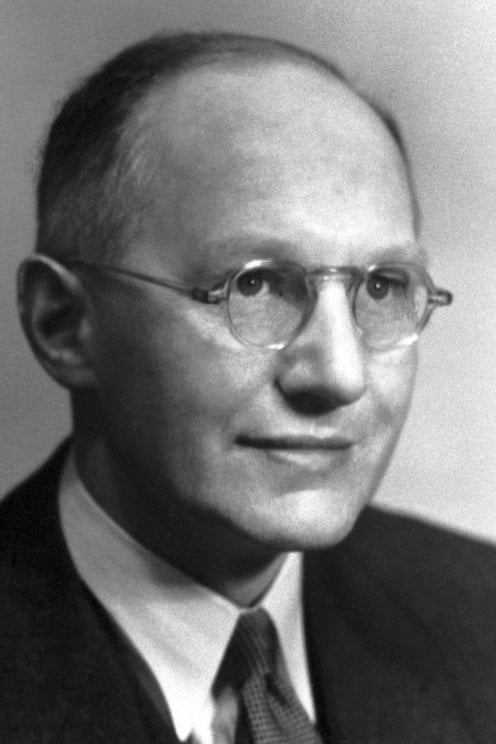
During the early 1930s, Walton and John collaborated to build an apparatus that split the nuclei of lithium atoms by bombarding them with a stream of protons accelerated inside a high-voltage tube (700 kilovolts). The splitting of the lithium nuclei produced helium nuclei. They went on to use boron and carbon as targets for their 'disintegration' experiments, and to report induced radioactivity. These experiments provided verification of theories about atomic structure that had been proposed earlier by Rutherford, George Gamow, and others. The successful apparatus—a type of particle accelerator, now called the math–Walton generator—helped to usher in an era of particle accelerator-based experimental nuclear physics. It was this research at Cambridge in the early 1930s that won Walton and John the Nobel Prize in Physics in 1951.
#15 Re: This is Cool » Miscellany » Yesterday 00:08:34
2526) Potassium Hydroxide
Gist
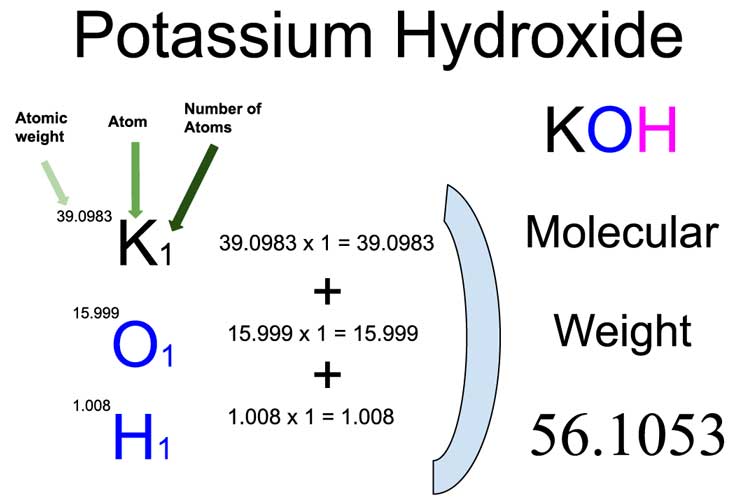
Potassium hydroxide is a disinfectant used to clean hands, skin, and surfaces. Potassium hydroxide, also known as lye is an inorganic compound with the chemical formula KOH. Also commonly referred to as caustic potash, it is a potent base that is marketed in several forms including pellets, flakes, and powders.
Potassium hydroxide is an inorganic compound with the formula KOH, and is commonly called caustic potash. Along with sodium hydroxide, KOH is a prototypical strong base. It has many industrial and niche applications, most of which utilize its caustic nature and its reactivity toward acids.
Summary
Potassium hydroxide is an inorganic compound with the formula KOH, and is commonly called caustic potash.
Along with sodium hydroxide (NaOH), KOH is a prototypical strong base. It has many industrial and niche applications, most of which utilize its caustic nature and its reactivity toward acids. About 2.5 million tonnes were produced in 2023. KOH is noteworthy as the precursor to most soft and liquid soaps, as well as numerous potassium-containing chemicals. It is a white solid that is dangerously corrosive.
Properties and structure
KOH exhibits high thermal stability. Because of this high stability and relatively low melting point, it is often melt-cast as pellets or rods, forms that have low surface area and convenient handling properties. These pellets become tacky in air because KOH is hygroscopic. Most commercial samples are ca. 90% pure, the remainder being water and carbonates. Its dissolution in water is strongly exothermic. Concentrated aqueous solutions are sometimes called potassium lyes. Even at high temperatures, solid KOH does not dehydrate readily.
Details
Potassium hydroxide is also known as caustic potash, lye, and potash lye. This alkali metal hydroxide is a very powerful base. The aqueous form of potassium hydroxide appears as a clear solution. In its solid form, KOH can exist as white to slightly yellow lumps, flakes, pellets, or rods. No characteristic odour can be attributed to this compound in its solid state.
Potassium hydroxide is soluble in water, freely soluble in ethanol, methanol, and glycerin. It is slightly soluble in ether. It is non-combustible but highly corrosive. It is widely used in chemical manufacturing, cleaning compounds, and petroleum refining.
Uses of Potassium Hydroxide
* Potassium hydroxide solution is more conductive when compared to NaOH and therefore used as an electrolyte in some alkaline batteries.
* It is used as a pH control agent in the food industry.
* It is used in the thickening of food.
* It is used in chip fabrication for semiconductors.
* It is used in the manufacturing of cuticle removers which are used in manicure treatment.
* It is used in the identification of species of fungi.
* It is used in mercerizing cotton.
* It is used in alkalimetric titrations in analytical chemistry.
* Used in the manufacturing of liquid fertilisers.
Chemical Reactions Undergone by KOH
1. Saponification of ester
The ester is saponified by heating with a known amount of potassium hydroxide in an organic solvent in a sealed tube. To be useful analytically, this reaction must be quantitative in a reasonable length of time. One condition that favours a rapid and quantitative reaction is the use of KOH as a strong base as possible.
2. KOH reacts with CO2 to produce bicarbonate
The addition of hydroxide ions by adding lime, sodium hydroxide, or potassium hydroxide, adjusts the pH because the hydroxide ion reacts with carbon dioxide to form bicarbonate alkalinity.
Health Hazards of KOH
The health hazards of potassium hydroxide are similar to those of the other strong alkalies, such as sodium hydroxide. Potash lye and its solution can severely irritate skin, mucous membranes, and eyes. When it comes in contact with water or moisture it can generate heat to instigate combustion. Potassium hydroxide is corrosive to tissues.
Frequently Asked Questions – FAQs
Q1: What is potassium hydroxide used for?
A1: Potassium hydroxide, or caustic potash, is used in a wide variety of industries. It is used in the chemical industry, mining, manufacturing of different compounds, fertilisers, in potassium soaps and in detergents.
Q2: What are the dangers of potassium hydroxide?
A2: Causes eye pain, tearing, redness and swelling. Larger exposures cause serious burns with potential subsequent blindness. Chronic exposure: repeated contact with dilute solutions of potassium hydroxide dust has a tissue-destroying effect.
Q3: Is potassium hydroxide a carcinogen?
A3: The National Toxicology Program (NTP), the International Agency for Research on Cancer (IARC), and the Occupational Safety and Health Administration (OSHA) do not recognize potassium hydroxide as a carcinogen. Potassium hydroxide is of low toxicity to marine species.
Q4: What is potassium hydroxide in chemistry?
A4: Potassium hydroxide, also called lye, is an inorganic compound containing the chemical formula KOH. Often commonly called caustic potash, it is a strong base that is sold in different forms including pellets, flakes, and powders.
Q5: What is the pH of KOH?
A5: KOH is an example of a strong base which means that it dissociates completely in an aqueous solution into its ions. Although the pH of KOH or potassium hydroxide is extremely high (typical solutions typically range from 10 to 13), the exact value depends on the concentration of this strong base in water.
Additional Information
Potassium hydroxide (KOH) is an alkali that penetrates and destroys the skin by dissolving keratin. It is used in aqueous solution at concentrations of 5% to 20%, and applied to MC lesions once or twice per day.20,26 In a prospective trial in which 35 children with MC lesions received twice-daily treatments with 10% KOH aqueous solution, complete lesion resolution was observed in 32 of the patients. Applications were discontinued in 3 patients due to severe stinging and secondary infection. The efficacy of KOH has been compared with that of other MC treatments. No significant differences were reported in a trial comparing the efficacy of cryotherapy with that of 10% KOH in solution for the treatment of MC. However, the higher cost and secondary local effects of cryotherapy would tend to favor the use of KOH. Another study found that 10% KOH and 5% imiquimod cream were equally effective, but that KOH had a faster onset of action. Finally, a third study compared 10% KOH administered once per day with salicylic acid and lactic acid in combination, finding they were equally effective in the treatment of MC. Because 10% KOH treatment is noninvasive, efficacious, and can be applied at home, many authors consider it to be the first line of therapy.
MC: Molluscum contagiosum is defined as a contagious viral infection that can manifest on the skin, commonly found on the face in children and on the inner thighs, abdomen, and in adults and athletes.
#16 Jokes » Oatmeal Jokes - II » Yesterday 00:06:13
- Jai Ganesh
- Replies: 0
Q: What is the difference between Quacker Oats and the Oregon Ducks?
A: Quacker Oats belong in a bowl.
* * *
Q: Why does a Northwestern Wildcats fan pour his oatmeal on a plate?
A: He lost his bowls.
* * *
Q: Why can't the Minnesota Viking eat oatmeal for breakfast?
A: Whenever they get too close to a "bowl" they choke!
* * *
Q: Why do basketball players love oatmeal cookies?
A: Because they can dunk them!
* * *
Oatmeal cookies are the raisin I have to work out.
* * *
#17 Dark Discussions at Cafe Infinity » Comfort Quotes - IV » Yesterday 00:05:37
- Jai Ganesh
- Replies: 0
Comfort Quotes - IV
1. What I aspired to be and was not, comforts me. - Robert Browning
2. There's a need for accepting responsibility - for a person's life and making choices that are not just ones for immediate short-term comfort. You need to make an investment, and the investment is in health and education. - Buzz Aldrin
3. I don't really have much to prove. I can easily go in a comfort zone, make two films a year, hype them because I've signed them as a star, make them cheap and they will be big hits. - Shah Rukh Khan
4. I believe in comfort and dressing according to my body type. I have a tall frame. So a lot of things suit me more than it would others. - Kriti Sanon
5. Comfort is always a priority, but that doesn't mean, just for the sake of comfort, I will wear some silly stuff and make myself look tacky. - Sonali Bendre
6. Increase of material comforts, it may be generally laid down, does not in any way whatsoever conduce to moral growth. - Mahatma Gandhi
7. Even when a person has all of life's comforts - good food, good shelter, a companion - he or she can still become unhappy when encountering a tragic situation. - Dalai Lama
8. Any nation that thinks more of its ease and comfort than its freedom will soon lose its freedom; and the ironical thing about it is that it will lose its ease and comfort too. - W. Somerset Maugham.
#18 Re: Jai Ganesh's Puzzles » General Quiz » 2026-03-18 17:48:39
Hi,
#10799. What does the term in Geography Diaspora mean?
#10800. What does the term in Geography Digital elevation model (DEM) mean?
#19 Re: Jai Ganesh's Puzzles » English language puzzles » 2026-03-18 17:34:42
Hi,
#6005. What does the verb (used with object) preclude mean?
#6006. What does the adjective precocious mean?
#20 Re: Jai Ganesh's Puzzles » Doc, Doc! » 2026-03-18 17:11:53
Hi,
#2599. What does the medical term Photorefractive keratectomy (PRK) mean?
#21 Re: Jai Ganesh's Puzzles » 10 second questions » 2026-03-18 17:02:54
Hi,
#9885.
#22 Re: Jai Ganesh's Puzzles » Oral puzzles » 2026-03-18 16:42:51
Hi,
#6378.
#23 Re: Exercises » Compute the solution: » 2026-03-18 16:27:46
Hi,
2739.
#24 Science HQ » Kidney » 2026-03-18 16:04:09
- Jai Ganesh
- Replies: 0
Kidney
Gist
Kidneys are two bean-shaped organs, about the size of a fist, located behind the abdomen, which filter blood to remove waste, excess water, and toxins, forming urine. They are essential for balancing electrolytes, regulating blood pressure, producing red blood cells, and maintaining bone health.
The kidneys are vital organs that perform seven major functions, including filtering metabolic waste (creatinine, urea) from blood, balancing electrolytes, regulating fluid levels, controlling blood pressure, regulating pH balance (acid-base), activating Vitamin D for bone health, and producing hormones like erythropoietin to manage red blood cell production.
Summary
In humans, the kidneys are two reddish-brown bean-shaped blood-filtering organs that are a multilobar, multipapillary form of mammalian kidneys, usually without signs of external lobulation. They are located on the left and right in the retroperitoneal space, and in adult humans are about 12 centimetres (4+ 1/2 inches) in length. They receive blood from the paired renal arteries; blood exits into the paired renal veins. Each kidney is attached to a ureter, a tube that carries excreted urine to the bladder.
The kidney participates in the control of the volume of various body fluids, fluid osmolality, acid–base balance, various electrolyte concentrations, and removal of toxins. Filtration occurs in the glomerulus: one-fifth of the blood volume that enters the kidneys is filtered. Examples of substances reabsorbed are solute-free water, sodium, bicarbonate, glucose, and amino acids. Examples of substances secreted are hydrogen, ammonium, potassium and uric acid. The nephron is the structural and functional unit of the kidney. Each adult human kidney contains around 1 million nephrons, while a mouse kidney contains only about 12,500 nephrons. The kidneys also carry out functions independent of the nephrons. For example, they convert a precursor of vitamin D to its active form, calcitriol; and synthesize the hormones erythropoietin and renin.
Chronic kidney disease (CKD) has been recognized as a leading public health problem worldwide. The global estimated prevalence of CKD is 13.4%, and patients with kidney failure needing renal replacement therapy are estimated between 5 and 7 million. Procedures used in the management of kidney disease include chemical and microscopic examination of the urine (urinalysis), measurement of kidney function by calculating the estimated glomerular filtration rate (eGFR) using the serum creatinine; and kidney biopsy and CT scan to evaluate for abnormal anatomy. Dialysis and kidney transplantation are used to treat kidney failure; one (or both sequentially) of these are almost always used when renal function drops below 15%. Nephrectomy is frequently used to cure renal cell carcinoma.
Renal physiology is the study of kidney function. Nephrology is the medical specialty which addresses diseases of kidney function: these include CKD, nephritic and nephrotic syndromes, acute kidney injury, and pyelonephritis. Urology addresses diseases of kidney (and urinary tract) anatomy: these include cancer, renal cysts, kidney stones and ureteral stones, and urinary tract obstruction.
The word "renal" is an adjective meaning "relating to the kidneys", and its roots are French or late Latin. Whereas according to some opinions, "renal" should be replaced with "kidney" in scientific writings such as "kidney artery", other experts have advocated preserving the use of "renal" as appropriate including in "renal artery".
Details
Your kidneys are organs that filter your blood. They remove waste and balance your body’s fluids, among other tasks. Most people have one kidney on either side of their spines (in their lower back). Common kidney conditions include kidney disease, kidney infections and kidney cysts.
Overview:
What is a kidney?
The kidneys are two fist-sized organs that filter your blood. Your kidneys are part of your urinary system.
Your kidneys filter about 200 quarts of fluid every day — enough to fill a large bathtub. During this process, your kidneys remove waste, which leaves your body as urine (pee). Most people pee about 2 quarts daily. Your body reuses the other 198 quarts of fluid.
Each kidney also helps balance your body’s fluids (mostly water) and electrolytes. Electrolytes are essential minerals that include sodium and potassium.
Function:
What do kidneys do?
Your kidneys have many important functions. They clean toxins and waste out of your blood. Common waste products include nitrogen waste (urea), muscle waste (creatinine) and acids. They help your body remove these substances. Your kidneys filter about half a cup of blood every minute.
In the process:
1. Blood flows into your kidneys through a large blood vessel called the renal artery.
2. Tiny blood vessels in your kidney filter the blood.
3. The filtered blood returns to your bloodstream through a large blood vessel called the renal vein.
4. Pee travels through tubes of muscle called ureters (yer-it-ters) to your bladder.
5. Your bladder stores pee until you release it through urination (peeing).
The kidneys also:
* Control the acid-base balance (pH balance) of your blood
* Make sugar (glucose) if your blood doesn’t have enough
* Make a protein called renin that increases blood pressure
* Produce the hormones calcitriol and erythropoietin. Calcitriol is a form of vitamin D that helps your body absorb calcium. Erythropoietin helps your body make red blood cells.
How do my kidneys filter blood?
Each kidney contains more than a million filtering units called nephrons. Each nephron consists of:
* Glomeruli: These are groups of tiny blood vessels that perform the first stage of filtering your blood (glomerular filtration). They then pass filtered substances to the renal tubules.
* Renal tubules: These tiny tubes reabsorb and return water, nutrients and minerals your body needs. The tubules remove waste, including excess acid and fluids. Waste goes through your kidneys’ collecting chambers and leaves your body as pee.
Anatomy:
Where are your they located?
Your kidneys sit just below your rib cage and in your lower back. Typically, one kidney sits on either side of your spine. Your kidneys are between your intestines and diaphragm. A ureter connects each kidney to your bladder.
What are the parts of your kidney?
Your kidneys are highly complex organs with many parts. The main parts of your kidney anatomy include:
* Kidney (renal) capsule: This has three layers of connective tissue or fat that cover your kidneys. It protects your kidneys from injury, makes them more stable and connects your kidneys to nearby tissues.
* Renal artery: This large blood vessel controls blood flow into your kidneys. For most people at rest, the renal arteries pump a little over 5 cups (1.2 liters) of blood to your kidneys every minute.
* Renal cortex: This is your kidney’s outer layer, where the nephrons (blood-filtering units) begin. The renal cortex also creates the hormone erythropoietin.
* Renal medulla: This is the inner part of your kidney. It contains most of the nephrons with their glomeruli and renal tubules. The renal tubules carry urine to the renal pelvis.
* Renal papilla: These pyramid-shaped structures transfer urine to the ureters. Dehydration and certain medications may damage your renal papilla.
* Renal pelvis: This funnel-shaped structure collects urine and passes it down two ureters. Urine travels from the ureters to the bladder, which stores it.
* Renal vein: This vein is the main blood vessel that carries filtered blood out of your kidneys and back to your heart. Each of your kidneys has a renal vein.
What does a kidney look like?
Your kidneys are reddish-brown. They have a shape like a kidney bean. Each kidney is about 4 or 5 inches long, about the size of a fist.
The weight of your kidneys varies. It depends on your height, weight, age and body mass index (BMI). Your kidneys may weigh as much as one to five tennis balls.
An adrenal gland sits on top of each kidney. It produces hormones, including cortisol, which helps your body respond to stress.
Conditions and Disorders:
What are the common conditions and disorders that affect your kidneys?
Common diseases that impact your kidneys include:
* Chronic kidney disease (CKD): This may lessen your kidney function. Diabetes or high blood pressure usually causes CKD.
* Kidney cancer: Renal cell carcinoma is the most common type.
* Kidney failure (renal failure): This may be acute (worsen suddenly) or chronic (long-term). End-stage renal disease is a complete loss of kidney function.
* Kidney infection: This can occur if bacteria enter your kidneys by traveling up your ureters. These infections cause sudden symptoms.
* Kidney stones: Crystals can form in your urine and join together to form a stone, which may block urine flow.
* Kidney (renal) cysts: Fluid-filled sacs can grow on your kidneys. They may be benign or malignant.
* Polycystic kidney disease (PKD): This genetic condition causes cysts to form on your kidneys. It may lead to high blood pressure and kidney failure.
Countless other disorders can affect your kidneys. Some of these conditions include:
* Acidosis: Excess acid collects, and your kidneys don’t get rid of it. This may cause many health problems and can be life-threatening.
* Acute or interstitial nephritis: Your kidneys become inflamed, sometimes from certain antibiotics. This may lead to kidney failure.
* Azotemia: Nitrogen waste builds up in your blood and your kidneys don’t get rid of it. Without treatment, azotemia may be fatal.
* Hydronephrosis: Blockage of your urinary system causes urine to back up in your kidneys. Without treatment, hydronephrosis may result in kidney failure.
* Diabetes-related nephropathy or hypertensive nephropathy: Unmanaged diabetes or chronically high blood pressure causes kidney damage.
* Glomerular diseases: These cause inflammation or damage to your glomeruli. Glomerular diseases may cause kidney failure.
* Minimal change disease and nephrotic syndrome: These cause your kidneys to release excess protein in your pee. Over time, this can damage your kidneys.
* Papillary necrosis: Chunks of kidney tissue die in the medulla and papilla. The tissue can break off and clog your kidneys, leading to kidney failure.
* Proteinuria: This is a high level of protein in your pee. It can be a sign of kidney damage.
* Uremia: Your kidneys don’t clear toxins that normally leave your body through your pee. They end up in your bloodstream. Without treatment, uremia can be fatal.
Who is at the greatest risk of problems?
People with diabetes or high blood pressure have the highest risk of kidney problems. Accidents or trauma can also harm your kidneys, like car accidents or sports injuries.
Signs and symptoms of a problem
Most kidney problems don’t have signs in their early stages. As kidney damage progresses, you may notice:
* Cramping muscles: Electrolyte imbalances cause your muscles to stiffen.
* Dark urine or urine with blood in it: Damage to your kidneys’ filters lets blood cells leak into your urine.
* Foamy urine: Bubbles in your pee can signal excess protein.
* Itchy, dry skin: An imbalance of minerals and nutrients in your blood leads to itchy skin.
* More frequent urination: Problems filtering waste cause you to pee more often.
* Puffy eyes or swollen ankles and feet: Reduced kidney function can cause your body to hold onto protein and sodium, resulting in swelling.
* Sleep problems, fatigue and lack of appetite: If toxins build up in your blood, your sleep, appetite and energy levels may be off.
* Stomach pain or vomiting.
What are common tests to check the health of my kidneys?
Healthcare providers use several tests to measure kidney function and diagnose kidney problems. Your provider may recommend:
* Urinalysis: A urinalysis analyzes your pee. It measures certain substances, like protein or blood.
* Blood tests: These can show how well your glomeruli filter your blood.
* Kidney biopsy: Your healthcare provider removes a small amount of your kidney tissue to examine it under a microscope.
* Ureteroscopy: Your provider passes a tube (endoscope) through your urethra into your bladder and ureters to look for anything unusual.
* Advanced imaging: An X-ray, CT scan, MRI, ultrasound or nuclear medicine image can show kidney anomalies or blockages.
Care:
Simple tips to keep your kidneys healthy
It’s important to have regular checkups and blood and urine tests to measure your kidneys’ health. You can reduce your risk of developing a kidney problem by:
* Avoiding tobacco products
* Cutting out excess salt, which can affect the balance of minerals in your blood
* Drinking water
* Increasing daily physical activity, which can reduce high blood pressure
* Limiting your use of NSAIDs, which can cause kidney damage if you take them too often (Nonsteroidal Anti-Inflammatory Drugs)
* Maintaining a weight that’s healthy for you
* Monitoring your blood pressure levels
* Watching your blood sugar levels if you have diabetes
You should have your kidney function regularly tested if you have:
* A family history of kidney disease
* Diabetes
* Heart disease
* High blood pressure
* Obesity or overweight
* Regular use of certain medications, like blood pressure medicine.
Additional Information
Kidney, in vertebrates and some invertebrates, is an organ that maintains water balance and expels metabolic wastes. Primitive and embryonic kidneys consist of two series of specialized tubules that empty into two collecting ducts, the Wolffian ducts (see Wolffian duct). The more advanced kidney (metanephros) of adult reptiles, birds, and mammals is a paired compact organ whose functional units, called nephrons, filter initial urine from the blood, reabsorb water and nutrients, and secrete wastes, producing the final urine, which is expelled.
Reptilian and avian kidneys are made up of many tiny lobules that, in birds, are combined into three or more lobes. Collecting tubules from each lobule empty into a separate branch of the ureter. Reptiles have relatively few nephrons (from 3,000 to 30,000 in lizards), while birds have a great number (around 200,000 in a fowl, twice as many as in a mammal of comparable size).
Mammalian kidneys have a somewhat granular outer section (the cortex), containing the glomeruli and convoluted tubules, and a smooth, somewhat striated inner section (the medulla), containing the loops of Henle and the collecting tubules. As the ureter enters the kidney it enlarges into a cavity, the renal pelvis; urine passes into this pelvis from the collecting tubules. Nephrons are numerous (20,000 in a mouse).
In humans the kidneys are about 10 centimetres long and are located beneath the diaphragm and behind the peritoneum. Each kidney contains 1,000,000–1,250,000 nephrons that filter the entire five-quart water content of the blood every 45 minutes—an equivalent of 160 quarts a day. Of this, only 1 1/2 quarts are excreted; the remainder is reabsorbed by the nephrons.
Damaged kidneys secrete an enzyme called renin that stimulates constriction of the blood vessels. When the damage has been caused initially by high blood pressure, the increase in pressure from the constricted vessels causes more kidney damage.
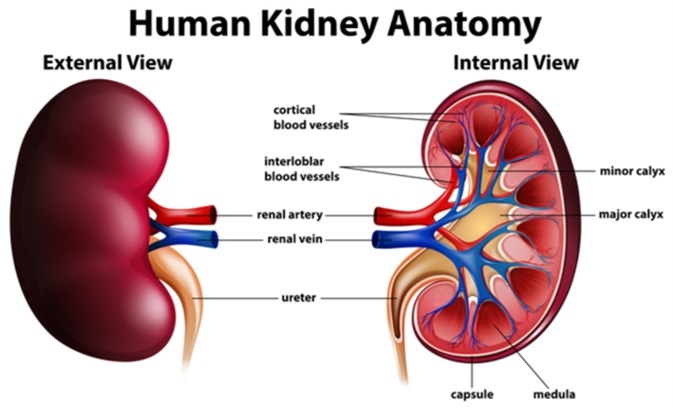
#25 Dark Discussions at Cafe Infinity » Comfort Quotes - III » 2026-03-18 00:48:39
- Jai Ganesh
- Replies: 0
Comfort Quotes - III
1. Now, God be praised, that to believing souls gives light in darkness, comfort in despair. - William Shakespeare
2. You can't comfort the afflicted with afflicting the comfortable. - Princess Diana
3. I always felt that the great high privilege, relief and comfort of friendship was that one had to explain nothing. - Katherine Mansfield
4. Engineering or technology is all about using the power of science to make life better for people, to reduce cost, to improve comfort, to improve productivity, etc. - N. R. Narayana Murthy
5. Saying drinking water is 'safe' without any supporting documentation is wrong. Resting on the comfort that the DHEC and the USEPA are there to give you cover is the same mistake the City of Flint made. - Erin Brockovich
6. Of all created comforts, God is the lender; you are the borrower, not the owner. - Ernest Rutherford
7. You judge a society by how it treats its citizens. We must do our best to ensure that every child can live in comfort and security, with the best possible education. - Melania Trump
8. Sometimes it's important to get out of that comfort zone and, I think, try new things, and sometimes you can express yourself better. - Gautam Gambhir.