Math Is Fun Forum
You are not logged in.
- Topics: Active | Unanswered
#626 Science HQ » Dispersion » 2026-02-07 17:06:57
- Jai Ganesh
- Replies: 0
Dispersion
Gist
Dispersion of light is the phenomenon where white light splits into its seven constituent colors (VIBGYOR: Violet, Indigo, Blue, Green, Yellow, Orange, Red) as it passes through a transparent medium, like a glass prism or water droplets. This occurs because different colors (wavelengths) of light travel at different speeds in the medium, causing them to bend, or refract, at slightly different angles, creating a spectrum.
In physics, dispersion is the phenomenon where a wave (like light, sound, or water waves) splits into its constituent frequencies or wavelengths, causing them to travel at different speeds, most famously seen as white light separating into a rainbow spectrum (VIBGYOR) when passing through a prism or water droplet. This happens because the refractive index or phase velocity of the medium changes with the wave's frequency, meaning different colors bend or travel at different rates, separating from the original beam.
Summary
Dispersion, in wave motion, is any phenomenon associated with the propagation of individual waves at velocities that depend on their wavelengths.
Ocean waves in deep water, for example, move at speeds proportional to the square root of their wavelengths; these speeds vary from a few meters per second for ripples to hundreds of kilometers per hour for tsunamis. (When ocean waves come closer to land in shallow water, the waves are nondispersive and move at a constant speed equal to the square root of the acceleration due to gravity times the depth of the water.)
In a vacuum, a wave of light has a defined speed, but in a transparent medium that speed varies inversely with the index of refraction (a measure of the angle by which the direction of a wave is changed as it moves from one medium into another). Any transparent medium—e.g., a glass prism—will cause an incident parallel beam of light to fan out according to the refractive index of the glass for each of the component wavelengths, or colors. This effect also causes rainbows, in which sunlight entering raindrops is spread out into its different wavelengths before it is reflected. This separation of light into colors is called angular dispersion or sometimes chromatic dispersion.
Chromatic dispersion is the change of index of refraction with wavelength. Generally the index decreases as wavelength increases, blue light traveling more slowly in the material than red light. Dispersion is the phenomenon which gives you the separation of colors in a prism. It also gives the generally undesirable chromatic aberration in lenses. Usually the dispersion of a material is characterized by measuring the index at the blue F line of hydrogen (486.1 nm), the yellow sodium D lines (589.3 nm), and the red hydrogen C line (656.3 nm).
Details
Dispersion is the phenomenon in which the phase velocity of a wave depends on its frequency. Sometimes the term chromatic dispersion is used to refer to optics specifically, as opposed to wave propagation in general. A medium having this common property may be termed a dispersive medium.
Although the term is used in the field of optics to describe light and other electromagnetic waves, dispersion in the same sense can apply to any sort of wave motion such as acoustic dispersion in the case of sound and seismic waves, and in gravity waves (ocean waves). Within optics, dispersion is a property of telecommunication signals along transmission lines (such as microwaves in coaxial cable) or the pulses of light in optical fiber.
In optics, one important and familiar consequence of dispersion is the change in the angle of refraction of different colors of light, as seen in the spectrum produced by a dispersive prism and in chromatic aberration of lenses. Design of compound achromatic lenses, in which chromatic aberration is largely cancelled, uses a quantification of a glass's dispersion given by its Abbe number V, where lower Abbe numbers correspond to greater dispersion over the visible spectrum. In some applications such as telecommunications, the absolute phase of a wave is often not important but only the propagation of wave packets or "pulses"; in that case one is interested only in variations of group velocity with frequency, so-called group-velocity dispersion.
All common transmission media also vary in attenuation (normalized to transmission length) as a function of frequency, leading to attenuation distortion; this is not dispersion, although sometimes reflections at closely spaced impedance boundaries (e.g. crimped segments in a cable) can produce signal distortion which further aggravates inconsistent transit time as observed across signal bandwidth.
Examples
Dispersion causes a rainbow's spatial separation of a white light into components of different wavelengths (different colors). However, dispersion also has an effect in many other circumstances: for example, group-velocity dispersion causes pulses to spread in optical fibers, degrading signals over long distances; also, a cancellation between group-velocity dispersion and nonlinear effects leads to soliton waves.
Material and waveguide dispersion
Most often, chromatic dispersion refers to bulk material dispersion, that is, the change in refractive index with optical frequency. However, in a waveguide there is also the phenomenon of waveguide dispersion, in which case a wave's phase velocity in a structure depends on its frequency simply due to the structure's geometry. More generally, "waveguide" dispersion can occur for waves propagating through any inhomogeneous structure (e.g., a photonic crystal), whether or not the waves are confined to some region. In a waveguide, both types of dispersion will generally be present, although they are not strictly additive. For example, in fiber optics the material and waveguide dispersion can effectively cancel each other out to produce a zero-dispersion wavelength, important for fast fiber-optic communication.
Additional Information
A rainbow shining against a gloomy stormy sky is a sight that everyone loves. How does sunshine shining through pure raindrops produce the rainbow of colors observed? A transparent glass prism or a diamond uses the same method to break white light into colors. There are about six colors in a rainbow—red, black, yellow, green, blue, and violet; indigo is often identified as well.
Specific wavelengths of light are correlated with certain colors. Depending on the wavelength, we expect to see only one of the six colors as we absorb pure-wavelength light. Our eye's response to a combination of various wavelengths produces the thousands of other colors we can detect in other conditions. White light, in fact, is a combination of all visible wavelengths that are fairly uniform.
Because of the combination of wavelengths, sunlight, which is known bright, tends to be a little yellow, but it does include all visible wavelengths. The colors in rainbows are in the same order as the colors plotted against wavelength. This means the white light in a rainbow is distributed according to wavelength. This scattering of white light is known as Dispersion. More precisely, dispersion happens if a mechanism changes the direction of light in a wavelength-dependent way. Dispersion can occur with any form of wave and is often associated with wavelength-dependent processes.
What is a White Light?
Sometimes you have noticed that when you face towards the sun and see the sky you see the white light in the sky it is not really a white light it is a mixture of several colors. We can say that white light is the mixture of several colors having different wavelengths and frequency points on the same spot. We can also say that the complete blend of all the wavelengths of the spectrum is known as White Light.
The natural sources of white light are stars and the sun. The source of white light in the solar system is the sun. The artificial white light can be created with the help of LED and fluorescent light bulbs.
What is the Visible Light Spectrum?
Visible light waves are one of the significant forms of electromagnetic waves just like X-rays, infrared radiation, UV-rays, and microwaves. These waves can be visualized as the colors of the rainbow, with each color possessing a different wavelength. The wavelength of red is the longest, while that of violet is the smallest.
White light is formed when all the waves are seen together. As white light passes through the lens, it splits into the visible light spectrum's colors. The visible light spectrum is a portion of an electromagnetic spectrum which can we can see from our naked eyes. The human eye can only see light with a specific wavelength only, and it ranges between 380 and 740 nm. If we are considering the frequency then the range of frequency varies between 405 and 790 THz.
Dispersion
The phenomenon of splitting of visible light into its component colors is called dispersion. Dispersion of light is caused by the change of speed of light ray (resulting in angle of deviation) of each wavelength by a different amount.
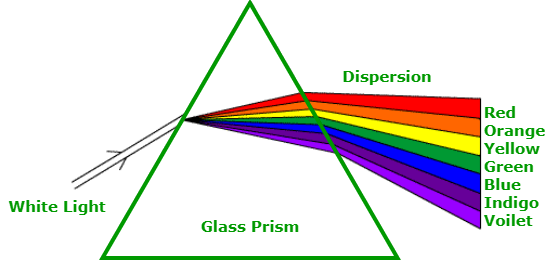
The dispersion of a light wave by a prism is shown in the diagram. As white light is incident on a glass prism, the emergent light appears to be multicolored (violet, indigo, blue, green, yellow, orange and red). The light that bends the least is red, while the light that bends the most is violet. Dispersion is the process of light breaking into its constituent colors. The continuum of light is the pattern of color components in light.
When light falls on the surface it dispersed into several colors depending on the wavelength of the color or the frequency, as we know that frequency and wavelength are inversely proportional to each other. Each color has its own wavelength and frequency, so we see different colors for the same white light.
Causes of the Dispersion of Light
* The various degrees of refraction produced by different colors of light cause dispersion. In a vacuum, various colors of light travel at the same speed, but in a refracting medium, they travel at different speeds.
* Violet light travels at a much slower speed than red light. As a result, violet light has the highest refractive index of the medium, while red light has the lowest.
* As a result, violet light has the highest refractive index, while red light has the lowest refractive index (in the visible spectrum). As a consequence, violet-colored light refracts or bends the most, while red-colored light refracts the least.
* The dispersion of white light into its constituent colors as it emerges from a prism is caused by the disparity in the degree of bending of various colors of light.
Examples of Dispersion of Light
* Dispersion of white light through a prism: As shown in the figure, when white light falls on the prism a collection of seven colors found to come out from the prism due to the dispersion.
* Dispersion due to Oil on Road: Small amounts of oil are usually present on the road surface e.g. lubricating oil from automobiles, which give rise to bands of beautiful colors when it rains.
* Formation of Rainbow: A rainbow is considered to be one of the most amazing light displays ever seen on the planet. A rainbow is a multicolored arc formed by light striking water droplets. Rainbows are formed during rain by the absorption, refraction, and dispersion of light in water droplets. All of these phenomena provide a light spectrum in the sky, which is known as a rainbow.
* Dispersion in a Diamond: Diamond dispersion is where white light enters a diamond (or any dense object), separates into all the spectral colors of the rainbow, and bounces back to the viewer’s eyes in a wonderful display of colored light, also known as diamond fire.
Rainbow Formation
A Rainbow is formed of seven colors (VIBGYOR) Violet, Indigo, Blue, Green, Yellow, Orange, Red. When rain happens the drops of rain falling on the surface works like a prism and when sunlight falls on the drops of water the rays of the sun scatter into different colors and form a rainbow, and sometimes we may also see multiple rainbows. In this concept drops of water, acts likes a prism and create a rainbow. Drops of water are nothing but the spherical ball containing the water and having the refractive index of water (1.333) which makes the white light to dispersed and forming a beam of light of several called rainbow.
Therefore, the necessary conditions for the formation of the rainbow are: the presence of water droplets or raindrops and the position of Sun must be at the back side of the observer of rainbow.
#627 Re: Jai Ganesh's Puzzles » General Quiz » 2026-02-07 15:55:54
Hi,
#10735. What does the term in Geography Crossroads mean?
#10736. What does the term in Geography Crust (geology) mean?
#628 Re: Jai Ganesh's Puzzles » English language puzzles » 2026-02-07 15:36:36
Hi,
#5931. What does the verb (used with object) infringe mean?
#5932. What does the adjective ingenious mean?
#629 Re: Jai Ganesh's Puzzles » Doc, Doc! » 2026-02-07 15:23:33
Hi,
#2562. What does the medical term Gustatory cortex mean?
#630 Jokes » Cookie Jokes - II » 2026-02-07 15:14:41
- Jai Ganesh
- Replies: 0
Q: Why did the Oreo go to the dentist?
A: Because it lost its filling!
* * *
Q: What does the ginger bread man put on his bed?
A: A cookie sheet.
* * *
Q: What kind of keys do kids like to carry?
A: Cookies!
* * *
Q: What is a monkey's favorite cookie?
A: Chocolate chimp!
* * *
Q: What word backwards can predict the future?
A: Cookies (Seikooc as in psychic of you say it).
* * *
#631 Re: Jai Ganesh's Puzzles » 10 second questions » 2026-02-07 14:46:29
Hi,
#9847.
#632 Re: Jai Ganesh's Puzzles » Oral puzzles » 2026-02-07 14:34:19
Hi,
#6341.
#633 Re: Exercises » Compute the solution: » 2026-02-07 14:22:13
Hi,
2698.
#634 This is Cool » Intelligence Quotient » 2026-02-06 22:26:37
- Jai Ganesh
- Replies: 0
Intelligence Quotient
Gist
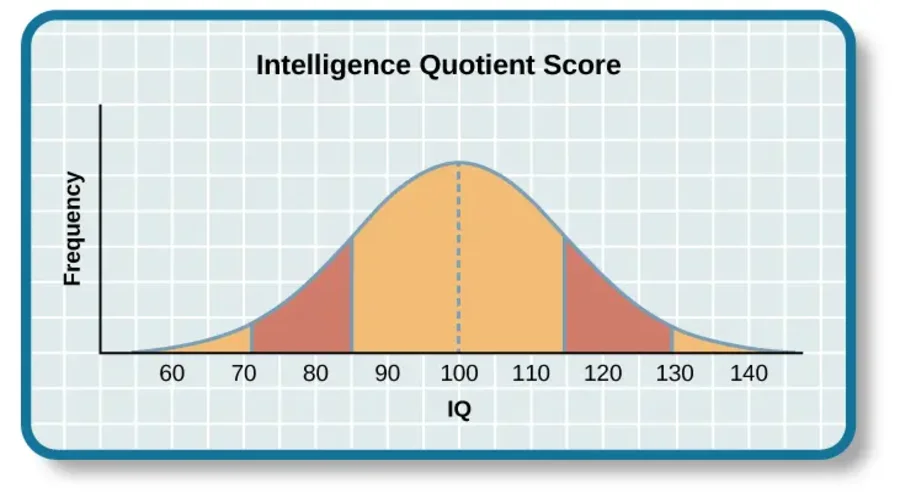
An Intelligence Quotient (IQ) is a standardized, numerical score derived from tests designed to measure human cognitive abilities—such as reasoning, logic, memory, and problem-solving—relative to a peer group. Modern IQ scores are calculated using a normal distribution (bell curve) with a mean of 100 and a standard deviation of 15, meaning ~68% of the population scores between 85 and 115.
IQ (Intelligence Quotient) is a score from standardized tests measuring cognitive abilities, originally calculated by dividing a person's mental age (MA) by their chronological age (CA) and multiplying by 100: IQ = (MA / CA) × 100, though modern tests use statistical norms with a mean of 100, says Wikipedia. It assesses logic, memory, problem-solving, and pattern recognition, with average scores around 100, while scores below 70 suggest extremely low intelligence and above 129 indicate giftedness.
Summary
IQ, (from “intelligence quotient”), is a number used to express the relative intelligence of a person. It is one of many intelligence tests.
IQ was originally computed by taking the ratio of mental age to chronological (physical) age and multiplying by 100. Thus, if a 10-year-old child had a mental age of 12 (that is, performed on the test at the level of an average 12-year-old), the child was assigned an IQ of 12/10 × 100, or 120. If the 10-year-old had a mental age of 8, the child’s IQ would be 8/10 × 100, or 80. Based on this calculation, a score of 100—where the mental age equals the chronological age—would be average. Few tests continue to involve the computation of mental ages.
Details
An intelligence quotient (IQ) is a total score derived from a set of standardized tests or subtests designed to assess human intelligence. Originally, IQ was a score obtained by dividing a person's estimated mental age, obtained by administering an intelligence test, by the person's chronological age. The resulting fraction (quotient) was multiplied by 100 to obtain the IQ score. For modern IQ tests, the raw score is transformed to a normal distribution with mean 100 and standard deviation 15. This results in approximately two-thirds of the population scoring between IQ 85 and IQ 115 and about 2 percent each above 130 and below 70.
Scores from intelligence tests are estimates of intelligence. Unlike quantities such as distance and mass, a concrete measure of intelligence cannot be achieved given the abstract nature of the concept of "intelligence". IQ scores have been shown to be associated with factors such as nutrition, parental socioeconomic status, morbidity and mortality, parental social status, and perinatal environment. While the heritability of IQ has been studied for nearly a century, there is still debate over the significance of heritability estimates and the mechanisms of inheritance. The best estimates for heritability range from 40 to 60% of the variance between individuals in IQ being explained by genetics.
IQ scores were used for educational placement, assessment of intellectual ability, and evaluating job applicants. In research contexts, they have been studied as predictors of job performance and income. They are also used to study distributions of psychometric intelligence in populations and the correlations between it and other variables. Raw scores on IQ tests for many populations have been rising at an average rate of three IQ points per decade since the early 20th century, a phenomenon called the Flynn effect. Investigation of different patterns of increases in subtest scores can also inform research on human intelligence.
Historically, many proponents of IQ testing have been eugenicists who used pseudoscience to push later debunked views of racial hierarchy in order to justify segregation and oppose immigration. Such views have been rejected by a strong consensus of mainstream science, though fringe figures continue to promote them in pseudo-scholarship and popular culture.
Additional Information
Earlier this year, 11-year-old Kashmea Wahi of London, England scored 162 on an IQ test. That’s a perfect score. The results were published by Mensa, a group for highly intelligent people. Wahi is the youngest person ever to get a perfect score on that particular test.
Does her high score mean she will go on to do great things — like Stephen Hawking or Albert Einstein, two of the world’s greatest scientists? Maybe. But maybe not.
IQ, short for intelligence quotient, is a measure of a person’s reasoning ability. In short, it is supposed to gauge how well someone can use information and logic to answer questions or make predictions. IQ tests begin to assess this by measuring short- and long-term memory. They also measure how well people can solve puzzles and recall information they’ve heard — and how quickly.
Every student can learn, no matter how intelligent. But some students struggle in school because of a weakness in one specific area of intelligence. These students often benefit from special education programs. There, they get extra help in the areas where they’re struggling. IQ tests can help teachers figure out which students would benefit from such extra help.
IQ tests also can help identify students who would do well in fast-paced “gifted education” programs. Many colleges and universities also use exams similar to IQ tests to select students. And the U.S. government — including its military — uses IQ tests when choosing who to hire. These tests help predict which people would make good leaders, or be better at certain specific skills.
It’s tempting to read a lot into someone’s IQ score. Most non-experts think intelligence is the reason successful people do so well. Psychologists who study intelligence find this is only partly true. IQ tests can predict how well people will do in particular situations, such as thinking abstractly in science, engineering or art. Or leading teams of people. But there’s more to the story. Extraordinary achievement depends on many things. And those extra categories include ambition, persistence, opportunity, the ability to think clearly — even luck.
Intelligence matters. But not as much as you might think.
Measuring IQ
IQ tests have been around for more than a century. They were originally created in France to help identify students who needed extra help in school.
The U.S. government later used modified versions of these tests during World War I. Leaders in the armed forces knew that letting unqualified people into battle could be dangerous. So they used the tests to help find qualified candidates. The military continues to do that today. The Armed Forces Qualification Test is one of many different IQ tests in use.
IQ tests have many different purposes, notes Joel Schneider. He is a psychologist at Illinois State University in Normal. Some IQ tests have been designed to assess children at specific ages. Some are for adults. And some have been designed for people with particular disabilities.
But any of these tests will tend to work well only for people who share a similar cultural or social upbringing. “In the United States,” for instance, “a person who has no idea who George Washington was probably has lower-than-average intelligence,” Schneider says. “In Japan, not knowing who Washington was reveals very little about the person’s intelligence.”
Questions about important historical figures fall into the “knowledge” category of IQ tests. Knowledge-based questions test what a person knows about the world. For example, they might ask whether people know why it’s important to wash their hands before they eat.
IQ tests also ask harder questions to measure someone’s knowledge. What is abstract art? What does it mean to default on a loan? What is the difference between weather and climate? These types of questions test whether someone knows about things that are valued in their culture, Schneider explains.
Such knowledge-based questions measure what scientists call crystallized intelligence. But some categories of IQ tests don’t deal with knowledge at all.
Some deal with memory. Others measure what’s called fluid intelligence. That’s a person’s ability to use logic and reason to solve a problem. For example, test-takers might have to figure out what a shape would look like if it were rotated. Fluid intelligence is behind “aha” moments — times when you suddenly connect the dots to see the bigger picture.
Aki Nikolaidis is a neuroscientist, someone who studies structures in the brain. He works at the University of Illinois at Urbana-Champaign. And he wanted to know what parts of the brain are active during those “aha” episodes.
In a study published earlier this year, he and his team studied 71 adults. The researchers tested the volunteers’ fluid intelligence with a standard IQ test that had been designed for adults. At the same time, they mapped out which areas of test takers’ brains were working hardest. They did this using a brain scan called magnetic resonance spectroscopy, or MRS. It uses magnets to hunt for particular molecules of interest in the brain.
As brain cells work, they gobble up glucose, a simple sugar, and spit out the leftovers. MRS scans let researchers spy those leftovers. That told them which specific areas of people’s brains were working hard and breaking down more glucose.
People who scored higher on fluid intelligence tended to have more glucose leftovers in certain parts of their brains. These areas are on the left side of the brain and toward the front. They’re involved with planning movements, with spatial visualization and with reasoning. All are key aspects of problem solving.
“It’s important to understand how intelligence is related to brain structure and function,” says Nikolaidis. That, he adds, could help scientists develop better ways to boost fluid intelligence.
Personal intelligence
IQ tests “measure a set of skills that are important to society,” notes Scott Barry Kaufman. He’s a psychologist at the University of Pennsylvania in Philadelphia. But, he adds, such tests don’t tell the full story about someone’s potential. One reason: IQ tests favor people who can think on the spot. It’s a skill plenty of capable people lack.
It’s also something Kaufman appreciates as well as anyone.
As a boy, he needed extra time to process the words he heard. That slowed his learning. His school put him into special education classes, where he stayed until high school. Eventually, an observant teacher suggested he might do well in regular classes. He made the switch and, with hard work, indeed did well.
Kaufman now studies what he calls “personal intelligence.” It’s how people’s interests and natural abilities combine to help them work toward their goals. IQ is one such ability. Self-control is another. Both help people focus their attention when they need to, such as at school.
Psychologists lump together a person’s focused attention, self-control and problem-solving into a skill they call executive function. The brain cells behind executive function are known as the executive control network. This network turns on when someone is taking an IQ test. Many of the same brain areas are involved in fluid intelligence.
But personal intelligence is more than just executive function. It’s tied to personal goals. If people are working toward some goal, they’ll be interested and focused on what they are doing. They might daydream about a project even while not actively working on it. Although daydreaming may seem like a waste of time to outsiders, it can have major benefits for the person doing it.
When engaged in some task, such as learning, people want to keep at it, Kaufman explains. That means they will push forward, long after they might otherwise have been expected to give up. Engagement also lets a person switch between focused attention and mind wandering.
That daydreaming state can be an important part of intelligence. It is often while the mind is “wandering” that sudden insights or hunches emerge about how something works.
While daydreaming, a so-called default mode network within the brain kicks into action. Its nerve cells are active when the brain is at rest. For a long time, psychologists thought the default mode network was active only when the executive control network rested. In other words, you could not focus on an activity and daydream at the same time.
To see if that was really true, last year Kaufman teamed up with researchers at the University of North Carolina in Greensboro and at the University of Graz in Austria. They scanned the brains of volunteers using functional magnetic resonance imaging, or fMRI. This tool uses a strong magnetic field to record brain activity.
As they scanned the brains of 25 college students, the researchers asked the students to think of as many creative uses as they could for everyday objects. And as students were being as creative as possible, parts of both the default mode network and the executive control network lit up. The two systems weren’t at odds with each other. Rather, Kaufman suspects, the two networks work together to make creativity possible.
“Creativity seems to be a unique state of consciousness,” Kaufman now says. And he thinks it is essential for problem-solving.
Turning potential into achievement
Just being intelligent doesn’t mean someone will be successful. And just because someone is less intelligent doesn’t mean that person will fail. That’s one take-home message from the work of people like Angela Duckworth.
She works at the University of Pennsylvania in Philadelphia. Like many other psychologists, Duckworth wondered what makes one person more successful than another. In 2007, she interviewed people from all walks of life. She asked each what they thought made someone successful. Most people believed intelligence and talent were important. But smart people don’t always live up to their potential.
When Duckworth dug deeper, she found that the people who performed best — those who were promoted over and over, or made a lot of money — shared a trait independent of intelligence. They had what she now calls grit. Grit has two parts: passion and perseverance. Passion points to a lasting interest in something. People who persevere work through challenges to finish a project.
Duckworth developed a set of questions to assess passion and perseverance. She calls it her “grit scale.”
In one study of people 25 and older, she found that as people age, they become more likely to stick with a project. She also found that grit increases with education. People who had finished college scored higher on the grit scale than did people who quit before graduation. People who went to graduate school after college scored even higher.
She then did another study with college students. Duckworth wanted to see how intelligence and grit affected performance in school. So she compared scores on college-entrance exams (like the SAT), which estimate IQ, to school grades and someone’s score on the grit scale. Students with higher grades tended to have more grit. That’s not surprising. Getting good grades takes both smarts and hard work. But Duckworth also found that intelligence and grit don’t always go hand in hand. On average, students with higher exam scores tended to be less gritty than those who scored lower.
Students who perform best in the National Spelling Bee are those with grit. Their passion, drive, and persistance pay off and help them succeed against less “gritty” competitors.
But some people counter that this grit may not be all it’s cracked up to be. Among those people is Marcus Credé. He’s a psychologist at Iowa State University in Ames. He recently pooled the results of 88 studies on grit. Together, those studies involved nearly 67,000 people. And grit did not predict success, Credé found.
However, he thinks grit is very similar to conscientiousness. That someone’s ability to set goals, work toward them and think things through before acting. It’s a basic personality trait, Credé notes — not something that can be changed.
“Study habits and skills, test anxiety and class attendance are far more strongly related to performance than grit,” Credé concludes. “We can teach [students] how to study effectively. We can help them with their test anxiety,” he adds. “I’m not sure we can do that with grit.”
In the end, hard work can be just as important to success as IQ. “It’s okay to struggle and go through setbacks,” Kaufman says. It might not be easy. But over the long haul, toughing it out can lead to great accomplishments.
#635 This is Cool » Diode » 2026-02-06 18:30:15
- Jai Ganesh
- Replies: 0
Diode
Gist
A diode is a two-terminal semiconductor device that acts as a one-way valve for electricity, allowing current to flow easily in one direction (forward-biased) while restricting it in the opposite direction (reverse-biased). Primarily used to convert alternating current (AC) to direct current (DC), they are essential for circuit protection, rectification, and voltage regulation.
A diode is a two-terminal semiconductor device acting as a one-way electrical valve, allowing current to flow easily in one direction (forward-biased) but blocking it in the reverse direction, making it crucial for power conversion (AC to DC), overvoltage protection (Zener diodes), signal demodulation (radios), light emission (LEDs), and building digital logic gates in computers. They are fundamental in electronics, found in everything from chargers to solar panels, by controlling current flow and protecting circuits.
Summary
A diode is a two-terminal electronic component that conducts electric current primarily in one direction (asymmetric conductance). It has low (ideally zero) resistance in one direction and high (ideally infinite) resistance in the other.
A semiconductor diode, the most commonly used type today, is a crystalline piece of semiconductor material with a p–n junction connected to two electrical terminals. It has an exponential current–voltage characteristic. Semiconductor diodes were the first semiconductor electronic devices. The discovery of asymmetric electrical conduction across the contact between a crystalline mineral and a metal was made by German physicist Ferdinand Braun in 1874. Today, most diodes are made of silicon, but other semiconducting materials such as gallium math and germanium are also used.
The obsolete thermionic diode is a vacuum tube with two electrodes, a heated cathode and a plate, in which electrons can flow in only one direction, from the cathode to the plate.
Among many uses, diodes are found in rectifiers to convert alternating current (AC) power to direct current (DC), demodulation in radio receivers, and can even be used for logic or as temperature sensors. A common variant of a diode is a light-emitting diode, which is used as electric lighting and status indicators on electronic devices.
Details
A diode is an electrical component that allows the flow of current in only one direction. In circuit diagrams, a diode is represented by a triangle with a line across one vertex.
The most common type of diode uses a p-n junction. In this type of diode, one material (n) in which electrons are charge carriers abuts a second material (p) in which holes (places depleted of electrons that act as positively charged particles) act as charge carriers. At their interface, a depletion region is formed across which electrons diffuse to fill holes in the p-side. This stops the further flow of electrons. When this junction is forward biased (that is, a positive voltage is applied to the p-side), electrons can easily move across the junction to fill the holes, and a current flows through the diode. When the junction is reverse biased (that is, a negative voltage is applied to the p-side), the depletion region widens and electrons cannot easily move across. The current remains very small until a certain voltage (the breakdown voltage) is reached and the current suddenly increases.
Light-emitting diodes (LEDs) are p-n junctions that emit light when a current flows through them. Several p-n junction diodes can be connected in series to make a rectifier (an electrical component that converts alternating current to direct current). Zener diodes have a well-defined breakdown voltage, so that current flows in the reverse direction at that voltage and a constant voltage can be maintained despite fluctuations in voltage or current. In varactor (or varicap) diodes, varying the bias voltage causes a variation in the diode’s capacitance; these diodes have many applications for signal transmission and are used throughout the radio and television industries. (For more detail about these and other types of diodes, see semiconductor device.)
Early diodes were vacuum tubes, an evacuated glass or metal electron tube containing two electrodes—a negatively charged cathode and a positively charged anode. These were used as rectifiers and as detectors in electronic circuits such as radio and television receivers. When a positive voltage is applied to the anode (or plate), electrons emitted from the heated cathode flow to the plate and return to the cathode through an external power supply. If a negative voltage is applied to the plate, electrons cannot escape from the cathode, and no plate current flows. Thus, a diode permits electrons to flow from cathode to plate but not from plate to cathode. If an alternating voltage is applied to the plate, current flows only during the time when the plate is positive. The alternating voltage is said to be rectified, or converted to direct current.
Additional Information
A diode is a semiconductor device, typically made of silicon, that essentially acts as a one-way switch for current. It allows current to flow easily in one direction but severely restricts current from flowing in the opposite direction.
Diodes are also known as rectifiers because they change alternating current (AC) into pulsating direct current (DC). Diodes are rated according to their type, voltage, and current capacity.
What Does a Diode Do?
Diodes have polarity, determined by an anode (positive lead) and cathode (negative lead). Most diodes allow current to flow only when positive voltage is applied to the anode.
When a diode allows current flow, it is forward-biased. When a diode is reverse-biased, it acts as an insulator and does not permit current to flow.
Strange but true: The diode symbol's arrow points against the direction of electron flow. The reason is that engineers conceived the symbol, and their schematics show current flowing from the positive (+) side of the voltage source to the negative (-). It's the same convention used for semiconductor symbols that include arrows — the arrow points in the permitted direction of "conventional" flow, and against the permitted direction of electron flow.
Types of Diodes
Different diode types all perform key functions in an electrical system. Here are some of the most important types of diodes.
* Rectifier Diodes: A rectifier diode converts AC into DC. Direct current flows in one consistent direction, making it easier to control.
* Zener Diodes: Zener diodes are designed to protect electrical systems from overvoltage. They conduct current in reverse whenever the cathode reaches a predetermined threshold voltage.
* Light Emitting Diodes: A light-emitting diode (LED) emits light when forward-biased current flows through it. LEDs are widely used in displays and indicators.
* Schottky Diodes: Schottky diodes, also known as barrier diodes or hot-carrier diodes, are often used in high-speed applications because of their fast-switching capabilities and their low forward voltage drop.
* Photodiodes: Photodiodes produce electrical currents when they absorb photons. They are widely used in sensors and in solar cells.
Diode Ratings and Testing
Every diode has a current and voltage rating, determined by factors like materials and design. Those ratings represent the maximum levels of voltage and currency the diode can tolerate.
Exceeding currency and voltage levels can cause permanent damage to the diode or to the whole circuit. High voltage levels may also cause the diode to short circuit and either allow current to flow in both directions or halt current from flowing in either direction.
Proper diode function can be tested with a digital multimeter (DMM).
Testing Diodes with a Digital Multimeter
There are two methods of testing diodes using a digital multimeter: diode test mode and resistance mode. Diode test mode is by far the more effective means of testing. Resistance testing is less reliable and should only be used if the multimeter does not have a diode test mode.
A digital multimeter's diode test produces a small voltage between the test leads, enough to forward-bias a diode junction. A good forward-bias diode displays a voltage drop from 0.5 to 0.8 volts (for most silicon diodes). The meter will display ‘OL’ when a good diode is reverse-biased. OL will indicate the diode is functioning as an open switch.
The forward-biased resistance of a good diode should range from 1000 ohms to 10 Mohms. Thereverse-biased resistance on a good diode, will read OL The diode is bad if readings are the same in both directions.
Applications of Diodes
* Power Conversion: Rectifiers convert AC signal into pulsing DC signal, making it easier to control the flow of power.
* Signal Demodulation: Demodulation diodes are a critical part of radio receivers. The diodes retrieve the original message sent through the airwaves for transmission.
* Overvoltage Protection: Zener diodes are used to protect circuits from unsafe voltage levels. They are also used to protect supply lines and power supply control lines.
* Logic Gates: Diodes play a crucial role in modern computing and digital technology. They make it possible to reinforce binary systems through gates that perform simple logic functions, like and/or/not.
Final Thoughts
Though small and simple, the diode is an essential part of modern electrical systems. By controlling the flow and direction of current, diodes enable countless applications of modern electronics.
Fortunately, tools like digital multimeters make it easy to measure diode health and determine when it’s time to replace diodes. This allows technicians to keep circuits in good running order, powering the electrical systems we all rely on.

#636 Re: Dark Discussions at Cafe Infinity » crème de la crème » 2026-02-06 17:31:29
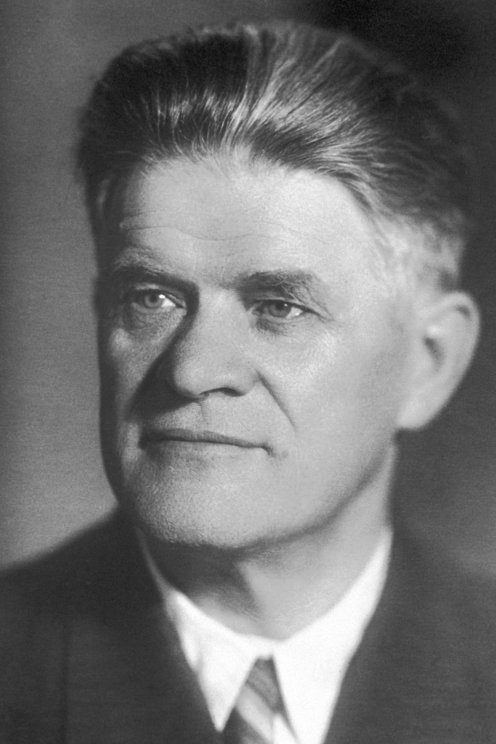
2426) Pavel Cherenkov
Gist:
Work
In certain media the speed of light is lower than in a vacuum and particles can travel faster than light. One result of this was discovered in 1934 by Pavel Cherenkov, when he saw a bluish light around a radioactive preparation placed in water. Igor Tamm and Ilya Frank explained the phenomenon in 1937. On their way through a medium, charged particles disturb electrons in the medium. When these resume their position, they emit light. Normally this does not produce any light that can be observed, but if the particle moves faster than light, a kind of backwash of light appears.
Summary
Pavel Alekseyevich Cherenkov (born July 15 [July 28, New Style], 1904, Novaya Chigla, Russia—died Jan. 6, 1990, U.S.S.R.) was a Soviet physicist who shared the 1958 Nobel Prize for Physics with fellow Soviet scientists Igor Y. Tamm and Ilya M. Frank for the discovery and theoretical interpretation of the phenomenon of Cherenkov radiation.
A peasant’s son, Cherenkov graduated from Voronezh State University in 1928; he later became a research student at the P.N. Lebedev Physical Institute. In 1934, working on his dissertation under the guidance of and in collaboration with Sergei Ivanovich Vavilov, he observed that electrons produce a faint blue glow when passing through a transparent liquid at high velocity. This Cherenkov radiation, which was correctly explained by Tamm and Frank in 1937, led to the development of the Cherenkov counter, or Cherenkov detector, that later was used extensively in experimental nuclear and particle physics. Cherenkov continued to do research in nuclear and cosmic-ray physics at the P.N. Lebedev Physical Institute. Cherenkov was elected to the U.S.S.R. Academy of Sciences as a corresponding (1964) and subsequently full (1970) member.
Details
Pavel Alekseyevich Cherenkov (28 July 1904 – 6 January 1990) was a Soviet physicist who shared the 1958 Nobel Prize in Physics with Ilya Frank and Igor Tamm "for the discovery and interpretation of the Cherenkov effect".
Biography
Cherenkov was born into a Russian family on July 28, 1904, to Alexey Cherenkov and Mariya Cherenkova in the small village of Novaya Chigla. This town is in present-day Voronezh Oblast, Russia.
In 1928, he graduated from the Department of Physics and Mathematics of Voronezh State University. In 1930, he took a post as a senior researcher in the Lebedev Physical Institute. That same year he married Maria Putintseva, daughter of A.M. Putintsev, a Professor of Russian Literature. They had a son, Alexey, and a daughter, Yelena.
Cherenkov was promoted to section leader, and in 1940 was awarded the degree of Doctor of Physico-Mathematical Sciences. In 1953, he was confirmed as Professor of Experimental Physics. Starting in 1959, he headed the institute's photo-meson processes laboratory. He remained a professor for fourteen years. In 1970, he became Academician of the USSR Academy of Sciences.
Cherenkov died in Moscow on 6 January 1990 and was buried in Novodevichy Cemetery.
Discoveries in physics
In 1934, while working under S. I. Vavilov, Cherenkov observed the emission of blue light from a bottle of water subjected to radioactive bombardment. This phenomenon, associated with charged subatomic particles moving at velocities greater than the phase velocity of light, proved to be of great importance in subsequent experimental work in nuclear physics, and for the study of cosmic rays. Eponymously, it was dubbed the Cherenkov effect, as was the Cherenkov detector, which has become a standard piece of equipment in particle-physics research for observing the existence and velocity of high-speed particles. Such a device was installed in Sputnik 3.
Pavel Cherenkov also shared in the development and construction of electron accelerators and in the investigation of photo-nuclear and photo-meson reactions.
Awards and honours
Cherenkov was awarded two Stalin Prizes, the first in 1946, sharing the honor with Vavilov, Frank and Tamm, and another in 1952. He was also awarded the USSR State Prize in 1977. In 1958, he was awarded the Nobel Prize in Physics for the discovery of the Cherenkov effect. He was also awarded the Soviet Union's Hero of Socialist Labour title in 1984. Cherenkov was a member of the Communist Party of the Soviet Union since 1946.
#637 Re: This is Cool » Miscellany » 2026-02-06 17:09:05
2488) Mass
Gist
In physics, mass is the fundamental property of matter that quantifies the amount of "stuff" in an object and its resistance to acceleration (inertia), measured in kilograms (kg). It's a scalar quantity, meaning it has magnitude but no direction, and remains constant regardless of location, unlike weight, which is a force dependent on gravity. Mass determines how much force is needed to change an object's motion.
The simple definition of mass is the quantity of matter within a given object. Mass is determined by the atomic and molecular makeups of objects. All objects are made up of protons, neutrons, and electrons, and each of these has different makeups and masses.
Summary
Mass is an intrinsic property of a body. In modern physics, it is generally defined as the strength of an object's gravitational attraction to other bodies - as measured by an observer moving along at the same speed.
It was traditionally believed to be related to the quantity of matter in a body, until the discovery of the atom and particle physics. It was found that different atoms and different elementary particles, theoretically with the same amount of matter, have nonetheless different masses. Mass in modern physics has multiple definitions which are conceptually distinct, but physically equivalent.
Mass can be experimentally defined as a measure of the body's inertia, meaning the resistance to acceleration (change of velocity) when a net force is applied.
The SI base unit of mass is the kilogram (kg). In physics, mass is not the same as weight, even though mass is often determined by measuring the object's weight using a spring scale, rather than balance scale comparing it directly with known masses. An object on the Moon would weigh less than it does on Earth because of the lower gravity, but it would still have the same mass. This is because weight is a force, while mass is the property that (along with gravity) determines the strength of this force.
In the Standard Model of physics, the mass of elementary particles is believed to be a result of their coupling with the Higgs boson in what is known as the Brout–Englert–Higgs mechanism.
Details
Mass, in physics, is a quantitative measure of inertia, a fundamental property of all matter. It is, in effect, the resistance that a body of matter offers to a change in its speed or position upon the application of a force. The greater the mass of a body, the smaller the change produced by an applied force. The unit of mass in the International System of Units (SI) is the kilogram, which is defined in terms of Planck’s constant, which is defined as equal to 6.62607015 × {10}^{-34} joule second. One joule is equal to one kilogram times metre squared per second squared. With the second and the metre already defined in terms of other physical constants, the kilogram is determined by accurate measurements of Planck’s constant. (Until 2019 the kilogram was defined by a platinum-iridium cylinder called the International Prototype Kilogram kept at the International Bureau of Weights and Measures in Sèvres, France.) In the English system of measurement, the unit of mass is the slug, a mass whose weight at sea level is 32.17 pounds.
Weight, though related to mass, nonetheless differs from the latter. Weight essentially constitutes the force exerted on matter by the gravitational attraction of Earth, and so it varies slightly from place to place. In contrast, mass remains constant regardless of its location under ordinary circumstances. A satellite launched into space, for example, weighs increasingly less the farther it travels away from Earth. Its mass, however, stays the same.
According to the principle of conservation of mass, the mass of an object or collection of objects never changes, no matter how the constituent parts rearrange themselves. If a body split into pieces, the mass divides with the pieces, so that the sum of the masses of the individual pieces is equal to the original mass. Or, if particles are joined together, the mass of the composite is equal to the sum of the masses of the constituent particles. However, this principle is not always correct.
With the advent of the special theory of relativity by Einstein in 1905, the notion of mass underwent a radical revision. Mass lost its absoluteness. The mass of an object was seen to be equivalent to energy, to be interconvertible with energy, and to increase significantly at exceedingly high speeds near that of light (about 3 × {10}^{8} metres per second, or 186,000 miles per second). The total energy of an object was understood to comprise its rest mass as well as its increase of mass caused by high speed. The rest mass of an atomic nucleus was discovered to be measurably smaller than the sum of the rest masses of its constituent neutrons and protons. Mass was no longer considered constant, or unchangeable. In both chemical and nuclear reactions, some conversion between mass and energy occurs, so that the products generally have smaller or greater mass than the reactants. The difference in mass is so slight for ordinary chemical reactions that mass conservation may be invoked as a practical principle for predicting the mass of products. Mass conservation is invalid, however, for the behaviour of masses actively involved in nuclear reactors, in particle accelerators, and in the thermonuclear reactions in the Sun and stars. The new conservation principle is the conservation of mass-energy.
Additional Information
Key takeaways
* Mass is the quantity of matter that makes up a given object
* Mass and weight are not the same thing. Mass deals with matter. Weight deals with the gravitational pull the Earth has on an object.
* The formula for calculating mass is Mass = Density x Volume. You can also find an object’s inertial and gravitational mass.
Mass definition
Mass is everywhere you look. Everything that is made up of something has mass. Even the oxygen we breathe has mass!
Understanding mass gives you a greater understanding of the way the world around you works. The screen you’re reading off of right now has mass! The keyboard you type with has mass! The food you eat, the bed you sleep on, and the bus you ride to school are all made of mass.
That’s because mass is made up of atoms, and everything we see contains atoms.
Mass is all around you, but what is mass exactly?
Mass definition
The simple definition of mass is the quantity of matter within a given object.
Mass is determined by the atomic and molecular makeups of objects. All objects are made up of protons, neutrons, and electrons, and each of these has different makeups and masses.
Units of mass
In 1875, scientists at the International Metric Convention created the International Prototype Kilogram which would, from then on, be used as the basis for mass measurement. The prototype kilogram was used to standardise one kilogram for every country in the world and therefore standardise the units of mass.
Part of the metric system, the kilogram, kg, then became what is called an SI unit of mass, or a part of the International System of Units.
Even though the physical prototype kilogram was replaced with a more practical definition in 2019, the kg and the SI unit are still used to measure mass today.
The mass unit of measure is the kilograms and multiples or fractions of the kilogram. The chart of mass units below demonstrates the most common units used to measure mass.
Mass vs weight
Mass and weight often get confused because in many cases, they both deal with the concept of heaviness and lightness. However, the two are very different!
First, let’s define mass again.
According to the mass definition, mass is a measurement of the quantity of matter. Mass is measured in grams and related units.
Weight is the measurement of the Earth’s gravitational pull on an object. Weight is measured in ounces, pounds, and tons.
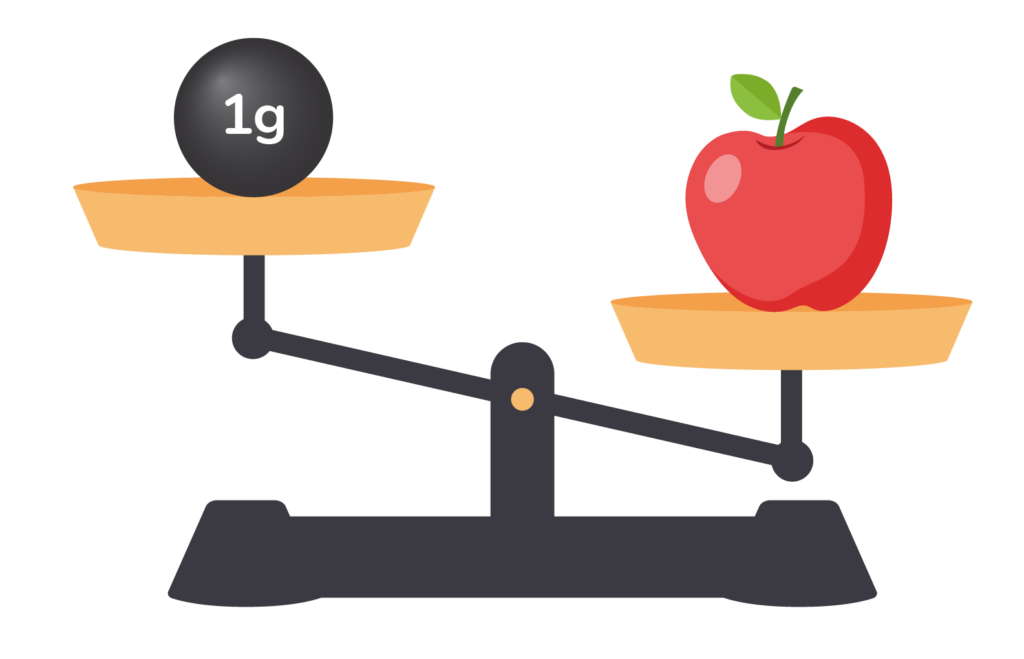
Weight is the combination of mass and gravity: Weight = Mass x Gravity
Your weight depends on the gravitational pull of the Earth. If you were standing on Mars, your weight would depend on the gravitational pull of Mars, and therefore, you would have a different weight. Your mass, on the other hand, does not depend on gravity and will not change no matter where in the universe you are.
On Earth, it just so happens that weight and mass tend to be very similar. This is why the two are so easily confused with each other.
#638 Dark Discussions at Cafe Infinity » Combine Quotes - I » 2026-02-06 16:46:31
- Jai Ganesh
- Replies: 0
Combine Quotes - I
1. When you combine ignorance and leverage, you get some pretty interesting results. - Warren Buffett
2. I dream of the realization of the unity of Africa, whereby its leaders combine in their efforts to solve the problems of this continent. I dream of our vast deserts, of our forests, of all our great wildernesses. - Nelson Mandela
3. When bad men combine, the good must associate; else they will fall one by one, an unpitied sacrifice in a contemptible struggle. - Edmund Burke
4. I have done one thing that I think is a contribution: I helped Buddhist science and modern science combine. No other Buddhist has done that. Other lamas, I don't think they ever pay attention to modern science. Since my childhood, I have a keen interest. - Dalai Lama
5. I know of no single formula for success. But over the years I have observed that some attributes of leadership are universal and are often about finding ways of encouraging people to combine their efforts, their talents, their insights, their enthusiasm and their inspiration to work together. - Queen Elizabeth II
6. The attempt to combine wisdom and power has only rarely been successful and then only for a short while. - Albert Einstein
7. All the interests of my reason, speculative as well as practical, combine in the three following questions: 1. What can I know? 2. What ought I to do? 3. What may I hope? - Immanuel Kant
8. Invention is not enough. Tesla invented the electric power we use, but he struggled to get it out to people. You have to combine both things: invention and innovation focus, plus the company that can commercialize things and get them to people. - Larry Page.
#639 Science HQ » Refraction » 2026-02-06 16:06:57
- Jai Ganesh
- Replies: 0
Refraction
Gist
Refraction is the bending of a wave—most commonly light—as it passes obliquely from one transparent medium to another, caused by a change in its speed. It occurs because light travels at different velocities in materials of different densities (e.g., passing from air into water). This phenomenon is essential for lenses, prisms, and human vision.
Refraction is the bending of a wave, like light, sound, or water waves, as it passes from one transparent medium (like air) to another (like water or glass) due to a change in its speed, causing a change in direction. This common phenomenon explains why a straw in a glass of water looks bent, and it's essential for lenses, glasses, cameras, and even the formation of rainbows.
Summary
Refraction, in physics, is the change in direction of a wave passing from one medium to another caused by its change in speed. For example, waves travel faster in deep water than in shallow. If an ocean wave approaches a beach obliquely, the part of the wave farther from the beach will move faster than the part closer in, and so the wave will swing around until it moves in a direction perpendicular to the shoreline. The speed of sound waves is greater in warm air than in cold. At night, air is cooled at the surface of a lake, and any sound that travels upward is refracted down by the higher layers of air that still remain warm. Thus, sounds, such as voices and music, can be heard much farther across water at night than in the daytime.
The electromagnetic waves constituting light are refracted when crossing the boundary from one transparent medium to another because of their change in speed. A straight stick appears bent when partly immersed in water and viewed at an angle to the surface other than 90°. A ray of light of one wavelength, or colour (different wavelengths appear as different colours to the human eye), in passing from air to glass is refracted, or bent, by an amount that depends on its speed in air and glass, the two speeds depending on the wavelength. A ray of sunlight is composed of many wavelengths that in combination appear to be colourless. Upon entering a glass prism, the different refractions of the various wavelengths spread them apart as in a rainbow.
Details
Refraction is the bending of a wave when it enters a medium where its speed is different. The refraction of light when it passes from a fast medium to a slow medium bends the light ray toward the normal to the boundary between the two media. The amount of bending depends on the indices of refraction of the two media and is described quantitatively by Snell's Law.
The bending of refraction can be visualized in terms of Huygens' principle. As the speed of light is reduced in the slower medium, the wavelength is shortened proportionately. The frequency is unchanged; it is a characteristic of the source of the light and unaffected by medium changes.
The index of refraction is defined as the speed of light in vacuum divided by the speed of light in the medium.
Snell's Law relates the indices of refraction n of the two media to the directions of propagation in terms of the angles to the normal. Snell's law can be derived from Fermat's Principle or from the Fresnel Equations.
If the incident medium has the larger index of refraction, then the angle with the normal is increased by refraction. The larger index medium is commonly called the "internal" medium, since air with n=1 is usually the surrounding or "external" medium. You can calculate the condition for total internal reflection by setting the refracted angle = 90° and calculating the incident angle. Since you can't refract the light by more than 90°, all of it will reflect for angles of incidence greater than the angle which gives refraction at 90°.

Additional Information
In physics, refraction is the redirection of a wave as it passes from one medium to another. The redirection can be caused by the wave's change in speed or by a change in the medium. Refraction of light is the most commonly observed phenomenon, but other waves such as sound waves and water waves also experience refraction. How much a wave is refracted is determined by the change in wave speed and the initial direction of wave propagation relative to the direction of change in speed.
Optical prisms and lenses use refraction to redirect light, as does the human eye. The refractive index of materials varies with the wavelength of light, and thus the angle of the refraction also varies correspondingly. This is called dispersion and allows prisms and raindrops in rainbows to divide white light into its constituent spectral colors.
#640 Re: Jai Ganesh's Puzzles » General Quiz » 2026-02-06 15:38:39
Hi,
#10733. What does the term in Geography Creek mean?
#10734. What does the term in Geography Crevasse mean?
#641 Re: Jai Ganesh's Puzzles » English language puzzles » 2026-02-06 15:21:09
Hi,
#5929. What does the adjective homologous mean?
#5930. What does the noun homophone mean?
#642 Re: Jai Ganesh's Puzzles » Doc, Doc! » 2026-02-06 15:07:17
Hi,
#2561. What does the medical term Fragile X syndrome mean?
#643 Jokes » Cookie Jokes - I » 2026-02-06 14:56:20
- Jai Ganesh
- Replies: 0
Q: What cookie makes you rich?
A: A fortune cookie!
* * *
Q: Why do girls scouts sell cookies?
A: They wanna make a sweet first impression.
* * *
Q: When should you take a cookie to the doctor?
A: When it feels crummy.
* * *
Q: What do the cookie and the computer have in common?
A: They both have chips.
* * *
Q: What is green and brown and crawls through the grass?
A: A Girl Scout who has lost her cookie.
* * *
#644 Re: Jai Ganesh's Puzzles » 10 second questions » 2026-02-06 14:28:27
Hi,
#9846.
#645 Re: Jai Ganesh's Puzzles » Oral puzzles » 2026-02-06 14:15:56
Hi,
#6340.
#646 Re: Exercises » Compute the solution: » 2026-02-06 14:05:13
Hi,
2697.
#647 Re: This is Cool » Miscellany » 2026-02-05 21:21:47
2487) Skyscraper
Skyscraper
Gist
A skyscraper is a very tall, multi-story building, typically found in cities, that is supported by a metal framework and often used for offices, hotels, or residences, with modern definitions generally considering buildings over 100 or 150 meters (330-490 ft) as skyscrapers. The term emerged in the late 1880s with early high-rises in the U.S., evolving to describe exceptionally tall structures.
A skyscraper typically has over 40 floors, though the definition has evolved from early buildings of 10-20 stories to today's supertalls that often exceed 100 floors, with no strict minimum, but generally defined by being very tall and continuously habitable. Modern skyscrapers leverage steel frames and elevators, allowing for extreme heights, like the 163-story Burj Khalifa.
Summary
A skyscraper is a tall building with many habitable floors. Most modern sources define skyscrapers as being at least 100 metres (330 ft) or 150 metres (490 ft) in height, though there is no universally accepted definition, other than being very tall high-rise buildings. Skyscrapers may host offices, hotels, residential spaces, and retail spaces. Skyscrapers are a common feature of large cities, often due to a high demand for space and limited availability of land.
One common feature of skyscrapers is having a steel frame that supports curtain walls. These curtain walls either bear on the framework below or are suspended from the framework above, rather than resting on load-bearing walls of conventional construction. Some early skyscrapers have a steel frame that enables the construction of load-bearing walls taller than those made of reinforced concrete. Modern skyscraper walls are not load-bearing, and most skyscrapers are characterized by large surface areas of windows made possible by steel frames and curtain walls. However, skyscrapers can have curtain walls that mimic conventional walls with a small surface area of windows. Modern skyscrapers often have a tubular structure, and are designed to act like a hollow cylinder to resist wind, seismic, and other lateral loads. To appear more slender, allow less wind exposure and transmit more daylight to the ground, many skyscrapers have a design with setbacks, which in some cases is also structurally required.
Skyscrapers first appeared in the United States at the end of the 19th century, especially in the cities of Chicago and New York City. Following a building boom across the western world in the early 20th century, skyscraper development was halted in the 1930s by the Great Depression, and did not resume until the 1950s. A skyscraper boom in the downtowns of many American cities took place during the 1960s to 1980s. Towards the second half of the 20th century, skyscrapers began to be built more frequently outside the United States, particularly in East Asia and Southeast Asia during the 1990s. China has since overtaken the United States as the country with the most skyscrapers. Skyscrapers are an increasingly global phenomenon, and can be found in over 70 countries.
There are over 7 thousand skyscrapers over 150 m (490 ft) in height worldwide, most of which were built in the 21st century. Over three-quarters of skyscrapers taller than 150 m (492 ft) are located in Asia. Eighteen cities in the world have more than 100 skyscrapers that are taller than 150 m (492 ft), most recently Toronto and Singapore in 2025. The city with the most skyscrapers in the world is Hong Kong, with 569 skyscrapers, followed by Shenzhen in China with 444, New York City with 317, and Dubai in the United Arab Emirates with 270. Dubai is home to the tallest skyscraper in the world, the Burj Khalifa.
Details
Skyscraper is a very tall multistoried building. The name first came into use during the 1880s, shortly after the first skyscrapers were built, in the United States. The development of skyscrapers came as a result of the coincidence of several technological and social developments. The term skyscraper originally applied to buildings of 10 to 20 stories, but by the late 20th century the term was used to describe high-rise buildings of unusual height, generally greater than 40 or 50 stories.
The increase in urban commerce in the United States in the second half of the 19th century augmented the need for city business space, and the installation of the first safe passenger elevator (in the Haughwout Department Store, New York City) in 1857 made practical the erection of buildings more than four or five stories tall. Although the earliest skyscrapers rested on extremely thick masonry walls at the ground level, architects soon turned to the use of a cast-iron and wrought-iron framework to support the weight of the upper floors, allowing for more floor space on the lower stories. James Bogardus built the Cast Iron Building (1848, New York City) with a rigid frame of iron providing the main support for upper-floor and roof loads.
It was, however, the refinement of the Bessemer process, first used in the United States in the 1860s, that allowed for the major advance in skyscraper construction. As steel is stronger and lighter in weight than iron, the use of a steel frame made possible the construction of truly tall buildings. William Le Baron Jenney’s 10-story Home Insurance Company Building (1884–85) in Chicago was the first to use steel-girder construction. Jenney’s skyscrapers also first employed the curtain wall, an outer covering of masonry or other material that bears only its own weight and is affixed to and supported by the steel skeleton. Structurally, skyscrapers consist of a substructure of piers beneath the ground, a superstructure of columns and girders above the ground, and a curtain wall hung on the girders.
As the population density of urban areas has increased, so has the need for buildings that rise rather than spread. The skyscraper, which was originally a form of commercial architecture, has increasingly been used for residential purposes as well.
The design and decoration of skyscrapers have passed through several stages. Jenney and his protégé Louis Sullivan styled their buildings to accentuate verticality, with delineated columns rising from base to cornice. There was, however, some retention of, and regression to, earlier styles as well. As part of the Neoclassical revival, for instance, skyscrapers such as those designed by the firm of McKim, Mead, and White were modeled after Classical Greek columns. The Metropolitan Life Insurance Building in New York City (1909) was modeled by Napoleon Le Brun after the Campanile of St. Mark’s in Venice, and the Woolworth Building (1913), by Cass Gilbert, is a prime example of neo-Gothic decoration. Even the Art Deco carvings on such towers as the Chrysler Building (1930), the Empire State Building (1931), and the RCA Building (1931) in New York City, which were then considered as modern as the new technology, are now viewed as more related to the old ornate decorations than to truly modern lines.
The International Style with its total simplicity seemed ideally suited to skyscraper design, and, during the decades following World War II, it dominated the field, notable early examples being the Seagram Building (1958) in New York City and the Lake Shore Drive Apartments (1951) in Chicago. The stark verticality and glass curtain walls of this style became a hallmark of ultramodern urban life in many countries. During the 1970s, however, attempts were made to redefine the human element in urban architecture. Zoning ordinances encouraged the incorporation of plazas and parks into and around the bases of even the tallest skyscrapers, just as zoning laws in the first decades of the 20th century were passed to prevent city streets from becoming sunless canyons and led to the shorter, stepped skyscraper. Office towers, such as those of the World Trade Center (1972) in New York City and the Sears Tower (1973; now called Willis Tower) in Chicago, continued to be built, but most of them, such as the Citicorp Center (1978) in New York City, featured lively and innovative space for shopping and entertainment at street level.
Another factor influencing skyscraper design and construction in the late 20th and early 21st centuries was the need for energy conservation. Earlier, sealed windows that made necessary continuous forced-air circulation or cooling, for instance, gave way in mid-rise buildings to operable windows and glass walls that were tinted to reflect the sun’s rays. Also, perhaps in reaction to the austerity of the International Style, the 1980s saw the beginnings of a return to more classical ornamentation, such as that of Philip Johnson’s AT&T Building (1984) in New York City.
Additional Information
A skyscraper is a very tall high-rise building, usually more than 152 metres (500 feet) in height. Most skyscrapers are built in urban areas such as cities, and they are very common in the central business district (also called downtown) areas of many large cities including New York City, Chicago, London, Paris, Sydney, Beijing, Berlin, Toronto, Moscow, Hong Kong and Tokyo. Skyscrapers are common in downtown districts where it's more economical to build up instead of out.
History
Originally, the word skyscraper meant a tall sail on a sailing ship. Over time, the word's meaning has changed, and today it means a tall building. Until the nineteenth century, buildings taller than six stories tall were not common. Tall buildings made of weak materials would fall down. In addition, people did not like walking up many steps and running water could only be brought up to fifty feet (15m) high.
Better technology helped make skyscrapers more common. Stronger building materials such as steel and reinforced concrete were developed, so stronger buildings could be made. Water pumps brought water up to heights above fifty feet.
The first building to be considered a skyscraper, the Home Insurance Building, was built in Chicago, Illinois in the United States, and was designed by William LeBaron Jenney. The building, ten stories high, was built from 1884 to 1885. It was destroyed in 1931 because they wanted to build another building in its previous place.
In the same year the Home Insurance Building was destroyed, one of the oldest and most famous skyscrapers, the Empire State Building, opened in New York City. Later in the 20th century, people started building skyscrapers in cities that did not have many tall buildings in the past. In 1973, the then-called Sears Tower in Chicago was finished and became the world's tallest building until the late 1990s. It took the record from the World Trade Center in New York City, which opened in 1970 but was destroyed in the September 11, 2001 attacks.
Many taller buildings have been built since then, including Taipei 101 in Taipei. This building was the world's tallest from 2004 until 2008, when the Burj Khalifa in Dubai opened. Burj Khalifa is at this time the tallest building and man-made structure ever made, but the Jeddah Tower in Jeddah, which is still being built, will be even taller.

#648 This is Cool » Neuron » 2026-02-05 19:43:46
- Jai Ganesh
- Replies: 0
Neuron
Gist
A neuron, or nerve cell, is the fundamental unit of the nervous system, specialized to transmit information via electrical and chemical signals, enabling functions from thinking and feeling to movement, and forms the basis of the brain and nerves throughout the body. Structurally, a neuron typically consists of a cell body (soma), dendrites that receive signals, and an axon that transmits signals to other cells.
The basic functions of neurons can be summarized into four main tasks: receiving signals, integrating these signals/generating signals and transmitting the signals to target cells and organs. These functions reflect in the microanatomy of the neuron.
Summary
A neuron (American English), neurone (British English), or nerve cell, is an excitable cell that fires electric signals called action potentials across a neural network in the nervous system, mainly in the central nervous system and help to receive and conduct impulses. Neurons communicate with other cells via synapses, which are specialized connections that commonly use minute amounts of chemical neurotransmitters to pass the electric signal from the presynaptic neuron to the target cell through the synaptic gap.
Neurons are the main components of nervous tissue in all animals except sponges and placozoans. Plants and fungi do not have nerve cells. Molecular evidence suggests that the ability to generate electric signals first appeared in evolution some 700 to 800 million years ago, during the Tonian period. Predecessors of neurons were the peptidergic secretory cells. They eventually gained new gene modules which enabled cells to create post-synaptic scaffolds and ion channels that generate fast electrical signals. The ability to generate electric signals was a key innovation in the evolution of the nervous system.
Neurons are typically classified into three types based on their function. Sensory neurons respond to stimuli such as touch, sound, or light that affect the cells of the sensory organs, and they send signals to the spinal cord and then to the sensorial area in the brain. Motor neurons receive signals from the brain and spinal cord to control everything from muscle contractions to glandular output. Interneurons connect neurons to other neurons within the same region of the brain or spinal cord. When multiple neurons are functionally connected together, they form what is called a neural circuit.
A neuron contains all the structures of other cells such as a nucleus, mitochondria, and Golgi bodies but has additional unique structures such as an axon, and dendrites. The soma or cell body, is a compact structure, and the axon and dendrites are filaments extruding from the soma. Dendrites typically branch profusely and extend a few hundred micrometers from the soma. The axon leaves the soma at a swelling called the axon hillock and travels for as far as 1 meter in humans or more in other species. It branches but usually maintains a constant diameter. At the farthest tip of the axon's branches are axon terminals, where the neuron can transmit a signal across the synapse to another cell. Neurons may lack dendrites or have no axons. The term neurite is used to describe either a dendrite or an axon, particularly when the cell is undifferentiated.
Most neurons receive signals via the dendrites and soma and send out signals down the axon. At the majority of synapses, signals cross from the axon of one neuron to the dendrite of another. However, synapses can connect an axon to another axon or a dendrite to another dendrite. The signaling process is partly electrical and partly chemical. Neurons are electrically excitable, due to the maintenance of voltage gradients across their membranes. If the voltage changes by a large enough amount over a short interval, the neuron generates an all-or-nothing electrochemical pulse called an action potential. This potential travels rapidly along the axon and activates synaptic connections as it reaches them. Synaptic signals may be excitatory or inhibitory, increasing or reducing the net voltage that reaches the soma.
In most cases, neurons are generated by neural stem cells during brain development and childhood. Neurogenesis largely ceases during adulthood in most areas of the brain.
Details
The nervous system consists of two main cell types, neurons and supporting glial cells. The neuron (or nerve cell) is the functional unit of both the central nervous system (CNS) and the peripheral nervous system (PNS). The basic functions of neurons can be summarized into four main tasks: receiving signals, integrating these signals/generating signals and transmitting the signals to target cells and organs. These functions reflect in the microanatomy of the neuron. As such, neurons typically consist of four main functional parts which include the:
* Receptive part (dendrites), which receive and conduct electrical signals toward the cell body
* Integrative part (usually equated with the cell body/soma), containing the nucleus and most of the cell's organelles, acting as the trophic center of the entire neuron. More importantly, it is here where inputs are processed and integrated to determine whether an electrical impulse (action potential) will be generated.
* Conductive part (axon), which conducts electrical impulses away from the cell body.
* Transmissive part (axon terminals), where axons communicate with other neurons or effectors (target structures which respond to nerve impulses)
Neurons are categorized into different types based on their unique morphologies and functions. This article will focus on the structure and physiology of a typical multipolar neuron, the primary neuronal type found in the CNS, and explore its parts and functions in greater detail.
Neurons: Structure and types:
Neuron structure
Description: Spherical or polygonal central component of a neuron
Function: Integration and signal processing, protein synthesis, metabolic activities
Components: Nucleus (DNA), cytoplasmic organelles (endoplasmic reticulum (smooth and rough), Golgi apparatus, microtubules, mitochondria, lysosomes), axon hillock
Axon hillock
Description: Specialized, cone-shaped region of the cell body which forms the initial segment of the axon
Function: Site for initiation of action potentials (with initial segment of axon)
Components:
- Devoid of large cytoplasmic organelles (Nissl bodies and Golgi apparatus),
- Contains high density of voltage-gated sodium channels
Dendrites
Description: Tree-like, short, tapering processes of varying shape
Function: Reception of synaptic signals and translation into electrical events
Components: Similar to the cell body, neurotransmitter receptors, dendritic shaft, dendritic spines
Axon (nerve fiber)
Description: Single long process arising from the axon hillock
Function: Conduction of electrical impulses away from the cell body
Components:
- Axolemma (cell membrane), axoplasm (cytoplasm), myelin sheath, myelin sheath gaps (nodes of Ranvier), terminal arborizations, terminal boutons, microtubules, intermediate filaments
- Devoid of endoplasmic reticulum and ribosomes
Cell body
The cell body of a neuron, also known as the soma, is typically located at the center of the dendritic tree in multipolar neurons. It is spherical or polygonal in shape and relatively small, making up one-tenth of the total cell volume.
The functionality of the neuron is highly dependent on its cell body as it houses the nucleus, which contains the genetic material (DNA) of the cell as well as various cytoplasmic organelles. These organelles include the endoplasmic reticulum (both smooth and rough), which clusters with free ribosomes to form what is known as chromatophilic substances ( Nissl bodies) and are involved in the protein synthesis of enzymes, receptors, ion channels and other structural components. Additionally, the cell body contains the Golgi apparatus and microtubules, involved in the packaging and transport of proteins; mitochondria, involved in energy production; and lysosomes involved in the waste management of the cell.
The axon hillock refers to an anatomically and functionally distinct area of the cell body which serves as the origin of the axon. It is cone-shaped and devoid of large cytoplasmic organelles such as chromatophilic substance (Nissl bodies) and Golgi apparatus. The axon hillock contains a high density of voltage-gated sodium channels, allowing it to serve as a critical site for determining whether or not the sum of all incoming signals warrants the propagation of an action potential. It also supports neuron polarity by separating the receptive/integrative parts from the conductive/transmissive parts, providing directionality in the flow of information from the dendrites to the cell body, axon and axon terminals.
The region of the axon laying between the axon hillock and the beginning of the myelin sheath is termed the initial segment. This is the actual site of action potential generation, although more recent research states that both the initial segment and axon hillock are capable of action potential generation.
Dendrites
Dendrites are tree-like processes extending from the cell body of the neuron and contain organelles similar to those in the cell body. The highly branched structure of dendrites provides an increased surface area for receiving information from other neurons at specialized areas of contact called synapses. Dendrites primarily consist of dendritic shafts, which serve as the main structural branches.
These are lined with numerous tiny protrusions called dendritic spines, which serve as sites for the initial processing of synaptic signals via membrane embedded neurotransmitter receptors; they translate the chemical messages received into electrical events, which travel down the dendrites. There are approximately ten trillion of these structures present across all dendrites of neurons in the human cerebral cortex (for 16-20 billion neurons), therefore they greatly increase the area available for synaptic events.
Axon
The axon of a neuron is also known as a nerve fiber. The membrane of an axon is known as the axolemma, while the cytoplasm is also referred to as axoplasm. Bundles of axons in the CNS form a tract, while in the PNS, they are referred to as fascicles (which, when bound together with connective tissue, form nerves). Axons originate from the axon hillock and conduct electrical impulses, in the form of action potentials, away from the cell body through a process of sequential depolarization and repolarization. Unlike dendrites that form a complex network with many tapering branches, the axon of a neuron is usually a single, long process that can extend for a considerable distance before it branches and terminates. The length of axons varies and can sometimes exceed a meter, such as in some peripheral nerves like the sciatic nerve, which extends from the spinal cord to the feet.
Axons typically terminate as fine branches called terminal arborizations; each of which is capped with a terminal bouton. These specialized structures contain synaptic vesicles that store neurotransmitters to be released into the synaptic cleft (a small gap at a synapse between neurons where nerve impulses are transmitted by a neurotransmitter) when an action potential reaches the axon terminal.
Axons can be enveloped in an insulating layer of lipids and proteins called the myelin sheath. This sheath protects the axon and prevents the loss of electrical charge (ions) during the transmission of action potentials along the neuron, increasing the speed of impulse transmission. The myelin sheath is formed by specific types of glial cells, namely oligodendrocytes in the CNS and Schwann cells (neurolemmocytes) in the PNS. The myelination of PNS axons involves many Schwann cells, each of which participates in the formation of the myelin sheath of a single axon, by wrapping around it multiple times. Not all axons are covered by myelin. In the PNS, multiple nonmyelinated axons can go through a single Schwann cell, without myelin sheath production. In contrast, an oligodendrocyte can myelinate multiple axons in the CNS, due to its arm-like processes twisting around them.
The outermost nucleated cytoplasmic layer of Schwann cells overlying the myelin sheath is called the neurolemma. This structural characteristic aids in the regeneration of damaged peripheral axons when the corresponding cell body remains intact. In contrast, CNS neurons, which lack a neurolemma, exhibit limited regenerative capacity.
Nerve fibers are classified into groups, based on their myelination; group A neurons are heavily myelinated, group B are moderately myelinated, and group C are nonmyelinated. Along myelinated axons, evenly distributed gaps known as myelin sheath gaps (commonly referred to as nodes of Ranvier) allow electrical impulses to jump from node to node. This propagation pattern is referred to as saltatory conduction. Myelin sheath gapsare more numerous in axons of the PNS compared to those of the CNS.
Since axons lack endoplasmic reticulum and ribosomes, proteins and organelles needed for its growth are synthesized in the cell body and then transported to the axon via axonal transport. This is facilitated by microtubules and intermediate filaments that provide cytoskeletal "tracks" for transportation. The microtubule arrangements overlap, providing routes for simultaneous transport of different materials to and from the cell body.
Additional Information
Neurons (also called neurones or nerve cells) are the fundamental units of the brain and nervous system, the cells responsible for receiving sensory input from the external world, for sending motor commands to our muscles, and for transforming and relaying the electrical signals at every step in between. More than that, their interactions define who we are as people. Having said that, our roughly 100 billion neurons do interact closely with other cell types, broadly classified as glia (these may actually outnumber neurons, although it’s not really known).
The creation of new neurons in the brain is called neurogenesis, and this can happen even in adults.
What does a neuron look like?
A useful analogy is to think of a neuron as a tree. A neuron has three main parts: dendrites, an axon, and a cell body or soma (see image below), which can be represented as the branches, roots and trunk of a tree, respectively. A dendrite (tree branch) is where a neuron receives input from other cells. Dendrites branch as they move towards their tips, just like tree branches do, and they even have leaf-like structures on them called spines.
The axon (tree roots) is the output structure of the neuron; when a neuron wants to talk to another neuron, it sends an electrical message called an action potential throughout the entire axon. The soma (tree trunk) is where the nucleus lies, where the neuron’s DNA is housed, and where proteins are made to be transported throughout the axon and dendrites.
There are different types of neurons, both in the brain and the spinal cord. They are generally divided according to where they orginate, where they project to and which neurotransmitters they use.
Concepts and definitions
Axon – The long, thin structure in which action potentials are generated; the transmitting part of the neuron. After initiation, action potentials travel down axons to cause release of neurotransmitter.
Dendrite – The receiving part of the neuron. Dendrites receive synaptic inputs from axons, with the sum total of dendritic inputs determining whether the neuron will fire an action potential.
Spine – The small protrusions found on dendrites that are, for many synapses, the postsynaptic contact site.
Action potential – Brief electrical event typically generated in the axon that signals the neuron as 'active'. An action potential travels the length of the axon and causes release of neurotransmitter into the synapse. The action potential and consequent transmitter release allow the neuron to communicate with other neurons.
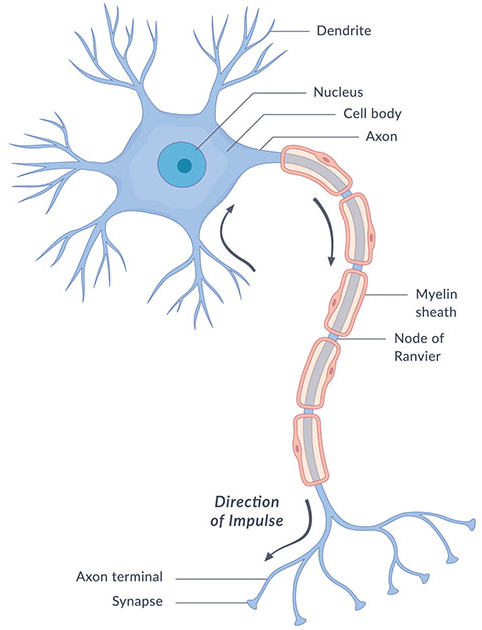
#649 Re: Dark Discussions at Cafe Infinity » crème de la crème » 2026-02-05 18:43:16
2425) Severo Ochoa
Gist:
Work
The substances known as DNA and RNA bear organisms' genetic code and also determine their vital processes. Severo Ochoa investigated how DNA and RNA are formed and which enzymes control this process. By studying bacteria, Ochoa and Marianne Grunberg-Manago discovered an enzyme in 1955 that can join nucleotides–the building blocks of RNA and DNA–together. Initially, it was thought that this enzyme assembled RNA based on information contained in DNA. This was later proven to be incorrect, although the enzyme proved to have other important functions nonetheless.
Summary
Severo Ochoa (born Sept. 24, 1905, Luarca, Spain—died Nov. 1, 1993, Madrid) was a biochemist and molecular biologist who received (with the American biochemist Arthur Kornberg) the 1959 Nobel Prize for Physiology or Medicine for his discovery of an enzyme in bacteria that enabled him to synthesize ribonucleic acid (RNA), a substance of central importance to the synthesis of proteins by the cell.
Ochoa was educated at the University of Madrid, where he received his M.D. in 1929. He then spent two years studying the biochemistry and physiology of muscle under the German biochemist Otto Meyerhof at the University of Heidelberg. He also served as head of the physiology division, Institute for Medical Research, at the University of Madrid (1935). He investigated the function in the body of thiamine (vitamin B1) at the University of Oxford (1938–41) and became a research associate in medicine (1942) and professor of pharmacology (1946) at New York University, New York City, where he became professor of biochemistry and chairman of the department in 1954. From 1974 to 1985 he was associated with the Roche Institute of Molecular Biology; thereafter he taught at the Autonomous University of Madrid. Ochoa became a U.S. citizen in 1956.
Ochoa made the discovery for which he received the Nobel Prize in 1955, while conducting research on high-energy phosphates. He named the enzyme he discovered polynucleotide phosphorylase. It was subsequently determined that the enzyme’s function is to degrade RNA, not synthesize it; under test-tube conditions, however, it runs its natural reaction in reverse. The enzyme has been singularly valuable in enabling scientists to understand and re-create the process whereby the hereditary information contained in genes is translated, through RNA intermediaries, into enzymes that determine the functions and character of each cell.
Details
Severo Ochoa de Albornoz (24 September 1905 – 1 November 1993) was a Spanish physician and biochemist, and winner of the 1959 Nobel Prize in Physiology or Medicine together with Arthur Kornberg for their discovery of "the mechanisms in the biological synthesis of deoxyribonucleic acid (DNA)".
Education and early life
Ochoa was born in Luarca (Asturias), Spain. His father was Severo Manuel Ochoa (who he was named after), a lawyer and businessman, and his mother was Carmen de Albornoz. Ochoa was the nephew of Álvaro de Albornoz (President of the Second Spanish Republic in exile and former Foreign Minister), and a cousin of the poet and critic Aurora de Albornoz. His father died when Ochoa was seven, and he and his mother moved to Málaga, where he attended elementary school through high school. His interest in biology was stimulated by the publications of the Spanish neurologist and Nobel laureate Santiago Ramón y Cajal. In 1923, he went to the University of Madrid Medical School, where he hoped to work with Ramón y Cajal, but Ramón y Cajal retired. He studied with father Pedro Arrupe, and Juan Negrín was his teacher:
Negrin opened wide, fascinating vistas to my imagination, not only through his lectures and laboratory teaching, but through his advice, encouragement, and stimulation to read scientific monographs and textbooks in languages other than Spanish.
Negrín encouraged Ochoa and another student, José Valdecasas, to isolate creatinine from urine. The two students succeeded and also developed a method to measure small levels of muscle creatinine. Ochoa spent the summer of 1927 at University of Glasgow working with D. Noel Paton on creatine metabolism and improving his English skills. He also refined the assay procedure further and upon returning to Spain he and Valdecasas submitted a paper describing the work to the Journal of Biological Chemistry, where it was rapidly accepted, marking the beginning of Ochoa's biochemistry career.
Ochoa completed his undergraduate medical degree in the summer of 1929 and decide to go abroad again to gain further research experience. His creatine and creatinine work led to an invitation to join Otto Meyerhof's laboratory at the Kaiser Wilhelm Institute for Biology in Berlin-Dahlem in 1929. At that time the institute was a "hot bed" of the rapidly evolving discipline of biochemistry, and thus Ochoa had the experience of meeting and interacting with scientists such as Otto Heinrich Warburg, Carl Neuberg, Einar Lundsgaard, and Fritz Lipmann in addition to Meyerhof who had received the Nobel Prize in Physiology and Medicine less than a decade earlier.
In 1930 Ochoa returned to Madrid to complete research for his MD thesis, which he defended that year. In 1931, a newly minted MD, he married Carmen García Cobián. They did not have any children. He then began postdoctoral study at the National Institute for Medical Research in London, where he worked with Henry Hallett Dale. His London research involved the enzyme glyoxalase and was an important departure in Ochoa's career in two respects. First, the work marked the beginning of Ochoa's lifelong interest in enzymes. Second, the project was at the cutting edge of the rapidly evolving study of intermediary metabolism.
Career and research
In 1933 the Ochoas returned to Madrid where he began to study glycolysis in heart muscle. Within two years, he was offered the directorship of the Physiology Section in a newly created Institute for Medical Research at the University of Madrid Medical School. Unfortunately the appointment was made just as the Spanish Civil War erupted. Ochoa decided that trying to perform research in such an environment would destroy forever his "chances of becoming a scientist." Thus, "after much thought, my wife and I decided to leave Spain." In September 1936 they began what he later called the "wander years" as they traveled from Spain to Germany, to England, and ultimately to the United States within a span of four years.
Ochoa left Spain and returned to Meyerhof's Kaiser Wilhelm Institute for Biology now relocated in Heidelberg, where Ochoa found a profoundly changed research focus. During his 1930 visit the laboratory work was "classical physiology," which Ochoa described as "one could see muscles twitching everywhere". By 1936 Meyerhof's laboratory had become one of the world's foremost biochemical facilities focused on processes such as glycolysis and fermentation. Rather than studying muscles "twitch," the lab was now purifying and characterizing the enzymes involved in muscle action and those involved in yeast fermentation.
From then until 1938, he held many positions and worked with many people at many places. For example, Otto Meyerhof appointed him Guest Research Assistant at the Kaiser Wilhelm Institute for Medical Research in Heidelberg for one year. From 1938 until 1941 he was Demonstrator and Nuffield Research Assistant at the University of Oxford.
Ochoa continued research on protein synthesis and replication of RNA viruses until 1985, when he returned to now democratic Spain where he was a science advisor. Ochoa was also a recipient of U.S. National Medal of Science in 1978.
Severo Ochoa died in Madrid, Spain on 1 November 1993. Carmen García Cobián had died in 1986.
Long after his death, Spanish actress Sara Montiel claimed that she and Severo Ochoa were involved in a romantic relationship in the 1950s, as stated in an interview in Spanish newspaper El País: "The great love of my life was Severo Ochoa. But it was an impossible love. Clandestine. He was married, and besides, him doing research and me doing films wasn't a good match."
Legacy
A research center that was planned in the 1970s was opened in 1975 (CBM) in the Autonomous University of Madrid (UAM). After his death, it was named the Centro de Biología Molecular Severo Ochoa.
In Leganés, Madrid, a hospital bears his name, as does the Madrid Metro station serving it, Hospital Severo Ochoa.
The asteroid 117435 Severochoa is also named in his honor.
In 2003, the Spanish General Post Office (Correos) issued a €0,76 postage stamp honoring Ochoa, as one of a pair featuring Spanish medical Nobel Prize winners[14] alongside Santiago Ramón y Cajal.
In June 2011, the United States Postal Service issued a stamp honoring him, as part of the American Scientists collection, along with Melvin Calvin, Asa Gray, and Maria Goeppert-Mayer. This was the third volume in the series.
The main road in to the tourist resort Benidorm is named Avenida Dr. Severo Ochoa in his honor.
#650 Science HQ » Bowman's Capsule » 2026-02-05 17:47:19
- Jai Ganesh
- Replies: 0
Bowman's Capsule
Gist
The glomerular capsule, also known as Bowman's capsule, is the blind expanded end of a renal tubule. It is a double layered epithelial capsule surrounding the glomerulus. The glomerular capsule together with the glomerulus are termed the renal corpuscle, the site of blood filtration within the kidneys.
The fluid entering Bowman's capsule is called glomerular filtrate, which consists of plasma from blood minus large proteins and cells that cannot pass through the filtration barrier.
Bowman's capsule looks like a pouch, sac or cup. You can only see it under a microscope. Bowman's capsule contains fluid like blood plasma, but with no red or white blood cells or platelets.
Bowman's capsule surrounds the glomerular capillary loops and participates in the filtration of blood from the glomerular capillaries. Bowman's capsule also has a structural function and creates a urinary space through which filtrate can enter the nephron and pass to the proximal convoluted tubule.
Summary
Bowman's capsule (or the Bowman capsule, capsula glomeruli, or glomerular capsule) is a cup-like sac at the beginning of the tubular component of a nephron in the mammalian kidney that performs the first step in the filtration of blood to form urine. A glomerulus is enclosed in the sac. Fluids from blood in the glomerulus are collected in the Bowman's capsule.
Structure
Outside the capsule, there are two poles:
* The vascular pole is the side with the afferent arteriole and efferent arteriole.
* The tubular pole, is the side with the proximal convoluted tubule.
Inside the capsule, the layers are as follows, from outside to inside:
* Parietal layer—A single layer of simple squamous epithelium. Does not function in filtration.
* Bowman's space (or "urinary space", or "capsular space")—Between the visceral and parietal layers, into which the filtrate enters after passing through the filtration slits.
* Visceral layer—Lies just above the thickened glomerular basement membrane and is made of podocytes. Beneath the visceral layer lie the glomerular capillaries.
* Filtration barrier—The filtration barrier is composed of the fenestrated endothelium of the glomerular capillaries, the fused basal lamina of the endothelial cells and podocytes, and the filtration slits of the podocytes. The barrier permits the passage of water, ions, and small molecules from the bloodstream into the Bowman's space. The barrier prevents the passage of large and/or negatively charged proteins (such as albumin). The basal lamina of the filtration barrier is composed of three layers. The first layer is the lamina rara externa, adjacent to the podocyte processes. The second layer is the lamina rara interna, adjacent to the endothelial cells. The final layer is the lamina densa which is a darker central zone of the basal lamina. It consists of the meshwork of type IV collagen and laminin which act as a selective macromolecular filter.
Function
The process of filtration of the blood in the Bowman's capsule is ultrafiltration, and the normal rate of filtration is 125 ml/min, equivalent to 80 times the daily blood volume. It is a major site for blood filtration (including glomerulus).
Any proteins under roughly 30 kilodaltons can pass freely through the membrane, although there is some extra hindrance for negatively charged molecules due to the negative charge of the basement membrane and the podocytes.
Any small molecules such as water, glucose, salt (NaCl), amino acids, and urea pass freely into Bowman's space, but cells, platelets and large proteins do not.
As a result, the filtrate leaving the Bowman's capsule is very similar to blood plasma (filtrate or glomerular filtrate is composed of blood plasma minus plasma protein i.e. it contains all the components of blood plasma except the proteins) in composition as it passes into the proximal convoluted tubule.
Details
Bowman’s capsule is part of a nephron, a filter in your kidney. One million nephrons in each kidney clean your blood. A Bowman’s capsule in each nephron plays a part in the filtering process. After filtering, nutrients stay in your blood, and waste goes out through urine.
Overview
Bowman’s capsule surrounds blood vessels in each nephron that filters blood in your kidneys.
What is Bowman’s capsule?
Bowman’s capsule is a part of each filtering unit (nephron) in your kidney. You have about 1 million nephrons that filter blood in each of your two kidneys. Kidneys clean blood and return it to your body.
Every nephron has a glomerulus. A two-walled pouch, Bowman’s capsule covers the glomerulus. This group of tiny blood vessels is the starting point for filtering waste products out of your blood. Bowman’s capsule and the glomerulus make up the renal corpuscle.
You may hear other names for Bowman’s capsule, like:
* Glomerular capsule
* Malpighian capsule
* Renal corpuscular capsule
The space in between the walls (layers) of Bowman’s capsule is called Bowman’s space. You may hear healthcare providers refer to Bowman’s space as:
* Glomerular capsule space
* Filtration space
* Urinary space
Function:
What is the function of the Bowman’s capsule in the kidney?
The function of Bowman’s capsule is to help the glomerulus filter blood. Small molecules from your blood pass freely into Bowman’s space. Cells and large proteins stay in your blood.
The glomerular capsule also protects cells called podocytes by keeping white blood cells from getting in. White blood cells can’t pass through Bowman’s capsule. Podocytes in a kidney capsule have pedicels that manage what stays and what goes. Finger-like pedicels link together like they’re holding hands. The way they join creates slits that only let certain things go through. When you’re healthy, protein and cell content can’t get through.
The small molecules then pass through tubes in your kidney. Your kidney regulates which molecules your blood absorbs and which leave your body in pee (urine).
Waste materials go out of your body as urine through tubules (tiny tubes). The blood pressure in the glomerulus helps move the blood along. As the fluids leave, water and nutrients go back into your blood.
Two arterioles go into the Bowman’s capsule. One brings blood into the glomerulus. The other lets blood out.
Anatomy:
Where is Bowman’s capsule located?
Bowman’s capsule is in the renal cortex, part of your kidney. Your kidneys are in your back, below your rib cage. Usually, you have one kidney on either side of your spine. Your kidneys are between your intestines and diaphragm. Each kidney connects to your bladder by a tube called a ureter.
What does it look like?
Bowman’s capsule looks like a pouch, sac or cup. You can only see it under a microscope. Bowman’s capsule contains fluid like blood plasma, but with no red or white blood cells or platelets.
What are the parts of Bowman’s capsule?
The glomerular capsule has two layers. A type of body tissue, simple squamous epithelium, makes up the outer (parietal) layer. These parietal cells give structure to Bowman’s capsule. Cells called podocytes form the inner (visceral) layer.
Additional Information:
Introduction
Bowman’s capsule is a part of the nephron that forms a cup-like sack surrounding the glomerulus. Bowman’s capsule encloses a space called “Bowman’s space,” which represents the beginning of the urinary space and is contiguous with the proximal convoluted tubule of the nephron. Bowman’s capsule, Bowman’s space, and the glomerular capillary network and its supporting architecture can collectively be thought of as composing the glomerulus. There are an estimated 900000 glomeruli within the cortex of a mature human kidney.
Structure and Function
In the kidney, the glomerulus represents the initial location of the renal filtration of blood. Blood enters the glomerulus through the afferent arteriole at the vascular pole, undergoes filtration in the glomerular capillaries, and exits the glomerulus through the efferent arteriole at the vascular pole.
Bowman’s capsule surrounds the glomerular capillary loops and participates in the filtration of blood from the glomerular capillaries. Bowman’s capsule also has a structural function and creates a urinary space through which filtrate can enter the nephron and pass to the proximal convoluted tubule. Liquid and solutes of the blood must pass through multiple layers to move from the glomerular capillaries into Bowman’s space to ultimately become filtrate within the nephron’s lumen.
The first step of filtration occurs through the endothelial layer of the capillaries, which is composed of fenestrated endothelial cells. These fenestrations, or slits between endothelial cells, are approximately 60 to 80 nm wide and restrict the movement of matter above this size. In addition to filtering based on size, the fenestrated endothelium carries negative charges that preferentially restrict the movement of negatively charged substances into Bowman’s space.
Filtrate next moves through the glomerular basement membrane (GBM). From the direction of the capillaries and moving towards Bowman’s capsule, three layers compose the GBM – the lamina rara interna, the lamina densa, and the lamina rara externa. Mesangial cells within the glomerulus play a role in creating and maintaining the GBM, as well as holding capillary loops together.
Following the GBM, filtrate must pass through the epithelial layer of Bowman’s capsule, which is composed of podocytes. The podocytes feature finger-like projections of cytoplasm referred to as “foot processes” or “pedicels.” These foot processes interdigitate with one another and create a further barrier through which filtrate must pass. Structures called “slit diaphragms” bridge nearby foot processes and provide structural support. The podocytes are the primary cells of the epithelium adjacent to the capillaries (the visceral epithelium) and play a role in filtration. The parietal epithelium of Bowman’s capsule is the outer layer and is composed of simple squamous epithelial cells called “parietal cells.” The parietal layer is not directly involved with filtration from the capillaries. Parietal cells play a structural role in maintaining Bowman’s capsule and are also speculated to have the ability to differentiate into podocytes to replace damaged or old podocytes. Bowman’s space is the area between the visceral and parietal epithelium of Bowman’s capsule.
In summary, filtrate entering Bowman’s space traverses through glomerular capillaries, the GBM, and the interdigitated foot processes of the podocytes and is filtered based on size and electric charge. The filtrate entering Bowman’s space has a very similar composition to that of the blood in the glomerular capillaries except for the protein, and cell content as these are the components largely prevented from entering Bowman’s space when glomerular filtration is functioning properly.
