Math Is Fun Forum
You are not logged in.
- Topics: Active | Unanswered
Pages: 1
#1 2026-01-05 17:41:09
- Jai Ganesh
- Administrator

- Registered: 2005-06-28
- Posts: 53,931
Chemotherapy
Chemotherapy
Gist
Chemotherapy (often called "chemo") is a type of cancer treatment that uses powerful anti-cancer drugs to destroy fast-growing cells in the body. The goal can be to cure the cancer, control its growth, or ease symptoms.
Chemotherapy itself isn't usually painful during administration (pills, IVs), but the process can cause discomfort from needle sticks, and the drugs often lead to painful side effects like mouth sores, nerve pain (neuropathy), headaches, and body aches, which are manageable with medications and support. Pain levels vary greatly, but reporting any discomfort to your medical team is key, as they can offer relief through anti-nausea meds, pain relievers, or other strategies like acupuncture and massage.
Summary
Chemotherapy is the treatment of diseases by chemical compounds. Chemotherapeutic drugs were originally those employed against infectious microbes, but the term has been broadened to include anticancer and other drugs.
Until the end of the 19th century, most drugs were derived either from minerals or from plants. The researches of Louis Pasteur in France and Robert Koch in Germany laid the foundations of bacteriology. It was Paul Ehrlich, however, who made the greatest contribution to the science (chemotherapy) he named. The problem facing medical scientists was to produce a disinfectant that would destroy parasites within a living animal without serious damage to the host.
William H. Perkin, in England, made the first aniline dye (1856) as a result of abortive attempts to synthesize quinine, the sole antimalarial drug available at that time. About 30 years later, Ehrlich found that a synthetic dye, methylene blue, has antimalarial properties. He had been led to this by a study of the specific staining of organs of an animal or of a parasite following the injection of a synthetic dye. From these studies there emerged (1901–04) Ehrlich’s well-known “side-chain” theory, in which he sought for the first time to correlate the chemical structure of a synthetic drug with its biological effects. In 1903 Ehrlich invented a dye, trypan red, which was the first drug to show activity against trypanosomal infections in mice. Ehrlich’s greatest triumph, however, was the discovery (1910) of the organic math drug Salvarsan, which proved to be effective in the treatment of syphilis. The discovery of other chemotherapeutic agents followed, including mepacrine, proguanil, and chloroquine.
The discovery of Prontosil in the early 1930s proved that antibacterial agents could be developed. Prontosil was the forerunner of the sulfonamide drugs, which came to be widely used for the treatment of bacterial infections in humans and domestic animals.
The discovery of penicillin by Sir Alexander Fleming in 1928, and its practical development by Sir Howard Florey and Ernst Chain, marked another important advance in bacterial chemotherapy. Penicillin, which did not become widely used until World War II, was the first of the so-called antibiotics, and it was followed by other important antibiotics such as streptomycin, the tetracyclines, and the macrolides.
Antibiotics, whether they are produced by living organisms (usually fungi or bacteria) or artificially synthesized, have transformed the modern management of diseases caused by bacteria and most other microorganisms. Paradoxically, the more widely they are used, the greater the likelihood that drug-resistant bacteria will emerge. Bacteria may develop resistance to drugs in several ways: mutation changes in genetic composition; transduction, whereby resistance is transferred from a resistant to a nonresistant strain; transformation, in which a bacterial cell takes from its environment the genes from a resistant form to acquire resistance; and conjugation, in which the organism acquires resistance by cell-to-cell contact.
Another comparative failure of chemotherapy is the lack of drugs to combat viruses (although viral infections can be controlled through prophylactic measures).
Drug modes of action vary. For example, some may act on the bacterial wall, others affect cell membranes, some modify the molecular mechanism for duplication, some change the nucleic acid metabolism, and others change the intermediary metabolism of two interacting organisms.
Cancer chemotherapy is an increasingly important aspect of drug treatment. Alkylating agents (that work by impairing cell division) and antimetabolites (that interfere with enzymes and thus block vital cell processes) are used cytotoxically to attack malignant cells. Steroid hormones are used in the treatment of breast and prostate cancers, and corticosteroids are used to treat leukemia and lymphatic cancers. The periwinkle plant derivatives vincristine and vinblastine have been used effectively in treating Hodgkin’s disease and leukemia.
The alkylating agents and antimetabolites have serious drawbacks. As they cannot distinguish between healthy and malignant cells, these drugs also interfere with actively multiplying noncancerous cells. They also reduce the body’s resistance to infection. Work is being done on tumour-specific agents that attack only cancer cells.
Another area where chemotherapy has had a major, albeit controversial, impact is mental illness. Severe depression, anxiety, and schizophrenia are now treated with various drugs.
Concomitant with the successes of drug therapy has come increasing concern about attendant dangers. Stringent controls are operated by such regulatory agencies as the Food and Drug Administration in the United States and the Committee on Safety of Medicines in the United Kingdom. These bodies ensure the safety of pharmaceuticals before they are placed on the market and monitor any side effects thereafter. Public demands for “watchdog” agencies were triggered in large part by the 1962 Thalidomide tragedy, when thousands of severely deformed children were born to users of that insufficiently tested drug.
Details
Chemotherapy (often abbreviated chemo, sometimes CTX and CTx) is the type of cancer treatment that uses one or more anti-cancer drugs (chemotherapeutic agents or alkylating agents) in a standard regimen. Chemotherapy may be given with a curative intent (which almost always involves combinations of drugs), or it may aim only to prolong life or to reduce symptoms (palliative chemotherapy). Chemotherapy is one of the major categories of the medical discipline specifically devoted to pharmacotherapy for cancer, which is called medical oncology.
The term chemotherapy now means the non-specific use of intracellular poisons to inhibit mitosis (cell division) or to induce DNA damage (so that DNA repair can augment chemotherapy). This meaning excludes the more-selective agents that block extracellular signals (signal transduction). Therapies with specific molecular or genetic targets, which inhibit growth-promoting signals from classic endocrine hormones (primarily estrogens for breast cancer and androgens for prostate cancer), are now called hormonal therapies. Other inhibitions of growth-signals, such as those associated with receptor tyrosine kinases, are targeted therapy.
The use of drugs (whether chemotherapy, hormonal therapy, or targeted therapy) is systemic therapy for cancer: they are introduced into the blood stream (the system) and therefore can treat cancer anywhere in the body. Systemic therapy is often used with other, local therapy (treatments that work only where they are applied), such as radiation, surgery, and hyperthermia.
Traditional chemotherapeutic agents are cytotoxic by means of interfering with cell division (mitosis) but cancer cells vary widely in their susceptibility to these agents. To a large extent, chemotherapy can be thought of as a way to damage or stress cells, which may then lead to cell death if apoptosis is initiated. Many of the side effects of chemotherapy can be traced to damage to normal cells that divide rapidly and are thus sensitive to anti-mitotic drugs: cells in the bone marrow, digestive tract and hair follicles. This results in the most common side-effects of chemotherapy: myelosuppression (decreased production of blood cells, hence that also immunosuppression), mucositis (inflammation of the lining of the digestive tract), and alopecia (hair loss). Because of the effect on immune cells (especially lymphocytes), chemotherapy drugs often find use in a host of diseases that result from harmful overactivity of the immune system against self (so-called autoimmunity). These include rheumatoid arthritis, systemic lupus erythematosus, multiple sclerosis, vasculitis and many others.
Additional Information
Chemotherapy (chemo) is one of the most common treatments for cancer. Learning about how it works and what to expect can help you prepare for treatment and make informed decisions about your care.
What is chemotherapy?
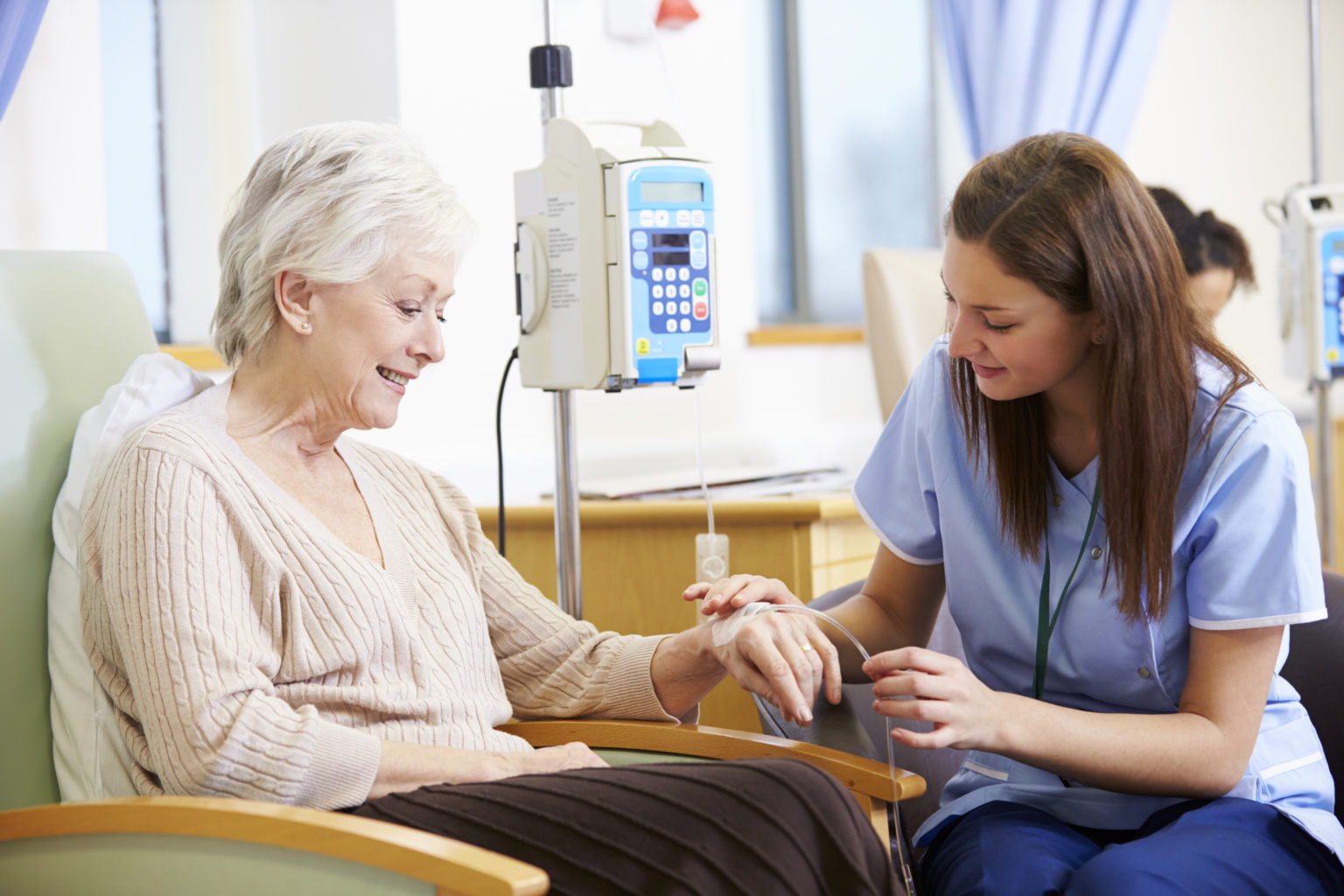
Chemotherapy is a treatment that uses medicines to destroy cancer cells. There are many different types of chemo. They don’t all work exactly the same way, so different types of chemo might be used for different types of cancer. Most are given as an infusion into a vein (IV), but some are given as an injection, taken as pills, or applied to the skin.
What is the goal of chemo?
If your doctor has recommended chemo, it’s important to understand the goal of treatment. This can depend on your type of cancer, its stage (size and location), and how far it has spread. Chemo can have 3 possible treatment goals:
* To cure the cancer (curative intent)
* To control the cancer
* To ease symptoms (palliative intent)
How is chemo different from other cancer treatments?
Chemo is a systemic treatment. It travels through the bloodstream to reach all parts of your body. It can kill cancer cells that have spread (metastasized) to parts of the body far away from the original (primary) tumor or cancer cells in blood cancers, such as leukemia, that have spread throughout the body. This makes chemo different from local treatments like surgery and radiation, which only affect one part of the body.
How does chemotherapy work?
Understanding how chemotherapy works can help you know what to expect during treatment.
Chemotherapy interrupts the cell cycle
Chemotherapy works by affecting cells when they are growing and dividing to make new cells. During this process (called the cell cycle), cells:
* Grow in size
* Make copies of their genetic material (DNA)
* Divide to form new cells
Some cells, such as skin cells, are fast growing, meaning they move through this process quickly. Other cells, such as muscle cells, complete it more slowly. Cancer cells tend to be faster growing, moving through the cell cycle very quickly.
Different types of chemo target cells at different phases of the cell cycle. This is why certain chemo drugs work better for different types of cancer cells, and sometimes different combinations of chemo work better together. Understanding how chemo works also helps doctors plan how often each chemo should be given, and how those doses should be timed.
Chemo affects normal cells, too
Chemo interrupts the cell cycles of normal cells, too – especially cells that grow faster, like hair or skin cells. This is why chemo often causes certain side effects, like hair loss.
The good news is that most normal cells will recover from chemo. Chemo is a useful cancer treatment because cancer cells are abnormal (mutated) and less able to recover from its effects.
To work best, chemo treatments must be at just the right dose to kill the cancer cells while sparing as many normal cells as possible.
Are all medicines used to treat cancer called chemo?
Not all cancer medicines are chemotherapy. Other medicines and biological treatments may be used alone or with chemo or other treatments. They work differently and often have different side effects.
* Targeted therapy: These find and attack specific proteins or receptors that some cancer cells have, without affecting most normal cells.
* Hormone therapy: These block or lower hormones that help some cancers (like breast, prostate, and endometrial (uterine) cancers) grow. They either stop the body from making the hormone or block the cancer cells from using it.
* Immunotherapy: These help a person's immune system recognize and attack certain types of cancer cells.
Although these treatments can be very effective, they are more specialized than traditional chemo. They might only work on certain types of cancer, often based on specific traits of the cancer cells. And because many of them are newer, less is known about their long-term side effects. Sometimes they are used only when chemo isn’t working or is no longer effective.
What is it like to get chemo?
Most people get chemo as infusions at a clinic or hospital. But some types of chemo can be taken by mouth or applied to the skin at home. Each type has its own routine, side effects, and safety steps. Learn what it’s like to get each type of chemo and how to stay safe during treatment.
It appears to me that if one wants to make progress in mathematics, one should study the masters and not the pupils. - Niels Henrik Abel.
Nothing is better than reading and gaining more and more knowledge - Stephen William Hawking.
Offline
Pages: 1