Math Is Fun Forum
You are not logged in.
- Topics: Active | Unanswered
Pages: 1
#1 2026-01-06 21:08:21
- Jai Ganesh
- Administrator

- Registered: 2005-06-28
- Posts: 53,931
Mosquito
Mosquito
Gist
Mosquitoes are attracted to the carbon dioxide (CO2) we exhale, body heat, and specific skin odors like lactic acid, ammonia, and carboxylic acids, often from skin bacteria, with factors like dark clothing, Type O blood, alcohol, and scented products also playing a role, while they find standing water for breeding. They use these cues, detected by antennae, to find hosts for blood meals (females) and breeding sites.
The mosquito is the world's deadliest animal. Spreading diseases like dengue, West Nile, Zika, chikungunya, malaria, and lymphatic filariasis, the mosquito kills more people than any other creature in the world.
Summary
Mosquitoes are one of the most intensely studied creatures on the planet. Their role in disease transmission and nuisance biting makes them worthy of such attention. There are over 3,500 species of mosquito on Earth and they are found on every continent except Antarctica. Yet, from this great diversity, only a small handful can carry the pathogens that cause disease and it is these species which have been studied most intensely. For the purposes of public health, this substantial body of research has helped us to understand mosquito-borne disease transmission and informed the development of mosquito- and disease-control methods. But parallel to this, a fascinating and complex biology has been revealed, showing the mosquito’s incredible and unusual behavioural, anatomical and physiological traits. This chapter will explore some of the unique aspects of mosquito biology and ecology, drawn from the ever-growing body of research on the most medically important species, and highlight the sophisticated adaptations of mosquitoes to their ecological niche.
Details
A mosquito, (family Culicidae), is any of approximately 3,500 species of familiar insects, some of which are important in public health because of the bloodsucking habits of the females. Mosquitoes are known to transmit serious diseases, including yellow fever, Zika fever, malaria, filariasis, chikungunya fever, and dengue, though less than 10 percent of all mosquito species are vectors of human disease. Ecologically, mosquitoes serve as an important food source for countless animals and play an integral role in local food webs. In natural bodies of standing water, mosquito eggs and larvae make up a substantial portion of the biomass in many places, providing food not only for fishes but also for turtles, amphibians, and even the larvae of other insects, such as dragonflies. In terrestrial environments, mosquitoes are a major food source for bats, birds, lizards, frogs, spiders, and predatory insects, and also serve as pollinators.
Mosquitoes are found in nearly every part of the world. They thrive in warm, humid environments and are especially abundant in tropical and subtropical regions, though some species inhabit temperate zones and survive cold seasons by overwintering in the egg or adult stage. In 2025, following record-breaking spring heat, mosquitoes (a male and two female of the species Culiseta annulata) were detected in the mountains of Iceland for the first time. If the population there survives the winter and becomes established, Antarctica would become the last remaining mosquito-free land mass on Earth. Mosquitoes are expected to benefit from anthropogenic climate change, as rising global temperatures, milder winters, and increasingly frequent heat waves, storms, and floods expand suitable habitats and create more standing water for breeding. A number of species, including several important vectors of disease, have already encroached into novel areas in higher latitudes and altitudes.
Physical features and behavior
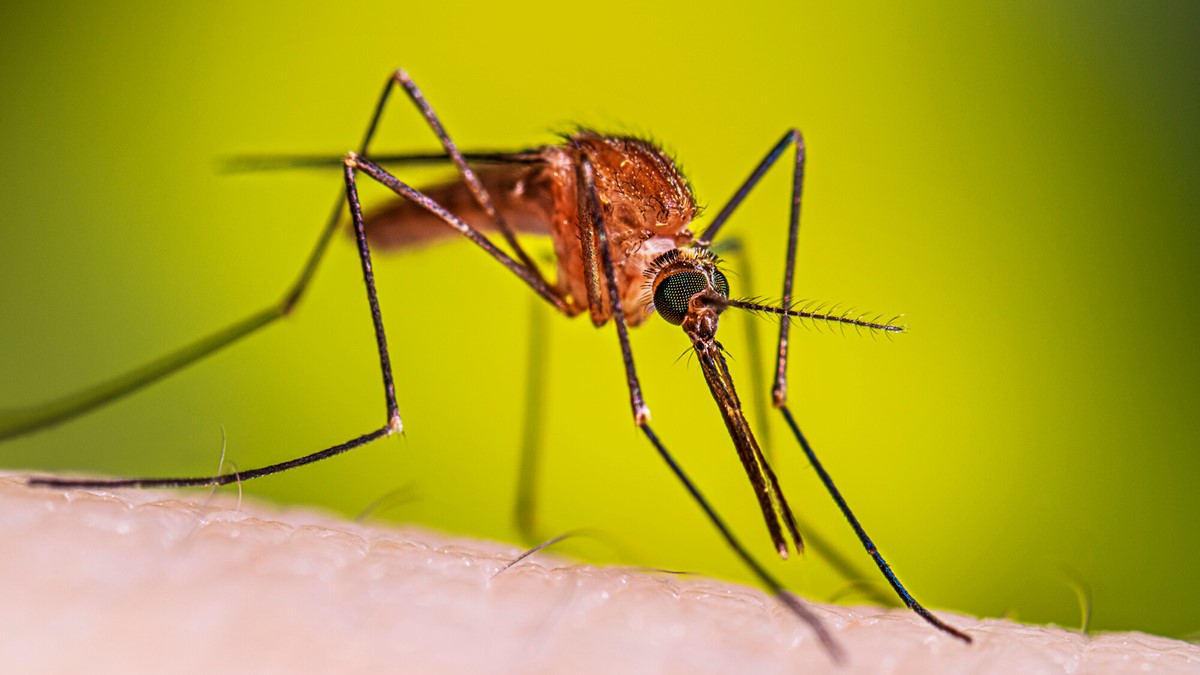
The slender elongated body of the adult is covered with scales, as are the veins of the wings. Mosquitoes are also characterized by long fragile-looking legs and elongated piercing mouthparts. The feathery antennae of the male are generally bushier than those of the female. The males, and sometimes the females, feed on nectar and other plant juices and are known pollinators. In most species, however, the females require the proteins obtained from a blood meal in order to mature their eggs. Different species of mosquitoes show preferences and, in many cases, narrow restrictions as to host animals. The females of Uranotaenia sapphirina, for example, specialize on earthworms and leeches, while those of a related species, Uranotaenia lowii, feast only on the blood of frogs and toads. Mammals, birds, and reptiles are common hosts for many mosquitoes.
The eggs are laid on the surface of water and hatch into aquatic larvae, or wrigglers, which swim with a jerking, wriggling movement. In most species, larvae feed on algae and organic debris, although a few are predatory and may even feed on other mosquitoes. Unlike most insects, mosquitoes in the pupal stage, called tumblers, are active and free-swimming. The pupae breathe by means of tubes on the thorax. The adults mate soon after emerging from their pupal cases. The duration of the life cycle varies greatly, depending on the species.
Mosquitoes are apparently attracted to host animals by moisture, lactic acid, carbon dioxide, body heat, and movement. The mosquito’s hum results from the high frequency of its wingbeats, and the female’s wingbeat frequency may serve as a means of sex recognition.
Major genera and species
There are three important mosquito genera that cause disease in humans.
Aedes mosquitoes
The genus Aedes carries the pathogens that cause yellow fever, dengue, Zika fever, chikungunya fever, and encephalitis. Like Culex, it holds its body parallel to the resting surface, with the proboscis bent down. The wings are uniformly colored. Aedes may be distinguished from Culex by its silver thorax with white markings and posterior spiracular bristles. The tip of the female’s abdomen is pointed and has protruding cerci. Aedes usually lays eggs in floodwater, rain pools, or salt marshes. The eggs are capable of withstanding long periods of dryness. The short, stout larvae have a breathing tube containing a pair of tufts, and the larvae hang head down at a 45° angle from the water surface. The life cycle may be as short as 10 days or, in cool weather, as long as several months.
A. aegypti, the important carrier of the virus responsible for yellow fever and other diseases, has white bands on its legs and spots on its abdomen and thorax. This domestic species breeds in almost any kind of container, from flower pots to discarded car-tire casings. The Asian tiger mosquito (A. albopictus) is another serious disease vector that has spread from its native Asia to the Americas.
The eastern salt marsh mosquito (A. sollicitans), the black salt marsh mosquito (A. taeniorhynchus), and the summer salt marsh mosquito (A. dorsalis) are important mosquitoes in coastal marsh areas that experience daily or occasional flooding with brackish or salt water. They are prolific breeders, strong fliers, and irritants to animals, including humans.
Anopheles mosquitoes
Anopheles, the only known carrier of malaria, also transmits filariasis and encephalitis. Anopheles mosquitoes are easily recognized from their resting position, in which the proboscis, head, and body are held in a straight line with one another but at an angle to the surface. The spotted coloring on the wings results from colored scales. Egg laying usually occurs in water containing heavy vegetation. The female deposits her eggs singly on the water surface. Anopheles larvae lie parallel to the water surface and breathe through posterior spiracular plates on the abdomen instead of through a tube, as do most other mosquito larvae. The life cycle is from 18 days to several weeks.
Culex mosquitoes
The genus Culex is a carrier of viral encephalitis and, in tropical and subtropical climates, of filariasis. It holds its body parallel to the resting surface and its proboscis is bent downward relative to the surface. The wings, with scales on the veins and the margin, are uniform in color. The tip of the female’s abdomen is blunt and has retracted cerci (sensory appendages). Egg laying may occur on almost any body of fresh water, including standing polluted water. The eggs, which float on the water, are joined in masses of 100 or more. The long and slender Culex larvae have breathing tubes that contain hair tufts. They hang head downward at an angle of 45° from the water surface. The life cycle, usually 10 to 14 days, may be longer in cold weather.
The northern house mosquito (C. pipiens) is the most abundant species in northern regions, while the southern house mosquito (C. quinquefasciatus) is abundant in southern regions, namely the tropics and subtropics.
Mosquito control
Because mosquitoes are such prolific carriers of infectious diseases, preventing them from feeding on humans is considered to be a key global health strategy. The likelihood of disease transmission can be reduced through the use of mosquito repellent, long clothing that covers the arms and legs, screens in open doors and windows, and insecticide-treated mosquito bed nets. Mosquito populations can be controlled in part through the elimination of sources of standing water, which provide ideal breeding sites for mosquitoes. A surface film of oil can be applied to standing water to clog the breathing tubes of wrigglers, which may also be killed by larvicides. Biological control using larvivorous fish, such as the mosquitofish (Gambusia affinis) is an option for some bodies of water. At times, insecticides are used to destroy adult mosquitoes indoors.
Aerial and truck-spraying applications of insecticides are commonly used in urban areas. Such applications are often done in the early evening to reduce the impact on pollinators, and ideally, they consist of insecticides that leave minimal residual effects, though regulations vary widely across the globe. Even in developed countries, commercial yard treatments are often less regulated than municipal applications and are frequently overused by the public. Nontarget fly species and many beneficial insects, including bees, are often killed with broad or persistent insecticide treatments. Naled, pyrethrins, pyrethroids, and other common insecticides used for mosquito control can make their way into waterways and harm aquatic invertebrates, affecting food webs far beyond the application site. Using mosquito insecticides in adverse weather conditions can exacerbate their negative environmental impacts.
Researchers have investigated the possibility of manipulating mosquito populations to prevent the production of viable mosquito offspring, thereby reducing the number of mosquitoes. Researchers have also identified ways in which male mosquitoes may be genetically engineered to transmit a gene to their offspring that causes the offspring to die before becoming sexually mature. Scientists have found that female mosquitoes are less attracted to humans when exposed to small compounds related to the neurotransmitter molecule neuropeptide Y. These compounds could be emitted via dispensers in areas where mosquitoes are abundant, helping to deter them from biting humans.
Additional Information
Many mosquitoes, such as Culex quinquefasciatus, lay their eggs on the surface of fresh or stagnant water. The water may be in tin cans, barrels, horse troughs, ornamental ponds, swimming pools, puddles, creeks, ditches, catch basins or marshy areas. Mosquitoes prefer water sheltered from the wind by grass and weeds.
Culex mosquitoes usually lay their eggs at night over a period of time sticking them together to form a raft of from 100 to 300 eggs. A raft of eggs looks like a speck of soot floating on the water and is about 1/4 inch long and 1/8 inch wide. A female mosquito may lay a raft of eggs every third night during its life span.
Anopheles and many other mosquitoes lay their eggs singly on the water surface. Aedes and Ochlerotatus mosquitoes lay their eggs singly, usually on damp soil. Aedes and Ochlerotatus eggs are more resistant to drying out (some require complete drying out before the eggs will hatch) and hatch only when flooded with water (salt water high tides, irrigated pastures, treeholes flooded by rains, flooded stream bottoms). Anopheles, Culex and Mansonia eggs are susceptible to drying out during extended droughts.
Tiny mosquito larvae (1st instar) emerge from the eggs within 24 - 48 hours almost in unison.
Mosquito Larva
Mosquito larvae, commonly called "wigglers," live in water from 4 to 14 days depending on water temperature.
Larvae of almost all species must come to the surface at frequent intervals to obtain oxygen through a breathing tube called a siphon. Larvae of Coquillettidia and Mansonia possess modified siphons that allow them to pierce the stems of emergent vegetation in water and draw their oxygen from the plant in this process. Larvae are constantly feeding since maturation requires a huge amount of energy and food. They hang with their heads down and the brushes by their mouths filtering anything small enough to be eaten toward their mouths to nourish the growing larvae. They feed on algae, plankton, fungi and bacteria and other microorganisms. They breath at the water surface with the breathing tube up breaking the water surface tension. The larvae of a few mosquito species are cannibalistic, feeding on larvae of other mosquitoes: Toxorhynchites and some Psorophora, the largest mosquitoes known, are predators of other mosquito larvae sharing their habitat. Their larvae are much larger than other mosquito larvae.
During growth, the larva molts (sheds its skin) four times. The stages between molts are called instars. At the 4th instar, the usual larva reaches a length of almost 1/2 inch and toward the end of this instar ceases feeding. When the 4th instar larva molts, it becomes a pupa.
Mosquito Pupa
Mosquito pupae, commonly called "tumblers," live in water from 1 to 4 days, depending upon species and temperature.
The pupa is lighter than water and therefore floats at the surface. It takes oxygen through two breathing tubes called "trumpets." The pupa does not eat, but it is not an inactive stage. When disturbed, it dives in a jerking, tumbling motion toward protection and then floats back to the surface.
The metamorphosis of the mosquito into an adult is completed within the pupal case. The pupal case thus serves as a factory wherein the mosquito makes an adult out of a larva. The adult mosquito splits the pupal case and emerges to the surface of the water where it rests until its body dries and hardens.
Mosquito Adult
Only female mosquitoes require a blood meal and bite animals - warm or cold blooded - and birds. Stimuli that influence biting (blood feeding) include a combination of carbon dioxide, temperature, moisture, smell, color and movement. Male mosquitoes do not bite, but feed on the nectar of flowers or other suitable sugar source. Acquiring a blood meal (protein) is essential for egg production, but mostly both male and female mosquitoes are nectar feeders for their nutrition. Female Toxorhynchites actually can't obtain a bloodmeal and are restricted to a nectar diet. Of those female mosquitoes capable of blood feeding, human blood meals are seldom first or second choices. Horses, cattle, smaller mammals and/or birds are preferred.
Aedes and Ochlerotatus mosquitoes are painful and persistent biters.
They search for a blood meal early in the morning, at dusk (crepuscular feeders) and into the evening. Some are diurnal (daytime biters) especially on cloudy days and in shaded areas. They usually do not enter dwellings, and they prefer to bite mammals like humans. Aedes and Ochlerotatus mosquitoes are strong fliers and are known to fly many miles from their larval development sites.
Culex mosquitoes are painful and persistent biters also but prefer to attack at dusk and after dark. They readily enter dwellings for blood meals. Domestic and wild birds usually are preferred over man, cows, and horses. Culex nigripalpus is known to transmit St. Louis encephalitis to man in Florida. Culex mosquitoes are generally weak fliers and do not move far from home, although they have been known to fly up to two miles, Culex usually live only a few weeks during the warm summer months. Those females that emerge in late summer search for sheltered areas where they "hibernate" until spring. Warm weather brings them out again in search of water on which to lay their eggs.
Culiseta mosquitoes are moderately aggressive biters, attacking in the evening hours or in the shade during the day. Psorophora, Coquillettidia and Mansonia mosquitoes are becoming more pestiferous as an ever-expanding human population invades their natural habitats. Anopheles mosquitoes are persistent biters and are the only mosquitoes which transmit malaria to man.
It appears to me that if one wants to make progress in mathematics, one should study the masters and not the pupils. - Niels Henrik Abel.
Nothing is better than reading and gaining more and more knowledge - Stephen William Hawking.
Offline
Pages: 1