Math Is Fun Forum
You are not logged in.
- Topics: Active | Unanswered
Pages: 1
#1 2026-02-15 16:43:12
- Jai Ganesh
- Administrator

- Registered: 2005-06-28
- Posts: 53,883
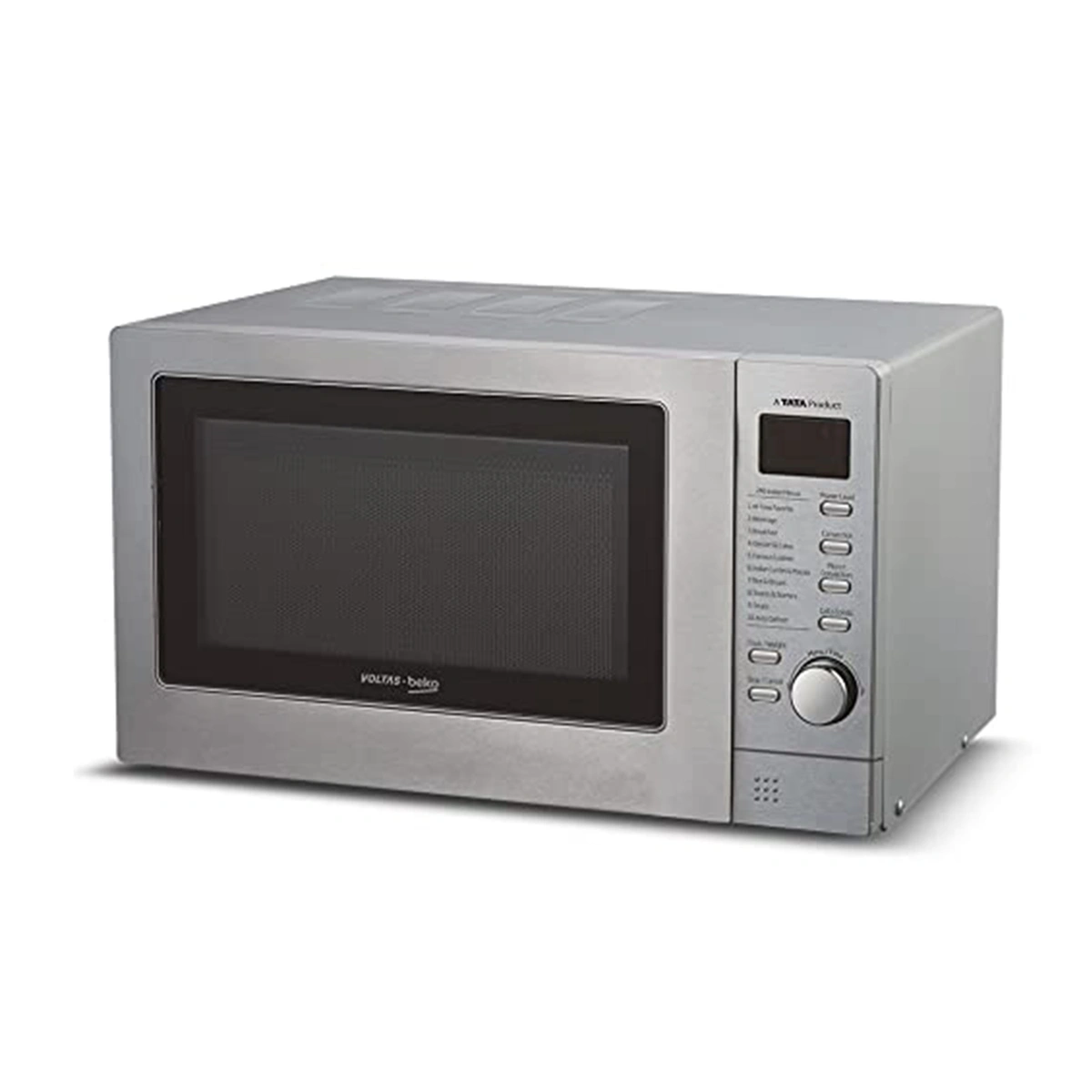
Microwave Oven
Microwave Oven
Gist
A microwave oven heats food using electromagnetic waves that excite water molecules, causing them to vibrate and generate heat, allowing for quick reheating, defrosting, and cooking, making it a convenient, energy-efficient appliance for modern kitchens, especially for busy individuals. Its main uses include rapidly warming leftovers, thawing frozen foods, making popcorn, steaming vegetables, and even baking with convection models.
The most common types of microwaves include built-in, over-the-range, countertop, undercounter, wall oven and microwave combination, smart and convection microwaves.
Summary
A microwave oven, or simply microwave, is an electric oven that heats and cooks food by exposing it to electromagnetic radiation in the microwave frequency range. This induces polar molecules in the food to rotate and produce thermal energy (heat) in a process known as dielectric heating. Microwave ovens heat food quickly and efficiently because the heating effect is fairly uniform in the outer 25–38 mm (1–1.5 inches) of a homogeneous, high-water-content food item.
The development of the cavity magnetron in the United Kingdom made possible the production of electromagnetic waves of a small enough wavelength (microwaves) to efficiently heat up water molecules. American electrical engineer Percy Spencer is generally credited with developing and patenting the world's first commercial microwave oven, the "Radarange", which was first sold in 1947. He based it on British radar technology which had been developed before and during World War II.
Raytheon later licensed its patents for a home-use microwave oven that was introduced by Tappan in 1955, but it was still too large and expensive for general home use. Sharp Corporation introduced the first microwave oven with a turntable between 1964 and 1966. The countertop microwave oven was introduced in 1967 by the Amana Corporation. After microwave ovens became affordable for residential use in the late 1970s, their use spread into commercial and residential kitchens around the world, and prices fell rapidly during the 1980s. In addition to cooking food, microwave ovens are used for heating in many industrial processes.
Microwave ovens are a common kitchen appliance and are popular for reheating previously cooked foods and cooking a variety of foods. They rapidly heat foods which can easily burn or turn lumpy if cooked in conventional pans, such as butter, fats, chocolate, or porridge. Microwave ovens usually do not directly brown or caramelize food, since they rarely attain the necessary temperature to produce Maillard reactions. Exceptions occur in cases where the oven is used to heat frying-oil and other oily items (such as bacon), which attain far higher temperatures than that of boiling water.
Microwave ovens have a limited role in professional cooking, because the boiling-range temperatures of a microwave oven do not produce the flavorful chemical reactions that frying, browning, or baking at a higher temperature produces. However, there are hybrid appliances that combine infrared radiation, hot air, and microwaves, such as convection microwave ovens.
Details
"Microwave" is just short for "microwave oven". Both terms mean the same thing: an appliance that uses microwave radiation to heat food. Cooking food in this way is called "microwaving". An oven, on the other hand, has a heating element which heats the air inside, which then heats the food. Cooking food in this way is generally called "baking", though there are a lot of other things (e.g. roasting) you can also reasonably do in an oven.
So if all you have is a microwave, then all you can do is microwave (not bake). And if you have an oven, then you can bake (but of course you can't microwave).
There also exist combinations, which are capable of both microwaving and baking, i.e. they have a microwave emitter and a heating element. However, remember that in the US - and thus on much of the internet - something talking about a "microwave oven" likely does not mean this combination, but simply microwave heating. Names like "convection microwave oven with grill", "combination microwave/oven" do refer to these combinations, though. I've also seen "speed oven". You may sometimes have seen people referring to these combination microwave/ovens as a "microwave oven" (I think this may be common in Indian English), but that's really just imprecise language.
Some sites say that a "microwave" is only for heating or re-heating cooked food. Whereas, in "microwave ovens", you can microwave and bake. Is that true?
It sounds like in this statement, "microwave oven" is careless language, referring to a combination microwave and oven. (It doesn't make any sense at all otherwise; the two things are the same thing, so of course you can do the same things in them.)
So the question is really, what can you do in a microwave vs an oven, or a combination microwave/oven?
It's true that microwaves are mainly used for reheating cooked food, and it's true that they can't actually bake. However, they can do a lot more than reheat food; there are a lot of kinds of cooking besides baking. For example, microwaves are great at simmering/boiling and steaming, and it doesn't matter if the food was cooked already or not. The recipes you're talking about are probably mostly in those kinds of categories, but if you're interested, How do I know if a food or recipe can be made in a microwave oven? discusses in a bit more detail what works in microwaves.
The big things that you can do with ovens but not microwaves are the things that actually need the steady dry heat of baking. You can't bake bread or cookies or roast a chicken in a microwave. Microwaves hold in a lot of steam and don't get terribly hot, so you can't generally get things to brown or crisp up. They also don't really hold a temperature like you need for baking, they just pump more and more heat into the food.
Additional Information
A microwave oven heats food by passing microwave radiation through it, a process known as dielectric heating. Microwaves are a form of non-ionizing electromagnetic radiation with a frequency between 300 MHz and 300 GHz. Microwave ovens use frequencies in one of the ISM (industrial, scientific, medical) bands, so they do not interfere with other vital radio services.
Dielectric heating takes advantage of the electric dipole structure of water molecules, fats, and many other substances in the food. These molecules have a partial positive charge at one end and a partial negative charge at the other. In an alternating electric field, they will rotate as they continually try to align themselves to the field. Once the electrical field's energy is initially absorbed, heat will gradually spread through the object similarly to any other contact with a hotter body.
It is a common misconception that microwave ovens heat food at a special resonance of water molecules in the food. Instead, all polar molecules participate, and dielectric heating for each molecule can happen over a wide range of frequencies.
Typically, consumer ovens work around a nominal 2.45 gigahertz (GHz) – a wavelength of 12.2 centimetres (4.80 in) in the 2.4 GHz to 2.5 GHz ISM band – while large industrial / commercial ovens often use 915 megahertz (MHz) – 32.8 centimetres (12.9 in). Among other differences, the longer wavelength of a commercial microwave oven allows the initial heating effects to begin deeper within the food or liquid, and therefore become evenly spread within its bulk sooner, as well as raising the temperature deep within the food more quickly.
It appears to me that if one wants to make progress in mathematics, one should study the masters and not the pupils. - Niels Henrik Abel.
Nothing is better than reading and gaining more and more knowledge - Stephen William Hawking.
Offline
Pages: 1