Math Is Fun Forum
You are not logged in.
- Topics: Active | Unanswered
Pages: 1
#1 2026-03-19 01:01:21
- Jai Ganesh
- Administrator

- Registered: 2005-06-28
- Posts: 53,894
Nitric Oxide
Nitric Oxide
Gist
Nitric oxide (NO) is a vital signaling gas produced by the body that relaxes and widens blood vessels (vasodilation), improving blood flow, lowering blood pressure, and supporting cardiovascular health. It acts as a neurotransmitter and immune defender. Key health benefits include improved heart health, increased exercise performance, and enhanced nutrient delivery.
Inhaled nitric oxide, used therapeutically, can cause adverse effects such as hypotension (low blood pressure), methemoglobinemia (impaired oxygen transport), platelet inhibition leading to bleeding, and respiratory issues like pulmonary edema or irritations. Common side effects include headaches, dizziness, and nausea.
Summary
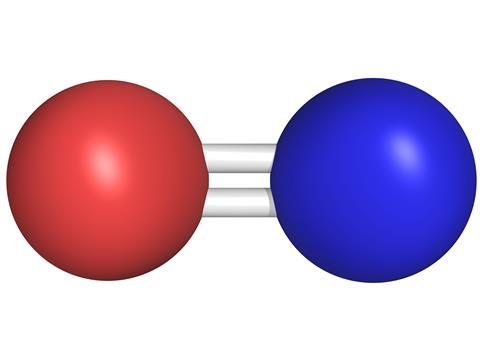
Nitric oxide (nitrogen oxide, nitrogen monooxide, or nitrogen monoxide) is a colorless gas with the formula NO. It is one of the principal oxides of nitrogen. Nitric oxide is a free radical: it has an unpaired electron, which is sometimes denoted by a dot in its chemical formula (•N=O or •NO). Nitric oxide is also a heteronuclear diatomic molecule, a class of molecules whose study spawned early modern theories of chemical bonding.
An important intermediate in industrial chemistry, nitric oxide forms in combustion systems and can be generated by lightning in thunderstorms. In mammals, including humans, nitric oxide is a signaling molecule in many physiological and pathological processes. It was proclaimed the "Molecule of the Year" in 1992. The 1998 Nobel Prize in Physiology or Medicine was awarded for discovering nitric oxide's role as a cardiovascular signalling molecule. Its impact extends beyond biology, with applications in medicine, such as the development of sildenafil, and in industry, including semiconductor manufacturing.
Nitric oxide should not be confused with nitrogen dioxide (NO2), a brown gas and major air pollutant, or with nitrous oxide (N2O), an anesthetic gas.
Details
Nitric oxide (NO) is a colourless toxic gas that is formed by the oxidation of nitrogen. Nitric oxide performs important chemical signaling functions in humans and other animals and has various applications in medicine. It has few industrial applications. It is a serious air pollutant generated by automotive engines and thermal power plants.
Nitric oxide is formed from nitrogen and oxygen by the action of electric sparks or high temperatures or, more conveniently, by the action of dilute nitric acid upon copper or mercury. It was first prepared about 1620 by the Belgian scientist Jan Baptista van Helmont, and it was first studied in 1772 by the English chemist Joseph Priestley, who called it “nitrous air.”
Nitric oxide liquefies at −151.8 °C (−241.2 °F) and solidifies at −163.6 °C (−262.5 °F); both the liquid and the solid are blue in colour. The gas is almost insoluble in water, but it dissolves rapidly in a slightly alkaline solution of sodium sulfite, forming the compound sodium dinitrososulfite, Na2(NO)2SO3. It reacts rapidly with oxygen to form nitrogen dioxide, NO2. Nitric oxide is a relatively unstable, diatomic molecule that possesses a free radical (i.e., an unpaired electron). The molecule can gain or lose one electron to form the ions NO− or NO+.
In the chemical industry, nitric oxide is an intermediate compound formed during the oxidation of ammonia to nitric acid. An industrial procedure for the manufacture of hydroxylamine is based on the reaction of nitric oxide with hydrogen in the presence of a catalyst. The formation of nitric oxide from nitric acid and mercury is applied in a volumetric method of analysis for nitric acid or its salts.
Though it is a toxic gas at high concentrations, nitric oxide functions as an important signaling molecule in animals. It acts as a messenger molecule, transmitting signals to cells in the cardiovascular, nervous, and immune systems. The nitric oxide molecule’s possession of a free radical makes it much more reactive than other signaling molecules, and its small size enables it to diffuse through cell membranes and walls to perform a range of signaling functions in various bodily systems. The body synthesizes nitric oxide from the amino acid L-arginine by means of the enzyme nitric oxide synthase.
The main site of the molecule’s synthesis is the inner layer of blood vessels, the endothelium, though the molecule is also produced by other types of cells. From the endothelium, nitric oxide diffuses to underlying smooth muscle cells and causes them to relax. This relaxation causes the walls of blood vessels to dilate, or widen, which in turn increases blood flow through the vessels and decreases blood pressure. Nitric oxide’s role in dilating blood vessels makes it an important controller of blood pressure. Nitric oxide is also produced by neurons (nerve cells) and is used by the nervous system as a neurotransmitter to regulate functions ranging from digestion to blood flow to memory and vision. In the immune system, nitric oxide is produced by macrophages, which are a type of leukocyte (white blood cell) that engulfs bacteria and other foreign particles that have invaded the body. The nitric oxide released by macrophages kills bacteria, other parasites, and tumour cells by disrupting their metabolism.
Nitric oxide’s role in regulating blood flow and pressure is used by modern medicine in several ways. The drug nitroglycerin has been used since the late 19th century to relieve the condition known as angina pectoris, which is caused by an insufficient supply of blood to the heart muscle. Nitroglycerin was long known to achieve its therapeutic effect by dilating the coronary arteries (thereby increasing the flow of blood to the heart), but why it did so remained unknown until the late 1980s, when researchers realized that the drug serves to replenish the body’s supply of nitric oxide, more of which is then available to relax, and thereby widen, the coronary blood vessels.
Nitric oxide is an important component of the air pollution generated by automotive engines and thermal power-generating plants. When a mixture of air and hydrocarbon fuel is burned in an internal-combustion engine or a power plant, the ordinarily inert nitrogen in the air combines with oxygen at very high temperatures to form nitric oxide. The nitric oxide and hydrocarbon vapours emitted by automotive exhausts and power-plant smokestacks undergo complex photochemical reactions in the lower atmosphere to form various secondary pollutants called photochemical oxidants, which make up photochemical smog. Nitric oxide combines with water vapour in the atmosphere to form nitric acid, which is one of the components of acid rain. Heightened levels of atmospheric nitric oxide resulting from industrial activity were also one of the causes of gradual depletion of the ozone layer in the upper atmosphere. Sunlight causes nitric oxide to react chemically with ozone (O3), thereby converting the ozone to molecular oxygen (O2).
Additional Information
Nitric oxide or Nitrogen monoxide is a chemical compound with chemical formula NO. This gas is an important signaling molecule in the body of mammals including humans and is an extremely important intermediate in the chemical industry. It is also a toxic air pollutant produced by automobile engines and power plants.
Nitric oxide (NO) should not be confused with nitrous oxide (N2O), a general anaesthetic, or with nitrogen dioxide (NO2) which is another poisonous air pollutant.
The nitric oxide molecule is a free radical, which is relevant to understanding its high reactivity. It reacts with the ozone in air to form nitrogen dioxide, signalled by the appearance of the reddish-brown color.
Pharmacodynamics
Persistent pulmonary hypertension of the newborn (PPHN) occurs as a primary developmental defect or as a condition secondary to other diseases such as meconium aspiration syndrome (MAS), pneumonia, sepsis, hyaline membrane disease, congenital diaphragmatic hernia (CDH), and pulmonary hypoplasia. In these states, pulmonary vascular resistance (PVR) is high, which results in hypoxemia secondary to right-to-left shunting of blood through the patent ductus arteriosus and foramen ovale. In neonates with PPHN, Nitric oxide improves oxygenation (as indicated by significant increases in PaO2). Nitric oxide appears to increase the partial pressure of arterial oxygen (PaO2) by dilating pulmonary vessels in better entilated areas of the lung, redistributing pulmonary blood flow away from lung regions with low ventilation/perfusion (V/Q) ratios toward regions with normal ratios.
Mechanism of action
Nitric oxide is a compound produced by many cells of the body. It relaxes vascular smooth muscle by binding to the heme moiety of cytosolic guanylate cyclase, activating guanylate cyclase and increasing intracellular levels of cyclic guanosine 3',5'-monophosphate, which then leads to vasodilation. When inhaled, nitric oxide produces pulmonary vasodilation.
It appears to me that if one wants to make progress in mathematics, one should study the masters and not the pupils. - Niels Henrik Abel.
Nothing is better than reading and gaining more and more knowledge - Stephen William Hawking.
Offline
Pages: 1