Math Is Fun Forum
You are not logged in.
- Topics: Active | Unanswered
Pages: 1
#1 2026-03-25 01:49:12
- Jai Ganesh
- Administrator

- Registered: 2005-06-28
- Posts: 53,931
Hyperthyroidism
Hyperthyroidism
Gist
Hyperthyroidism is caused by an overactive thyroid gland producing excessive thyroid hormones (T3 and T4), commonly driven by Graves' disease (an autoimmune disorder), toxic thyroid nodules, or thyroid inflammation (thyroiditis). Other causes include high iodine intake, overmedication for hypothyroidism, and rarely, pituitary tumors.
Hyperthyroidism, or overactive thyroid, happens when your thyroid gland makes more thyroid hormones than your body needs.
Your thyroid is a small, butterfly-shaped gland in the front of your neck. It makes hormones that control the way the body uses energy. These hormones affect nearly every organ in your body and control many of your body's most important functions. For example, they affect your breathing, heart rate, weight, digestion, and moods. If not treated, hyperthyroidism can cause serious problems with your heart, bones, muscles, menstrual cycle, and fertility. But there are treatments that can help.
Summary
Hyperthyroidism means that your thyroid gland is making too much thyroid hormone. You may also hear the term thyrotoxicosis. This also means there is too much thyroid hormone in your body.
What are the symptoms Hyperthyroidism?
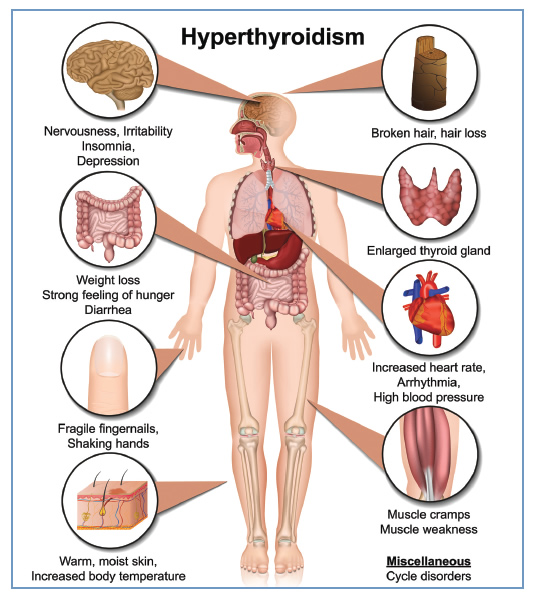
If there is too much thyroid hormone, your body speeds up and this can cause symptoms such as:
* increased sweating and feeling hot
* feeling like your heart is racing or is beating irregularly
* hand tremors
* anxiety, nervousness, and irritability
* weight loss despite normal or even increased appetite
* frequent bowel movements or diarrhea
* difficulty sleeping
* hair loss
* changes in menstrual periods, often lighter and/or less frequent
* trouble swallowing or fullness in the neck
* increased or decreased energy level
* pain behind the eyes and/or swelling or bulging of eyes (for autoimmune thyroid dysfunction only)
Everyone is different and you may not have all the symptoms. Symptoms can start suddenly or come on slowly over time.
Hyperthyroidism can be caused by an autoimmune condition (Graves’ disease), inflammation of the thyroid (thyroiditis), or due to thyroid nodules making too much thyroid hormone (hot nodule or toxic multinodular goiter). We will briefly describe each of these but be sure to check out our other resource links.
Graves' Disease:
Graves’ disease is the most common cause of hyperthyroidism. It is an autoimmune thyroid condition caused by antibodies that stimulate all the cells in the thyroid gland to make too much thyroid hormone.
Details
Hyperthyroidism, also called overactive thyroid, happens when your thyroid makes and releases high levels of thyroid hormone. It speeds up several bodily functions, causing symptoms like rapid heart rate, weight loss, increased appetite and anxiety. Hyperthyroidism is treatable — typically with medications.
Overview:
What is hyperthyroidism?
Hyperthyroidism, also called overactive thyroid, is a condition where your thyroid makes and releases high levels of thyroid hormone. It has multiple possible causes. The main thyroid hormones are triiodothyronine (T3), thyroxine (T4) and thyroid stimulating hormone (TSH).
Hyperthyroidism speeds up your metabolism, which can affect several aspects of your health. The condition can throw your whole well-being off balance. You may not feel like yourself or even feel out of control of your body. It’s important to get medical treatment if you develop signs of hyperthyroidism so you can get back to feeling like yourself.
How common is hyperthyroidism?
Hyperthyroidism is relatively rare. Approximately 1.3% of people in the United States have it.
Symptoms and Causes
What are the symptoms of hyperthyroidism?
Hyperthyroidism can impact your entire body, so there are many symptoms. You may experience some of these symptoms and not others, or many of them at the same time. Symptoms of hyperthyroidism can include:
* Rapid heart rate (tachycardia) and/or heart palpitations.
* Increased blood pressure.
* Shakiness, like hand tremors.
* Feeling anxious, nervous and/or irritable.
* Weight loss despite a regular or increased appetite.
* Diarrhea or more frequent pooping.
* Increased sweating and sensitivity to warm temperatures.
* Hair loss or brittle hair.
* Difficulty sleeping (insomnia).
* Menstrual period changes, like lighter or missed periods.
* Swelling and enlargement of your neck (goiter).
* Swelling or bulging of your eyes (thyroid eye disease).
These symptoms can start suddenly or develop slowly over time. It’s important to see your healthcare provider if you develop hyperthyroidism symptoms.
What causes hyperthyroidism?
Medical conditions and situations that can cause hyperthyroidism include:
* Graves’ disease: This is an autoimmune condition that makes your thyroid overactive. Graves’ disease is the most common cause of hyperthyroidism. Your chances of developing it increase if you have a biological family history of thyroid disease and/or another autoimmune condition.
* Thyroid nodules: These are lumps or growths of cells in your thyroid gland. They can sometimes produce excess thyroid hormone. Healthcare providers may call this toxic multinodular goiter (TMNG). Thyroid nodules are rarely cancerous.
* Thyroiditis: Thyroiditis is inflammation of your thyroid gland. It can cause hyperthyroidism temporarily. After this phase — the thyrotoxic phase — it may cause hypothyroidism (underactive thyroid). When the inflammation goes away, your hormone levels may stabilize.
* Consuming excess iodine: Consuming too much iodine (through foods or medications) can cause your thyroid to produce more thyroid hormone. Iodine is a mineral that your thyroid uses to create thyroid hormone. Receiving IV iodinated contrast (iodine “dye”) or taking amiodarone (a medication) may cause hyperthyroidism.
* TSH-releasing pituitary adenoma (thyrotropinoma): This is a growth in your pituitary gland that releases excess thyroid-stimulating hormone (TSH). Your pituitary gland normally releases TSH to trigger your thyroid to release thyroid hormone. Excess TSH can lead to excess thyroid hormone. This is a very rare cause of hyperthyroidism.
What are the risk factors for hyperthyroidism?
Factors that increase your risk of developing hyperthyroidism include:
* Biological family history of thyroid disease and/or autoimmune conditions.
* Smoking.
* Pregnancy (for postpartum thyroiditis).
Diagnosis and Tests:
How is hyperthyroidism diagnosed?
The diagnostic process for hyperthyroidism may involve multiple steps, including:
* A physical exam: To start, your healthcare provider will do a physical exam to check for signs of hyperthyroidism, like an enlarged thyroid, rapid heart rate and warm, moist skin.
* Thyroid blood tests: Blood tests can check your thyroid hormone levels. When you have hyperthyroidism, levels of the thyroid hormones T3 and T4 are above normal and thyroid-stimulating hormone (TSH) is often (but not always) lower than normal.
* Thyroid antibody blood test: This test can check if Graves’ disease is the cause.
* Imaging tests: Various imaging tests of your thyroid can help diagnose hyperthyroidism and its cause. They include a radioactive iodine uptake (RAIU) test and scan and a thyroid ultrasound. Your provider will go over the options and processes with you and recommend the test they think is best.
Management and Treatment:
What is the treatment for hyperthyroidism?
There are many treatment options for hyperthyroidism. Depending on the cause, some options may be better for you than others. Your healthcare provider will discuss each option with you and help you determine the best treatment plan.
Antithyroid medications
Methimazole (Tapazole®) and propylthiouracil (PTU) block the ability of your thyroid to make hormones. These medications are the most common treatment for hyperthyroidism. They can usually control thyroid function within two to three months. Your symptoms may get better within days to weeks.
Radioactive iodine (RAI) therapy
RAI therapy involves taking radioactive iodine by mouth in a single capsule or liquid dose. The radioactive iodine targets your thyroid cells specifically and destroys them. RAI usually leads to permanent destruction of your thyroid, which will cure hyperthyroidism. Most people who receive this treatment must take thyroid hormone medication (levothyroxine) for the rest of their lives to maintain normal thyroid hormone levels.
Surgery
A surgeon may remove all or part of your thyroid gland through surgery (thyroidectomy). This will correct hyperthyroidism but will usually cause hypothyroidism, requiring lifelong thyroid hormone medication.
Beta-blockers
Beta-blockers are medications that can help manage hyperthyroidism symptoms like rapid heartbeat, nervousness and shakiness. But they don’t change the level of hormones in your blood. Your provider may recommend beta-blockers alongside another treatment.
Each of these treatments has specific side effects and risks. Your provider will go over them with you. Don’t hesitate to ask questions.
Outlook / Prognosis:
What is the prognosis for someone with hyperthyroidism?
Hyperthyroidism is a treatable condition. Most people do well with treatment. While some forms of treatment require you to take medication for the rest of your life, this will help keep your thyroid hormone levels in a healthy range.
Untreated hyperthyroidism caused by Graves’ disease may get worse over time and cause complications, like Graves’ eye disease (Graves’ ophthalmopathy). If you have Graves’ disease, ask your healthcare provider how you can best manage the condition.
What happens if hyperthyroidism is left untreated?
Complications from untreated or undertreated hyperthyroidism include:
* Atrial fibrillation (Afib).
* Congestive heart failure.
* Infertility.
* Ischemic stroke.
* Osteoporosis.
A rare and life-threatening complication of hyperthyroidism is thyroid storm (thyroid crisis or thyrotoxic crisis). It happens when your thyroid makes and releases a large amount of thyroid hormone in a short amount of time. It’s an emergency that requires immediate medical attention.
Untreated or inadequately treated hyperthyroidism can cause thyroid storm. Stressors like infection, injury or surgery may trigger it.
Living With:
When should I see my healthcare provider?
* If you’re experiencing signs and symptoms of hyperthyroidism, it’s important to see your healthcare provider so they can assess your condition and recommend treatment.
* If you already have a diagnosis, you’ll likely need to see your provider regularly to make sure your treatment is working.
* If you’re experiencing signs of thyroid storm, like a high fever and very fast heart rate, get to the nearest hospital as soon as possible.
Additional Common Questions:
Does hyperthyroidism cause weight gain?
Hyperthyroidism doesn’t typically cause weight gain. In fact, some people experience weight loss — even with an increased appetite. This is because hyperthyroidism speeds up your metabolic rate, causing your body to use more calories for energy than usual.
Hypothyroidism (underactive thyroid) slows down your metabolism, which may lead to weight gain.
Can I develop hyperthyroidism during pregnancy?
During early pregnancy, your body needs to produce more thyroid hormones than normal to help the developing fetus. Having thyroid hormone levels that are a little higher than normal is OK, but if your levels increase dramatically, your healthcare provider may need to form a treatment plan. High levels of thyroid hormones can impact not only you but also the fetus.
It can be difficult to diagnose hyperthyroidism during pregnancy because your thyroid hormone levels naturally increase and the other symptoms of pregnancy can mask signs of the condition.
What foods should I avoid with hyperthyroidism?
Eating too many iodine-rich or iodine-fortified foods may cause hyperthyroidism or make it worse in some cases.
If you have hyperthyroidism, your healthcare provider may recommend certain changes to your diet. Always consult your provider or a registered dietitian before making drastic changes to your diet. Know that diet changes alone often can’t fix hyperthyroidism. You’ll likely need medical treatment.
If your provider recommends a low-iodine diet, try to avoid the following foods:
* Fish.
* Seaweed and kelp.
* Crab and lobster.
* Sushi.
* Prawns.
* Algae and alginate
* Milk and dairy products, like cheese.
* Egg yolks.
* Iodized salt.
Additional Information
Hyperthyroidism happens when the thyroid gland makes too much thyroid hormone. This condition also is called overactive thyroid. Hyperthyroidism speeds up the body's metabolism. That can cause many symptoms, such as weight loss, hand tremors, and rapid or irregular heartbeat.
Several treatments are available for hyperthyroidism. Anti-thyroid medicines and radioiodine can be used to slow the amount of hormones the thyroid gland makes. Sometimes, hyperthyroidism treatment includes surgery to remove all or part of the thyroid gland. In some cases, depending on what's causing it, hyperthyroidism may improve without medication or other treatment.
Symptoms
Hyperthyroidism sometimes looks like other health problems. That can make it hard to diagnose. It can cause many symptoms, including:
* Losing weight without trying.
* Fast heartbeat, a condition called tachycardia.
* Irregular heartbeat, also called arrhythmia.
* Pounding of the heart, sometimes called heart palpitations.
* Increased hunger.
* Nervousness, anxiety and irritability.
* Tremor, usually a small trembling in the hands and fingers.
* Sweating.
* Changes in menstrual cycles.
* Increased sensitivity to heat.
* Changes in bowel patterns, especially more-frequent bowel movements.
* Enlarged thyroid gland, sometimes called a goiter, which may appear as a swelling at the base of the neck.
* Tiredness.
* Muscle weakness.
* Sleep problems.
* Warm, moist skin.
* Thinning skin.
* Fine, brittle hair.
Older adults are more likely to have symptoms that are hard to notice. These symptoms may include an irregular heartbeat, weight loss, depression, and feeling weak or tired during ordinary activities.
When to see a doctor
If you lose weight without trying, or if you notice a rapid heartbeat, unusual sweating, swelling at the base of your neck or other symptoms of hyperthyroidism, make an appointment with your health care provider. Tell your provider about all the symptoms you've noticed even if they are minor.
After a diagnosis of hyperthyroidism, most people need regular follow-up visits with their health care provider to monitor the condition.
Causes
Hyperthyroidism can be caused by several medical conditions that affect the thyroid gland. The thyroid is a small, butterfly-shaped gland at the base of the neck. It has a big impact on the body. Every part of metabolism is controlled by hormones that the thyroid gland makes.
The thyroid gland produces two main hormones: thyroxine (T-4) and triiodothyronine (T-3). These hormones affect every cell in the body. They support the rate at which the body uses fats and carbohydrates. They help control body temperature. They have an effect on heart rate. And they help control how much protein the body makes.
Hyperthyroidism happens when the thyroid gland puts too much of those thyroid hormones into the bloodstream. Conditions that can lead to hyperthyroidism include:
* Graves' disease. Graves' disease is an autoimmune disorder that causes the immune system to attack the thyroid gland. That prompts the thyroid to make too much thyroid hormone. Graves' disease is the most common cause of hyperthyroidism.
* Overactive thyroid nodules. This condition also is called toxic adenoma, toxic multinodular goiter and Plummer disease. This form of hyperthyroidism happens when a thyroid adenoma makes too much thyroid hormone. An adenoma is a part of the gland that is walled off from the rest of the gland. It forms noncancerous lumps that can make the thyroid bigger than usual.
* Thyroiditis. This condition happens when the thyroid gland becomes inflamed. In some cases, it's due to an autoimmune disorder. In others, the reason for it is unclear. The inflammation can cause extra thyroid hormone stored in the thyroid gland to leak into the bloodstream and cause symptoms of hyperthyroidism.
Risk factors
Risk factors for hyperthyroidism include:
* A family history of thyroid disease, particularly Graves' disease.
* A personal history of certain chronic illnesses, including pernicious anemia and primary adrenal insufficiency.
* A recent pregnancy, which raises the risk of developing thyroiditis. This can lead to hyperthyroidism.
Complications
Hyperthyroidism can lead to the following complications.
* Heart problems
Some of the most serious complications of hyperthyroidism involve the heart, including:
* A heart rhythm disorder called atrial fibrillation that increases the risk of stroke.
* Congestive heart failure, a condition in which the heart can't circulate enough blood to meet the body's needs.
* Brittle bones
* Untreated hyperthyroidism can lead to weak, brittle bones. This condition is called osteoporosis. The strength of bones depends, in part, on the amount of calcium and other minerals in them. Too much thyroid hormone makes it hard for the body to get calcium into bones.
Vision problems
Some people with hyperthyroidism develop a problem called thyroid eye disease. It's more common in people who smoke. This disorder affects the muscles and other tissues around the eyes.
Symptoms of thyroid eye disease include:
* Bulging eyes.
* Gritty sensation in the eyes.
* Pressure or pain in the eyes.
* Puffy or retracted eyelids.
* Reddened or inflamed eyes.
* Light sensitivity.
* Double vision.
* Eye problems that go untreated may cause vision loss.
Discolored, swollen skin
In rare cases, people with Graves' disease develop Graves' dermopathy. This causes the skin to change colors and swell, often on the shins and feet.
Thyrotoxic crisis
This rare condition also is called thyroid storm. Hyperthyroidism raises the risk of thyrotoxic crisis. It causes severe, sometimes life-threatening symptoms. It requires emergency medical care. Symptoms may include:
* Fever.
* Fast heartbeat.
* Nausea.
* Vomiting.
* Diarrhea.
* Dehydration.
* Confusion.
* Delirium.
It appears to me that if one wants to make progress in mathematics, one should study the masters and not the pupils. - Niels Henrik Abel.
Nothing is better than reading and gaining more and more knowledge - Stephen William Hawking.
Offline
Pages: 1